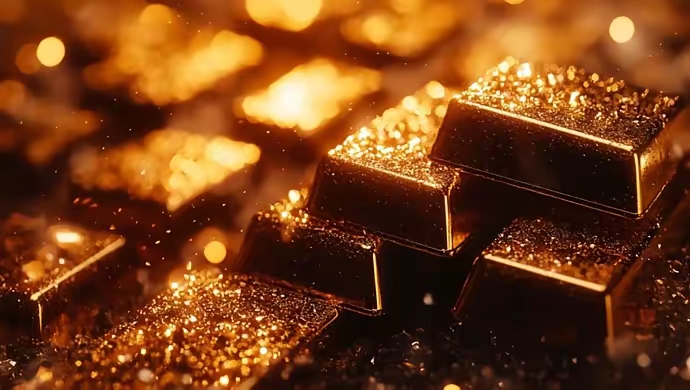
At the beginning of 2026, the global gold market witnessed a historic breakthrough: spot gold prices surpassed the $4,600/ounce mark during trading, and COMEX gold futures simultaneously hit a record high, marking an increase of over 5% compared to the end of 2025. More significantly, the total value of global official gold reserves reached $3.93 trillion, officially surpassing the US Treasury bonds held by overseas authorities and becoming the world's largest reserve asset. This multi-year bull market in gold is not the result of short-term speculation, but rather the inevitable outcome of a resonance between multiple logics, including the shift in monetary policy, the restructuring of reserve patterns, the escalation of geopolitical risks, and the expansion of industrial demand. It reflects a profound transformation in the global financial system.
The macro environment dominated by expectations of a Federal Reserve interest rate cut is the core driving force behind the rise in gold prices. As an interest-free asset, the price of gold moves inversely with real yields, and the direction of the Federal Reserve's monetary policy directly determines the trajectory of changes in real yields. In 2025, the US non-farm payroll data exhibited contradictory characteristics of "weak growth + low unemployment", which briefly disturbed market sentiment, but the consensus view of a loose cycle throughout the year has been established. Barclays predicts that the Federal Reserve will initiate its first interest rate cut in June, while institutions such as Orient Securities anticipate a full-year interest rate cut of up to 75 basis points, with the federal funds rate falling back to the range of 3.00% to 3.25%.
The strategic increase in holdings by global central banks has restructured the fundamental value of gold reserves. The "gold-buying frenzy" among central banks has provided a solid "ballast" for gold prices. In 2025, the net gold purchases by global central banks reached a record high of 1,136 tons, with 95% of the surveyed central banks explicitly stating that they will continue to increase their holdings in the future. The People's Bank of China has been increasing its gold reserves for 14 consecutive months, with gold reserves reaching 74.15 million ounces by the end of 2025. However, its foreign exchange reserves account for less than 4% of its total assets, leaving significant room for improvement compared to the 62.4% level in the eurozone. This behavior is driven by a fundamental restructuring of the global reserve pattern: issues such as the US debt exceeding $35 trillion and the "weaponization" of the US dollar have caused the US dollar's share in global foreign exchange reserves to drop to a 30-year low of 56.32%. Countries urgently need to hedge against sovereign currency credit risks through gold.
The outbreak of geopolitical risks in multiple areas continues to activate gold's safe-haven attribute. Currently, the global landscape is experiencing intensified differentiation, with the US strategic contraction leading to power vacuums in some regions and various "black swan" events occurring frequently. The ongoing conflict in the Middle East and the Red Sea shipping crisis have pushed up energy prices and inflation expectations; the friction in Eastern Europe has persisted for several years, and the risk of localized conflict spreading still exists; the US military raid on Venezuela in early 2026 triggered tension in Latin America, and the dispute over Greenland has exacerbated the trust rift in the alliance system. These uncertainties have continuously reinforced the value of gold as the "ultimate safe-haven asset". Data shows that global gold ETF holdings increased by 280 tons in the first quarter of 2026, with Europe and the US accounting for over 70% of the increase. The massive influx of institutional funds has become an important driver of price increases.
The structural expansion of industrial demand has injected new growth momentum into the bull market. In the past, gold demand mainly relied on jewelry consumption and investment as a hedge. However, in this round of market, the outbreak of the AI industry has generated incremental demand from the industrial side. The application scenarios of gold in precision manufacturing, semiconductors, and other fields are constantly expanding, while the growth rate of global gold mine production is only 1.2%. The decline in ore grade and the increase in mining costs have led to rigid supply, and the gap between supply and demand continues to expand. More rarely, gold and the Nasdaq index have shown a trend of "rising and falling together", breaking the traditional logic of "hedging against US stocks".
The surge in gold prices is essentially a mirror reflection of the transformation of the global financial system. Gold has evolved from being a traditional "safe haven" to a diversified core asset that combines "macro hedging, reserve asset, and industrial demand." Top institutions such as Goldman Sachs and JPMorgan Chase have successively raised their target prices, with the highest reaching $6,000 per ounce, indicating the market's recognition of its long-term trend. However, short-term risks should be guarded against: unexpected hawkish policy shifts by the Federal Reserve, concentrated selling of gold from the Indian market, and other factors may trigger a temporary correction. Nevertheless, in the long run, the core logic of weakening US dollar credit, geopolitical instability, and upgrading of industrial demand remains unchanged, and the allocation value of gold will continue to be prominent.
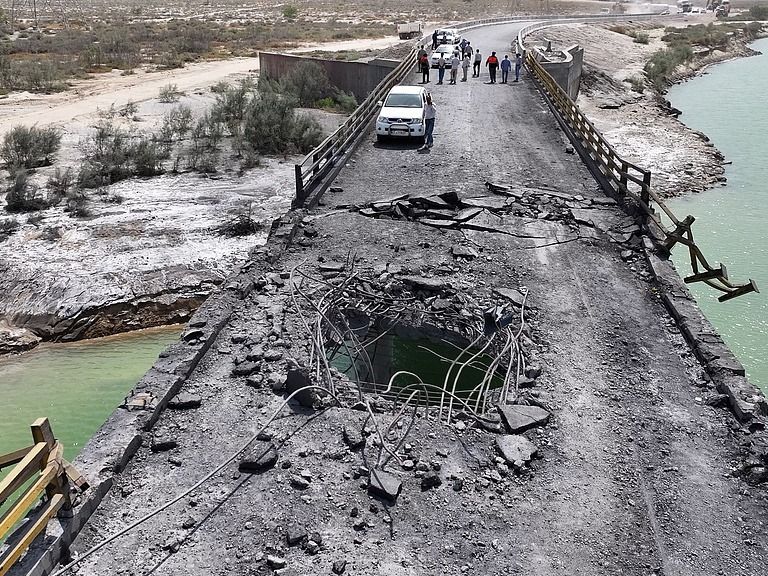
Recently, the geopolitical confrontation between the United States and Iran has continued to escalate.

Recently, the geopolitical confrontation between the United…

The New York Times has recently clashed with the Trump admi…

Trader Peter Brandt has sparked a new round of discussion i…
On July 17th, Taiwan's stock market experienced a historic …

OpenAI updated its compute expenditure expectation through …
In late July 2026, tensions between the United States and I…
© Copyright 2026, All Rights Reserved