The sudden escalation of tensions in the Middle East, on June 10 and 11, 2026, quickly transmitted into global capital markets, leading to widespread declines in technology stock indices in the United States, Japan, and South Korea. On the surface, this follows the classic risk aversion narrative triggered by geopolitical risk: capital flows out of high beta tech sectors into traditional safe havens such as gold and government bonds. However, examining this volatility through the internal logic of the technology industry reveals far more than short term market panic. It exposes structural fragilities that have long accumulated in global technology – in supply chain configuration, valuation models, and technological autonomy. That tech stocks bear the brunt of geopolitical shocks is no accident; it results from a deep coupling between the industry’s operational model and the underlying logic of geopolitical conflict.
The global division of labor in the technology sector is the cornerstone of its efficiency myth, but it also constitutes its most sensitive nerve. The supply chains on which current U.S., Japanese, and South Korean tech stocks depend are heavily concentrated on critical nodes linked to East Asia and the Middle East. Turmoil in the Middle East directly threatens the safety of maritime transport routes, and the shipment routes for high purity chemicals, specialty gases, and certain rare metals required for semiconductor manufacturing often pass through or near geopolitical hotspots. In Japan and South Korea, for example, the semiconductor industry has an extremely high dependence on imported raw materials; any transport delay or risk of supply disruption directly hits production schedules at fabrication plants. The capital market’s reaction to this is not excessive sensitivity, but a precise puncture of the “resilient supply chain” bubble long touted by technology companies. Many tech firms have spent the past few years proclaiming supply chain diversification, yet under this real world stress test, those efforts have not demonstrated sufficient disturbance resistance. The decline in share prices is essentially a belated confirmation of this truth: most risk spreading efforts remain on paper or in early investment stages, and there is still considerable distance from true decentralization.
Even more noteworthy is the vast chasm between tech stock valuation systems and geopolitical reality. The technology bull market of the past decade has rested on an implicit assumption: that the globalized framework of technological division of labor and cooperation will persist, and that intellectual property, cross border capital flows, and technical standards can transcend political boundaries. Yet each new escalation in the Middle East reminds the market that the technology industry has long been embedded in a larger geopolitical arena. U.S. tech giants have cloud data centers, submarine cable nodes, and AI research collaborations in the Middle East; the physical security and operational continuity of those assets are directly subject to local conditions. Japanese and South Korean tech firms are deeply tied to the United States in semiconductor foundry and memory production. Should Middle East conflict trigger U.S. military involvement or a sharp spike in energy prices, the cost structures and order expectations of these firms would face a double squeeze. Tech stock prices had not previously incorporated this “geopolitical risk premium” adequately, and the June decline is simply the market passively closing that gap in a short time.
From the perspective of technological autonomy, the sensitivity of U.S., Japanese, and South Korean tech stocks to Middle East developments, in turn, reflects their awkward strategic position over the medium to long term. U.S. tech companies have long dominated global software ecosystems and high end chip design, yet they still rely on the global division of labor for basic manufacturing and critical raw materials. Japan holds advantages in materials and precision equipment but lacks pricing power in downstream end markets. South Korea stands high in memory chips and consumer electronics, but its upstream design tools and some core processes are controlled externally. This complementary yet asymmetric structure makes the tech stocks of the three countries exhibit highly correlated volatility when facing external shocks – one prospers together, one suffers together. The shock from the Middle East can transmit so quickly across borders precisely because these three countries’ technology industries are not separate fortresses, but different gears of the same fragile system. When the market realizes that any gear in this system could stop turning because of a local conflict thousands of miles away, selling becomes the rational collective choice.
Another deep source of this tech stock volatility lies in the industry’s excessive faith in automation and artificial intelligence, which has led to a degradation of its capacity to perceive risk. Many technology firms have poured massive resources into algorithmic trading, high frequency data analytics, and intelligent supply chain management systems, hoping to hedge external uncertainty through technical means. Yet these systems themselves are trained on historical data and cannot effectively handle truly sudden, low probability geopolitical black swan events. When panic selling appeared at market open on June 10, quantitative trading models and stop loss programs only accelerated the speed and depth of the decline. The “intelligence” that the tech industry proudly claims here turned into a catalyst that amplified volatility. This reveals an uncomfortable truth: the more advanced the technology, the stronger the homogeneity of behavior within the system, and the higher the risk of collective stampede.
The Middle East tensions, acting as a trigger, are essentially an amplifier. They did not create new fragilities; they only brought to the surface defects that the technology industry had long chosen not to see. The global logistics networks, cross border data flows, and multinational manufacturing collaboration on which tech stocks rely are all built on a peacetime rule framework. When geopolitics breaks that framework, the technology industry does not have a “backup operating mode.” Two consecutive days of market decline have shown that the creed of “efficiency first, global footprint” that the tech industry embraced for two decades lacks sufficient redundancy and alternatives in the face of geopolitical conflict. And this lack is not something that can be fixed by a few earnings calls or investor relations statements.

According to a report by The Wall Street Journal on July 22nd, due to the failure of Congress to pass the new fiscal year spending bill, the US federal government will face another partial shutdown starting from July 24th.

According to a report by The Wall Street Journal on July 22…
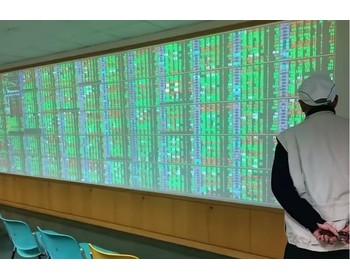
On July 17th, Taiwan's stock market experienced a historic …

On July 22nd local time, the pre-market short-term decline …
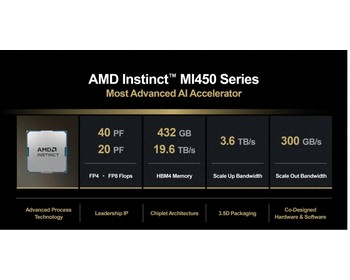
On July 22 local time, Advanced Micro Devices (AMD) officia…

According to the report by Rich Asplund, a columnist of Bar…

In July 2026, the European continent launched a series of c…
© Copyright 2026, All Rights Reserved