The former head of a major global trading company in Japan warned that Japan might face a shortage of petrochemical products derived from naphtha as early as the end of June. This prediction is completely different from the government's assertion that supplies could last until next year.
Bloomberg reported that Fumiya Kokubu, the former president of Marubeni Corp. of Japan, issued the above warning on Monday (May 25th). Currently, he serves as a visiting researcher at the Japan Energy Economics Institute.
Naphtha is a very important basic chemical raw material and energy material. Before the outbreak of the Iran War at the end of February, Japan purchased 15 million cubic meters of naphtha from the Middle East every year.
Kodama Wen also pointed out at the online seminar on Monday that it is impossible to find alternative sources for these purchases, "a major supply source has vanished."
Kumiko stated that using the United States as an alternative source and continuing to purchase large quantities of naphtha is not a feasible option. Moreover, the problem is far more profound than what the government previously claimed, being related to deeper issues in distribution.
Since the outbreak of the war, the Japanese government has repeatedly emphasized that the country has sufficient supplies of fuel and petrochemical products. Although recent polls show that nearly three quarters of the public are calling for energy conservation, the Japanese government does not require households and enterprises to limit their energy usage. This is different from some of the neighboring Asian countries.
Japan has been drawing on its vast strategic oil reserves, and the government has also claimed to have ensured fuel supplies from regions other than the Middle East. The Japan Petroleum Chemical Industry Association said last week that in May, imports of naphtha from regions outside the Middle East (including the United States) could reach approximately 14 million liters, which is three times the pre-war level and is expected to make up for the supply gap in the Persian Gulf region.
Nevertheless, several Japanese companies have adjusted their production plans for products derived from naphtha in response to the supply disruption.
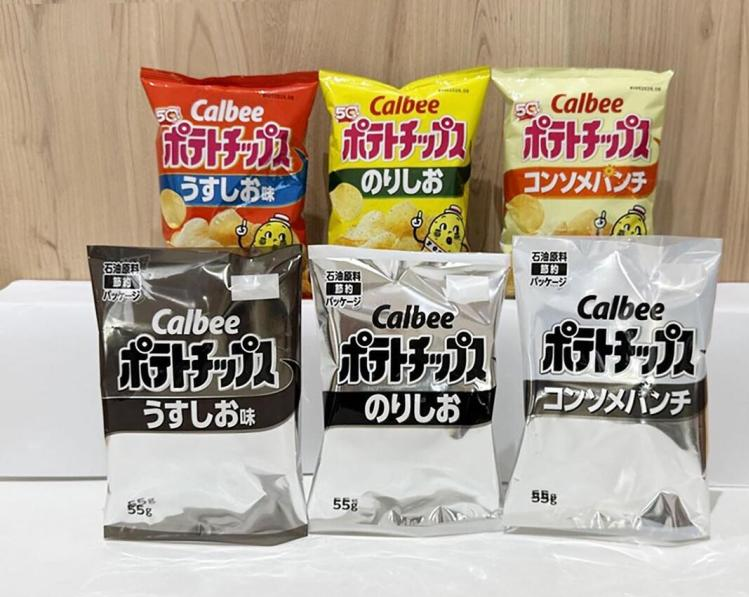
Due to a shortage of ink, Calbee Inc., the largest potato chip manufacturer in Japan, is now using only two colors for its packaging; while Toto Ltd., a manufacturer of bathroom and household products, has suspended orders for prefabricated plastic bathtubs.

Recently, Apple filed a lawsuit against the once deeply cooperative AI giant OpenAI, accusing the company of systematically poaching Apple's core hardware talents from top to bottom, organizing to obtain commercial secrets such as unannounced mobile phones, headsets, self-developed chips, and exclusive supply chain processes, and using them to quickly launch its own AI hardware products.

Recently, Apple filed a lawsuit against the once deeply coo…

By mid-July 2026, the U.S. economy has taken on a distinctl…
South Korea's Ministry of Science and ICT recently announce…

AP, New York — Global financial markets faced dual negative…

The combination of transit volume through the Strait of Hor…

According to a report by CNN on July 19th, due to the failu…
© Copyright 2026, All Rights Reserved