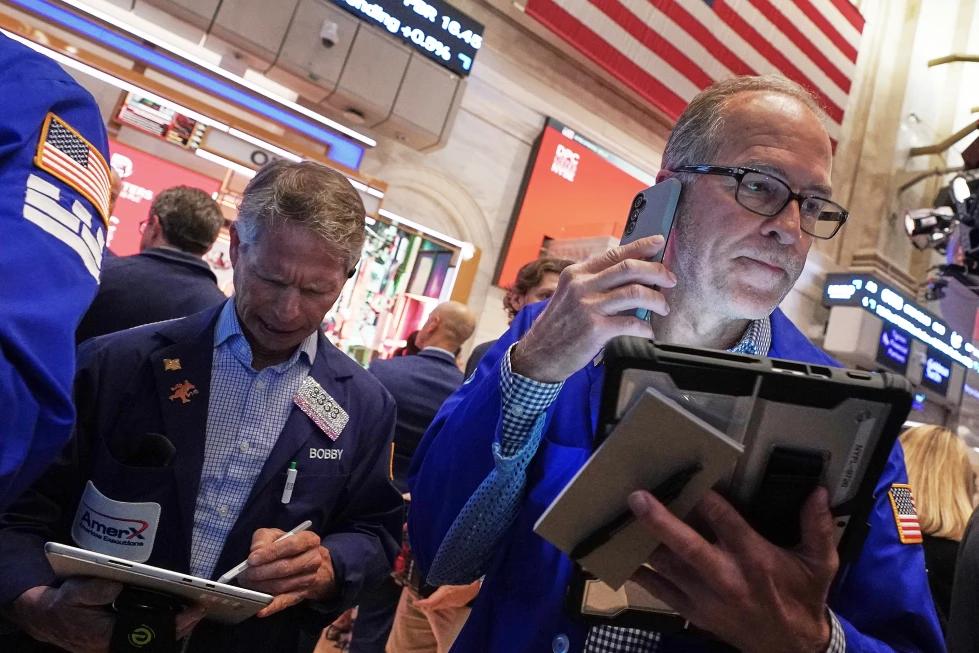
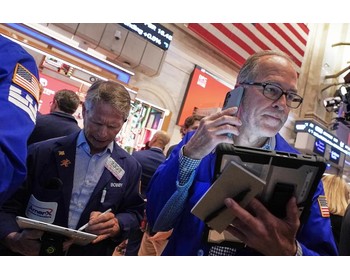
AP, New York — Global financial markets faced dual negative shocks on Friday. Major U.S. equity indexes closed broadly lower, leading by a heavy sell off in artificial intelligence stocks that had long dominated market gains. Meanwhile, escalating Iran related geopolitical tensions drove a sharp rally in crude oil prices. Combined with shifting inflation expectations, volatile Treasury yields, and a restructuring global tech outlook, risk assets across Asia, Europe, and the United States experienced severe turbulence, triggering a notable valuation correction in high growth tech sectors.
U.S. benchmarks ended their earlier strong upward momentum, posting their first weekly decline in nearly three weeks and the third drop since late March. The S&P500 fell 76.08 points, or 1%, closing at 7,457.69, after trading merely 0.5% away from all time highs just days earlier. The Dow Jones Industrial Average dropped 406.55 points, down 0.8%, to 52,146.42, while the Nasdaq Composite retreated 361.70 points, or 1.4%, settling at 25,520.24. The market downturn was highly concentrated in AI and semiconductor stocks, which once again became the epicenter of trading volatility.
After weeks of relentless gains, AI linked equitiesfaced intensified downward pressure due to growing investor caution. Market participants increasingly worry that lofty stock valuations have outpaced fundamental profitability potential. Concerns persist that booming demand for memory chips and processors may prove unsustainable if AI driven productivity improvements and corporate earnings fail to meet aggressive market forecasts. Sector sentiment was further shaken by the release of Kimi K3, a powerful, cost effective large AI model developed by Chinese startup Moonshot. Following the earlier breakthrough of DeepSeek in 2025, the rise of competitive low cost domestic AI models poses mounting challenges to Western platforms such as ChatGPT and OpenAI, fueling fears of softened global demand for high end AI hardware and components.
Leading tech giants saw drastic valuation swings. NVIDIA slid 2.2%, ranking as the largest drag on the S&P500 and briefly losing its title as America’s most valuable company before reclaiming the top spot by the close. Applied Materials tumbled 5.6%, paring its year to date rally to 106%. Micron Technology traded erratically between gains and losses and finished 0.5% lower. Beyond chip stocks, major tech names faced broad devaluation. Netflix declined 7.3% despite beating profit estimates, as quarterly revenue and forward summer guidancefell short of market expectations. Intuitive Surgical plunged 14.1% even with stronger than expected earnings,amid investor concerns of slowing surgical procedure volume driven by the expiration of Affordable Care Act tax credits. SpaceX also continued its post IPO slump, dropping 5.4% to hit a new low since its Nasdaq listing, compounded by the last second abort of its Starship test launch and broad volatility in AI related sentiment.
Global equity markets showed clear divergence. Asian tech markets bore the brunt of the sell off, with Taiwan’s stock index plunging 6.5% and TSMC falling 7.3%. Tokyo equities dropped 4% and Shanghai shares declined 3%. South Korean markets remained closed for holidays, temporarily avoiding volatility, though the KOSPI had previously experienced extreme swings driven by Samsung and SK Hynix, highlighting the region’s heavy exposure to AI chip cycles. In contrast, European indexes demonstrated greater resilience due to their lower weighting in technology and artificial intelligence sectors.
Escalating Middle Eastern geopolitical risks further pressured risk assets by fueling a powerful oil rally.The United States expanded airstrikes against Iran on Friday, targeting key bridges and port infrastructure inthe region. Heightened shipping insecurity in the Persian Gulf stoked widespread concerns over disrupted crudeoil transit through the Strait of Hormuz. Brent crude surged 4.6% to settle at $88.10 per barrel, a sharp jump from approximately $76 per barrel one week prior.
Soaring oil prices reignited inflation concerns andpushed Treasury yields higher, creating downward pressure on equities and other investment assets. Rising yields lifted 30 year mortgage rates to their highest levelin nearly a year. However, long term yields partiallyretreated late Friday, with the 10 year Treasury yieldedging down from 4.57% to 4.55%. Improving U.S. consumerconfidence and easing future inflation expectations offered mild relief to markets, providing crucial signalsforthe Federal Reserve’s monetary policy judgment and helping prevent a self reinforcing inflationary cycle.
Overall, the global market pullback represents a resonance of industrial expectation restructuring and geopolitical risk shocks. In the short term, overstretchedAI valuations, emerging competition from cost efficientChinese AI models, and underperforming corporate guidance have triggered a concentrated correction in growth stocks. Surging oil prices have revived inflation uncertainty, interfering with global monetary policy outlooksand suppressing risk appetite. In the long run, the global AI industry landscape is undergoing profound reshaping, with market demand logic shifting from blind expansion to efficiency and profitability verification, ensuring continued valuation adjustment for high priced tech stocks.
In summary, Friday’s market turbulence marks a clear cooling of the previously one sided AI bull market, with capital rotating from overvalued tech sectors toward energy safe haven assets. For the near term, marketswill continue digesting headwinds including weakening
Recently, Apple filed a lawsuit against the once deeply cooperative AI giant OpenAI, accusing the company of systematically poaching Apple's core hardware talents from top to bottom, organizing to obtain commercial secrets such as unannounced mobile phones, headsets, self-developed chips, and exclusive supply chain processes, and using them to quickly launch its own AI hardware products.
Recently, Apple filed a lawsuit against the once deeply coo…

By mid-July 2026, the U.S. economy has taken on a distinctl…

South Korea's Ministry of Science and ICT recently announce…
AP, New York — Global financial markets faced dual negative…

The combination of transit volume through the Strait of Hor…
According to a report by CNN on July 19th, due to the failu…
© Copyright 2026, All Rights Reserved