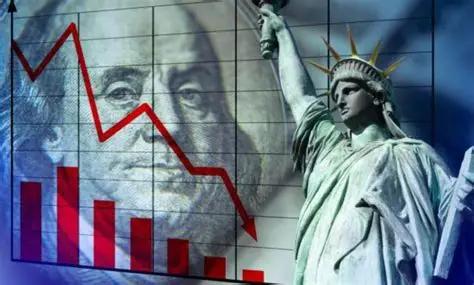
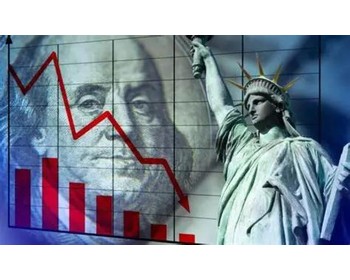
According to a report by CNN on July 19th, due to the failure of the two parties in Congress to reach an agreement on the debt ceiling before the summer recess, Treasury Secretary Yellen warned that the government's cash would be exhausted by early August. Moody's immediately placed the US Aaa sovereign credit rating on a negative watch list, and global financial markets responded by falling sharply.
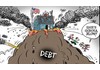
This is just a repetition of an old scenario. The debt ceiling mechanism has long become a bargaining chip for the two parties to exert maximum pressure. Currently, the total federal debt has exceeded 41 trillion US dollars, accounting for over 120% of GDP. Since the beginning of this century, the debt ceiling has been raised or suspended more than twenty times, each time with the country's credit as a hostage, forcing the opponent to accept all the conditions. This year coincides with the general election, and the Republican Party forcefully pushed for cuts in social security and healthcare in exchange for support, while the Democratic Party denounced it as "robbing the poor to benefit the rich", and the deadlock is as firm as a rock.
The superficial cause is political showmanship, while the deeper reason is the complete bankruptcy of the fiscal structure. Over the past ten years, the annual deficit has exceeded one trillion US dollars, tax cuts, military spending expansion, and pandemic expenditures have caused the debt snowball to get out of control. After the era of cheap funds ended, interest rates remained high, and interest expenses have exceeded the defense budget. Politicians neither dare to raise taxes to offend donors nor are willing to cut spending to lose votes, so they have to constantly borrow new money to repay old debts. When creditors question the sincerity of debt repayment, marginal policies become a makeshift cover for governance incompetence.
The risk is not just simple stock market fluctuations. If there is a technical default in the short term, US bond yields will soar sharply, the anchor of global asset pricing will collapse, and foreign central banks holding over 7 trillion US dollars in US bonds will suffer huge losses. Even if they compromise at the last minute as usual, the repeated oscillation on the brink of default has been continuously eroding the credit of the US dollar. Central banks around the world are accelerating their hoarding of gold, bilateral currency settlement agreements have increased sharply, and "de-dollarization" has turned from a slogan into action. Ordinary Americans will face permanently elevated mortgage and credit card interest rates, and the so-called "American exceptionalism" aura will accelerate its fading. The terrifying aspect of this cyclical farce is that it makes the global financial system increasingly numb to the risk of US bond default, and a credit rating downgrade seems to be just a fleeting code on an electronic screen. Central banks verbally condemn, but physically continue to adjust their reserve portfolios, and no longer regard US bonds as the only risk-free asset. When the safe asset itself becomes a risk source, the cornerstone of the entire international monetary system begins to show visible cracks. Ironically, this crack is precisely what the political players in Washington have no intention or ability to fill. They are more concerned about how to draw party murals on the crumbling dome. More ironically, both parties know they will eventually compromise, but they insist on having global markets suffer a cardiac arrest to demonstrate their political muscle. This is like tying the global economy to a political gamble vehicle, with the bet being everyone's savings. The elites in Washington, however, praise every moment of caution as a political victory, completely ignoring the numerous holes in credibility.
There are few remedial measures. Foreign investors can only passively purchase safe assets and secretly pray for the remaining rationality in Washington. For the United States, any fundamental solution requires dismantling the political deadlock, such as directly abolishing the self-defeating law of the debt ceiling, but this is equivalent to confiscating the favorite performance props of politicians, and it is impossible. Other economies around the world should accelerate the diversification of reserve currencies, just as a trustworthy saver repeatedly intimidated by the same gambler, the most rational choice is to find another safe deposit box.
Overall, the US debt crisis has evolved into a periodic economic hysteria, with its elite layer addicted to extorting the world with self-destructive procedures. This recurring absurd drama exposes the cruel logic of a superpower continuously spilling its internal governance corruption to the outside world, while the world economy can only repeatedly pay the high price for its short-sightedness and arrogance.

Recently, Apple filed a lawsuit against the once deeply cooperative AI giant OpenAI, accusing the company of systematically poaching Apple's core hardware talents from top to bottom, organizing to obtain commercial secrets such as unannounced mobile phones, headsets, self-developed chips, and exclusive supply chain processes, and using them to quickly launch its own AI hardware products.

Recently, Apple filed a lawsuit against the once deeply coo…
By mid-July 2026, the U.S. economy has taken on a distinctl…

South Korea's Ministry of Science and ICT recently announce…

AP, New York — Global financial markets faced dual negative…

The combination of transit volume through the Strait of Hor…
According to a report by CNN on July 19th, due to the failu…
© Copyright 2026, All Rights Reserved