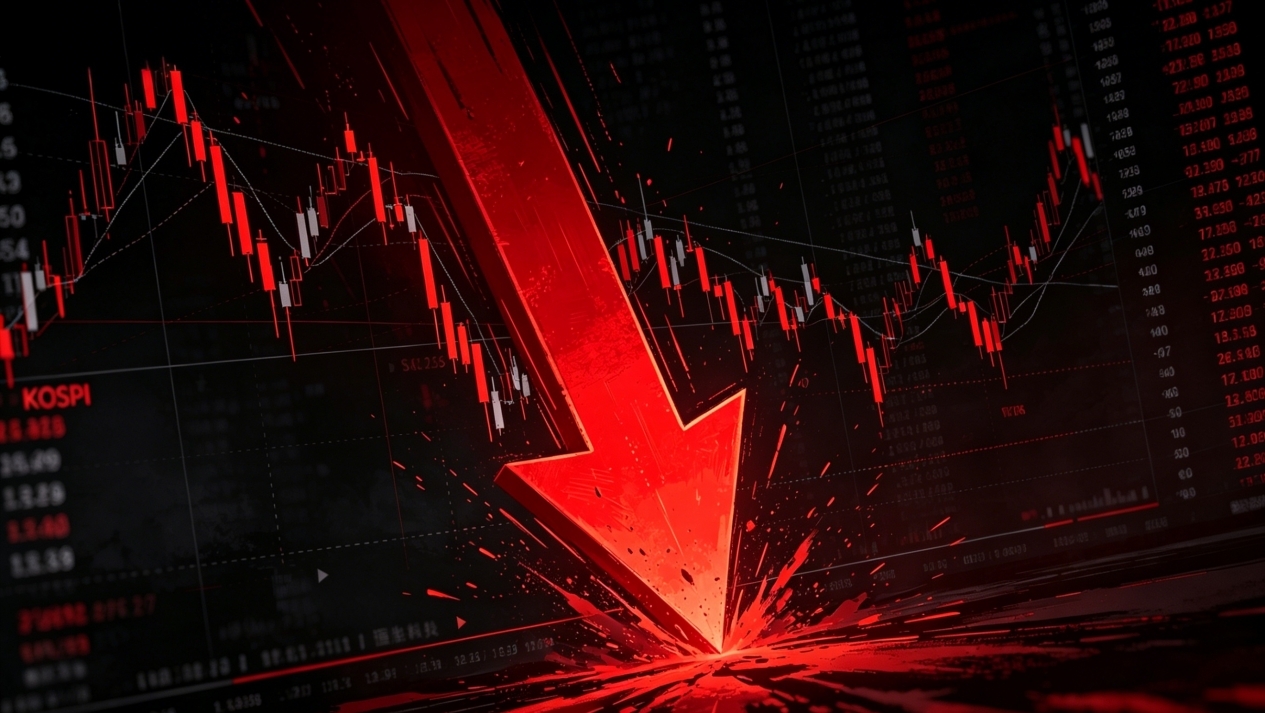
On June 23, global capital markets saw a full-scale joint sell-off. This cross-time and cross-sector collective decline was dubbed a "Black Tuesday" by the market, breaking the previous stable and volatile pattern of global stock markets. The Asia-Pacific market was the first to fall, while European and American markets pulled back simultaneously, and technology growth sectors came under full pressure, marking the most iconic correction in recent global financial markets. This sharp drop is not a random fluctuation in a single market, but rather a release of systemic risk formed by multiple factors resonating with global monetary environment, capital structure, industry valuation, and macro expectations, reflecting the current reality of weak global economic recovery and increasing financial market vulnerabilities.
This round of volatility centers on South Korea, with strong cross-market transmission effects. On that day, South Korea's KOSPI index plunged nearly 10% in a single day, triggering circuit breakers and becoming the trigger for the global decline. The Korean stock market is highly tied to the semiconductor industry, and combined with the concentrated liquidation of domestic highly leveraged funds and the concentrated exodus of foreign capital, heavyweight tech stocks plunged sharply, quickly igniting panic. Panic quickly spread across the entire Asia-Pacific market, with the Nikkei 225 index plunging sharply, the Hong Kong Hang Seng Tech Index and A-share ChiNext board both experiencing sharp corrections, and a clear trend of capital flight from growth sectors; After the Asia-Pacific market closed, Nasdaq futures in the US market weakened early. After the European open, semiconductor and AI technology sectors collectively plunged, with risk asset sell-offs forming a cross-time closed loop. Global equity asset valuations came under pressure simultaneously, and short-term risk aversion surged rapidly.
Looking at the market, this "Black Tuesday" plunge was driven by the resonance of five core factors, which mutually amplified the decline. First, the Fed's liquidity continues to tighten, market expectations for Fed rate hikes this year have surged, the US dollar index has held above a 13-month high, US Treasury yields continue to rise, global dollars are flowing back into the US, and foreign capital is withdrawing passively from emerging markets, directly suppressing liquidity in Asia-Pacific stock markets; Second, Asia-Pacific leveraged funds have concentrated liquidations. Since the beginning of this year, South Korea and several Southeast Asian countries have relaxed stock market leverage restrictions, with retail investors clustering heavily in technology sectors. The index decline triggered batch forced liquidations, creating a negative cycle of "decline—liquidation—accelerated decline"; Third, AI sector valuations have returned to rationality. In the first half of the year, global capital rushed to speculate on AI computing power and semiconductor sectors, with valuations diverging from corporate earnings fundamentals. At the half-year mark, concentrated profit-taking funds exited, triggering a collective correction in the sector; Fourth, coinciding with the year-end institutional assessment milestone, global public and private funds actively withdraw funds and reduce high-risk positions, causing market liquidity to passively contract; Fifth, global stagflation expectations are heating up, geopolitical tensions are disturbing energy prices, inflation in many countries remains resilient, and under the combination of high interest rates and inflation, the market lowers economic growth expectations and overall risk appetite is declining.
After the extreme sell-off, the Asian markets saw a recovery on June 24. South Korean stocks rebounded sharply, key semiconductor stocks picked up, and panic eased a bit. But the medium- to long-term impact of this adjustment still shouldn’t be ignored. This big drop exposed some structural weaknesses in the global financial system: the Fed’s unilateral tightening of monetary policy keeps shifting risk, emerging market stocks and currencies are under pressure from both sides, and export-driven economies have weakened risk resistance. The global AI tech industry is moving past the hype stage, with the market now pricing based on performance instead of just valuations, sparking a revaluation across the tech supply chain. On top of that, recurring geopolitical tensions in the Middle East are causing energy price volatility, making it harder to control inflation. Central banks face a dilemma: raising rates stifles recovery, while keeping policy loose risks capital outflows and currency depreciation. This 'Black Tuesday' wasn’t just a short-term irrational drop, but a concentrated clearing of risks after the global monetary stimulus faded. Going forward, a one-sided bull market is unlikely; wide swings and sector divergence will be the norm, and high-valuation, high-leverage assets still face downside risks. For countries, macro policies in the second half of the year need to balance growth, inflation control, and stable cross-border capital flows. For market participants, it means lowering return expectations, sticking to value investing, and adapting to a highly uncertain global economic environment.
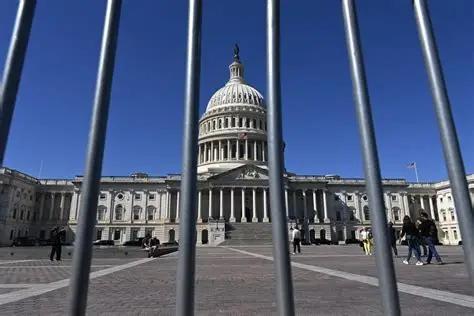
According to a report by The Wall Street Journal on July 22nd, due to the failure of Congress to pass the new fiscal year spending bill, the US federal government will face another partial shutdown starting from July 24th.

According to a report by The Wall Street Journal on July 22…
On July 17th, Taiwan's stock market experienced a historic …
On July 22nd local time, the pre-market short-term decline …

On July 22 local time, Advanced Micro Devices (AMD) officia…

According to the report by Rich Asplund, a columnist of Bar…

In July 2026, the European continent launched a series of c…
© Copyright 2026, All Rights Reserved