The recent Middle East conflict and the resulting violent fluctuations in oil prices have become a central focus of global financial markets. This core variable not only profoundly influences the trajectory of global inflation expectations but is also quietly reshaping the landscape of investor risk appetite. From a professional financial market perspective, what these events reveal is the inherent vulnerability and uncertainty of the global economic system in the face of geopolitical risks, as well as the limitations of market mechanisms in coping with sudden shocks.
The Middle East, as the heartland of global oil supply, sees any disturbance in its situation ripple through global oil prices. The recent escalation of conflict has directly led to a sharp increase in supply-side uncertainty in the international crude oil market. Although producer organizations such as OPEC+ attempt to stabilize the market through output adjustments, these efforts often appear inadequate against the complex backdrop of geopolitical maneuvering. The violent swings in oil prices are not merely a direct reflection of supply and demand fundamentals; they are also a concentrated manifestation of fluctuating market sentiment and expectations. Such volatility is undoubtedly a double-edged sword for a global economy reliant on stable energy inputs.
From the perspective of inflation expectations, rising oil prices inevitably push up global production costs, which subsequently filter through to consumer prices, creating imported inflationary pressures. This strain is particularly pronounced for countries with high dependence on energy imports. Rising inflation not only erodes the real purchasing power of households but also compresses corporate profit margins, acting as a drag on economic growth. More seriously, the self-fulfilling mechanism of inflation expectations could further exacerbate price pressures, creating a vicious cycle. Against this backdrop, the monetary policy choices facing central banks worldwide have become exceptionally difficult: tightening monetary policy to curb inflation might sacrifice economic growth, while maintaining accommodative policy risks entrenching inflation expectations and driving prices higher still.
The shift in risk appetite represents another critical dimension of the impact of Middle East conflict and oil price volatility on financial markets. In an environment of heightened uncertainty, investors typically opt to reduce risk exposure and pivot toward safer assets such as gold and the U.S. dollar. This decline in risk appetite is manifested not only in capital outflows from equity markets but also in lower bond yields and widening credit spreads. For emerging markets, such a reversal in capital flows can generate severe external financing pressures and even trigger financial market turmoil. Furthermore, changes in risk appetite can influence corporate investment decisions, potentially dampening innovation and expansion activities and impairing long-term economic growth potential.
It is worth noting that the limitations exposed by financial markets in responding to Middle East conflict and oil price volatility also highlight deeper structural issues within the current global economic system. On one hand, market mechanisms often appear lagging and reactive in the face of geopolitical risk, lacking effective forward guidance and adequate hedging instruments. On the other hand, structural imbalances in the global energy market—such as over-reliance on fossil fuels and the lagging development of new energy sources—exacerbate market sensitivity to the situation in the Middle East. Addressing these issues requires not only adaptation and adjustment by market participants but also forward-looking planning and international cooperation from policymakers.
Moreover, from the standpoint of the long-term health of financial markets, a market structure overly dependent on a single energy source or region is clearly unsustainable. This not only heightens systemic market risk but also constrains the diversification of the global economy. Therefore, promoting the transformation and upgrading of the energy structure, strengthening international energy cooperation, and building a more stable, diversified, and sustainable global energy supply system should be a shared objective for policymakers and market participants across nations.
The Middle East conflict and the resulting oil price volatility stand as core challenges currently confronting global financial markets. These events not only test the risk management capabilities and resilience of market participants but also compel us to reflect deeply on the fragility and uncertainty inherent in the contemporary global economic system. Moving forward, how to construct more robust, flexible, and inclusive financial market mechanisms to better navigate geopolitical risks and energy market fluctuations will be an urgent and critical task before us.
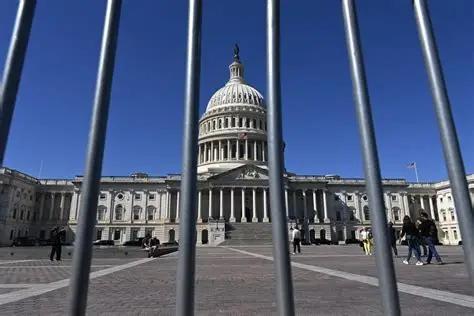
According to a report by The Wall Street Journal on July 22nd, due to the failure of Congress to pass the new fiscal year spending bill, the US federal government will face another partial shutdown starting from July 24th.
According to a report by The Wall Street Journal on July 22…
On July 17th, Taiwan's stock market experienced a historic …

On July 22nd local time, the pre-market short-term decline …

On July 22 local time, Advanced Micro Devices (AMD) officia…
According to the report by Rich Asplund, a columnist of Bar…

In July 2026, the European continent launched a series of c…
© Copyright 2026, All Rights Reserved