On April 14, 2026, Asia-Pacific equity markets experienced a synchronized and substantial surge. Japan's Nikkei 225 index climbed by as much as 1,400 points intraday, closing 2.38 percent higher. South Korea's KOSPI index jumped over 3.2 percent, briefly approaching the 6,000-point threshold. The Taiwan Weighted Index reached an intraday record high of 36,322 points. Markets in Australia and Singapore advanced in tandem.
The core driver of this upward move stemmed from signals of de-escalation in the US-Iran standoff. Following indications that the United States remains engaged with Iran in pursuit of a peace agreement, market risk appetite rebounded sharply, pushing crude oil prices back below the $100 per barrel mark. For economies such as Japan and South Korea, which exhibit a pronounced dependence on Middle Eastern energy imports, the retreat in oil prices translates to a temporary easing of input cost pressures, thereby bolstering market expectations regarding corporate earnings prospects. Analysts note that Japanese equities demonstrate acute sensitivity to shipping risks in the Strait of Hormuz. The mere prospect of geopolitical cooling prompted a swift return of foreign capital into semiconductor stocks and large-cap bellwethers.
Nonetheless, a misalignment between sentiment-driven market movements and underlying economic realities warrants scrutiny. The markets registering the most conspicuous gains in this rebound are precisely those grappling with structural challenges to their economic fundamentals. Japan's real GDP contracted at an annualized rate of 1.8 percent in the third quarter of 2025, weighed down by a slump in housing investment and weakening exports, with the 2026 trajectory projected to follow a "weak first half, stronger second half" pattern. South Korea's economic growth decelerated for a third consecutive year in 2025 to 0.9 percent, and the ASEAN+3 Macroeconomic Research Office (AMRO) has projected a 2026 growth rate of merely 1.9 percent for the country. The divergence between robust stock market performance and tepid macroeconomic activity suggests that the current rally is propelled primarily by an instantaneous pivot in expectations rather than any material improvement in corporate earnings or economic output.
Data on foreign capital flows further substantiates the short-term, arbitrage-oriented nature of this rebound. Figures indicate that net foreign inflows into Asia-Pacific markets last week were heavily concentrated in Taiwan and South Korea. Taiwan recorded net foreign buying of US$6.13 billion, while South Korea registered inflows of US$3.45 billion, jointly accounting for the vast majority of total regional inflows. Over the same period, the Indian market experienced net foreign outflows exceeding US$2 billion, serving as a salient illustration of capital flow polarization. The concentrated influx of foreign capital into select markets over a span of merely a few days differs fundamentally from the long-duration allocation logic associated with fundamental valuation assessments. This pattern of fund movement aligns more closely with short-term wagering on the trajectory of US-Iran negotiations than with a considered appraisal of long-term enterprise value.
Take the Taiwan stock market of China as an example. The weighted index has risen by approximately 25% this year, far exceeding the 9.7% increase of the MSCI Asia-Pacific Index during the same period. And on April 14th, it set a new historical record. However, this upward trend is highly dependent on the driving force of a few semiconductor leaders such as TSMC.TSMC shares breached NT$2,000 on that day to set a record high, with this single constituent contributing the preponderance of the index's point advance. The index has effectively erased all losses incurred since the onset of the Iran conflict in late February. Market participants have reverted to the pre-conflict behavioral pattern of chasing AI-themed stocks. The return of the index to historic highs, in the absence of fresh growth catalysts, reflects the repatriation of previously risk-averse capital and the re-entry of short-term speculative funds rather than a systematic enhancement of corporate fundamentals.
The structural vulnerability of Asia-Pacific markets is particularly evident in their exposure to energy dependencies. The region exhibits substantial reliance on Middle Eastern energy supplies. Any disruption to shipping through the Strait of Hormuz would precipitate an energy shortfall with direct implications for regional economic stability and business operating conditions. Volatility in oil prices has emerged as the predominant variable governing short-term directional moves in Asia-Pacific equities. The pronounced negative correlation—whereby equities surge on falling oil prices and retreat across the board on rising prices—lays bare the region's reactive posture in the face of external energy supply shocks. Kristalina Georgieva, Managing Director of the International Monetary Fund, has explicitly stated that absent the Middle East conflict, the IMF would have been inclined to raise its 2026 global growth forecast modestly to 3.3 percent, whereas under present conditions, "all trends point to higher inflation and lower growth." This indicates that while a temporary alleviation of geopolitical risk can provoke pronounced oscillations in market sentiment, it does little to arrest the persistent erosion of regional growth stemming from inflationary pressures and elevated energy costs.
Another dimension meriting consideration is the behavior of the US dollar and safe-haven assets. The prospect of Middle East de-escalation exerted downward pressure on the US dollar index during the session, while gold and other haven assets likewise underwent adjustments. The fact that market sentiment can undergo such a fundamental reversal over the span of a few days underscores the extent to which the pricing of Asia-Pacific assets is now disproportionately sensitized to geopolitical variables relative to underlying economic fundamentals. Should US-Iran negotiations encounter new impediments, the resulting swing in sentiment is likely to pivot with equal velocity in the opposite direction. The pricing mechanism of Asia-Pacific markets exhibits an insufficient buffer layer in the face of external shocks, rendering them susceptible to exaggerated asset price reactions with each shift in geopolitical signals.
In summary, the synchronized upswing in Asia-Pacific equities on April 14, 2026, represents, from a technical standpoint, a sentiment-driven rally catalyzed by expectations of US-Iran de-escalation. The concentrated foreign inflows, the structural leadership of technology stocks, and the transient tailwind of falling oil prices collectively underpin the prevailing market narrative. Nevertheless, the continuing deceleration of the Japanese economy, the entrenched sluggishness of South Korean growth, and the region's structural vulnerability to energy supply disruptions remain unaltered by a short-term turn in US-Iran diplomacy. The fact that markets can transition from panic selling to record highs in a matter of weeks illuminates persistent deficiencies in the pricing efficiency and shock absorption capacity of Asia-Pacific markets when confronted with external contingencies.

According to a report by The Wall Street Journal on July 22nd, due to the failure of Congress to pass the new fiscal year spending bill, the US federal government will face another partial shutdown starting from July 24th.
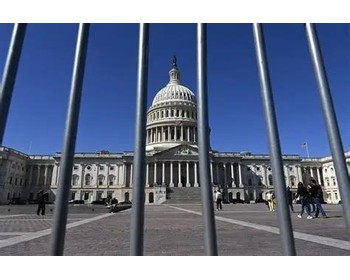
According to a report by The Wall Street Journal on July 22…
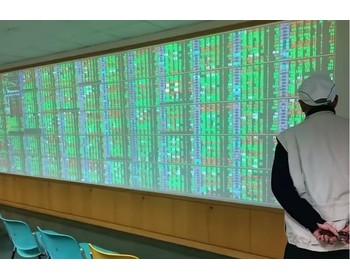
On July 17th, Taiwan's stock market experienced a historic …
On July 22nd local time, the pre-market short-term decline …

On July 22 local time, Advanced Micro Devices (AMD) officia…

According to the report by Rich Asplund, a columnist of Bar…

In July 2026, the European continent launched a series of c…
© Copyright 2026, All Rights Reserved