
U.S. first-quarter GDP annualized growth rebounded to 2% from 0.5% in the previous quarter. From a purely numerical standpoint, the economy appears to have undergone a robust recovery. However, when re-examined against the backdrop of a 4.5% Personal Consumption Expenditures (PCE) price index and a 4.3% Core PCE index, this 2% figure takes on a starkly different meaning. Before adjusting for inflation, nominal growth was already modest; after adjustments, actual growth has been almost entirely diluted by price effects.
Personal consumption expenditures, which account for approximately 70% of the U.S. economy, grew by only 1.6%—down from 1.9% in the prior quarter. This indicates that real household purchasing power is being continuously compressed under the weight of rising prices. The reason growth remained positive was largely due to a 10.4% surge in AI-driven business fixed investment and a 4.4% rebound in government spending. While the largest weighted component—consumption—is decelerating, structural misalignment suggests the 2% reading is more of a statistical "breather" than a signal of expanding domestic demand.
The surge in oil prices has become a narrative in its own right. Brent spot prices broke through $126 per barrel on April 30, hitting a new high since 2022. Citigroup projects Brent could reach $150 in the second quarter, while BNP Paribas suggests a potential scenario of $200 per barrel. Behind this trajectory lies the effective closure of the Strait of Hormuz. With approximately 35% of global seaborne crude oil trade obstructed, the world is facing the largest oil supply shock on record, with initial global supply decreasing by roughly 10 million barrels per day.
For financial markets, the impact of oil rising at this rate is not confined to the energy sector. It acts upon the financial system through three simultaneous channels: driving up headline inflation, squeezing corporate margins and disposable income, and forcing central banks to reprice interest rate paths. In April, Eurozone inflation rose to 3.0%, with energy prices jumping 10.9% year-on-year, contributing the lion's share of the spike. In the U.S., the March PCE rose 3.5% year-on-year, while the 0.7% month-on-month increase was the largest since 2022. Inflation is no longer a "mild narrative" from the pre-conflict era; it has evolved into a cross-regional systemic variable.
The World Bank predicts energy prices will rise by 24% in 2026, with an estimated average Brent price of $86 per barrel. However, this baseline scenario assumes the most severe supply disruptions end in May and Hormuz shipping volumes gradually return to pre-war levels by October. With Brent futures already trading more than $40 above this baseline—and significantly higher than even the "upside risk" scenario of $115—market pricing has effectively invalidated the World Bank's underlying assumptions. The synchronized rise in global 30-year treasury yields—the U.S. 30-year rising to 5% and Japan’s 30-year breaking 3.75%—reflects a repricing of a long-cycle scenario characterized by persistent high inflation and the retreat of monetary easing.
The tension within central bank leadership is equally critical. On April 29, the Federal Reserve held policy rates steady at 3.50%–3.75%, but the vote revealed an 8-to-4 split—the most significant internal division since 1992. Three regional Fed presidents jointly opposed the "easing bias" language in the policy statement. Minneapolis Fed President Neel Kashkari explicitly stated, "I am not inclined to suggest that rate cuts are even on the plan; we may face worse situations and might even have to move in the opposite direction." Meanwhile, one governor broke ranks to advocate for an immediate cut.
This fragmentation is not a statistical fluke; it reflects a lack of consensus on how oil shocks transmit. "Hawks" view energy prices as a persistent aggregate supply shock where easing would amplify demand-side pressure, while "Doves" fear the price shock will stifle economic activity. This rift has widened the gap between federal funds rate futures (market expectations) and the "dot plot" (Fed guidance). For global bond markets, this policy uncertainty translates directly into expanded term premiums and heightened volatility. The European Central Bank (ECB) faces an even sharper dilemma: headline inflation at 3.0% vs. core inflation receding to 2.2%. This internal contradiction provides data points for both "hike" and "hold" arguments, forcing the ECB to choose between two types of policy errors.
Developing economies represent the final terminal of this financial shock. The World Bank expects inflation in these economies to reach 5.1% in 2026 (5.8% in an upside scenario), while growth forecasts have been downgraded from 4% to 3.6%. As U.S. interest rates remain high due to "sticky" inflation, energy costs soar, and export demand weakens, the cost of servicing and refinancing dollar-denominated debt is rising simultaneously. Central banks in Pakistan and the Philippines have already raised borrowing costs, with others likely to follow. The World Bank's Chief Economist described this as a "layered shock": starting with energy, moving to food, culminating in inflation, and ending with expensive debt. This reveals the closed-loop chain through which energy shocks transform into sovereign credit risks.
When examining these four threads together—the structural fragility of U.S. growth, the financial pressure of oil breaking key thresholds, the pricing deviations in institutional forecasts, and the policy fractures within central banks—a cautionary pattern emerges. Real growth is being hollowed out by prices, inflation is being hardened by supply-side factors, and policy uncertainty is driving up global capital costs. The interaction of these forces is not converging toward a predictable equilibrium; instead, it is continuously accumulating new systemic tension.
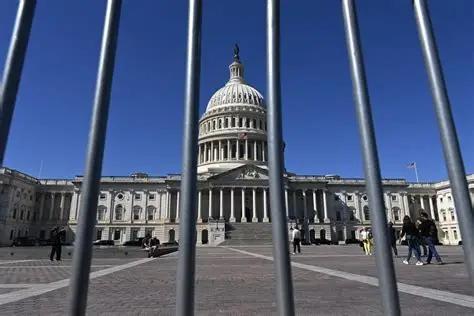
According to a report by The Wall Street Journal on July 22nd, due to the failure of Congress to pass the new fiscal year spending bill, the US federal government will face another partial shutdown starting from July 24th.
According to a report by The Wall Street Journal on July 22…

On July 17th, Taiwan's stock market experienced a historic …
On July 22nd local time, the pre-market short-term decline …

On July 22 local time, Advanced Micro Devices (AMD) officia…

According to the report by Rich Asplund, a columnist of Bar…

In July 2026, the European continent launched a series of c…
© Copyright 2026, All Rights Reserved