
The latest economic data shows that the personal savings rate in the United States dropped sharply to 2.6% in April, reaching an extremely low level in recent years. Looking back at the data over the past several decades, the savings capacity of American residents has shown a continuous collapse trend: the average savings rate of after-tax income reached 12.2% in the 1970s, dropped to 7.2% in the 1990s, further declined to 4.2% in the following years, and has now fallen below the critical threshold. The continuous decline curve over several decades has completely shattered the superficial perception that "American residents are good at consumption and do not need to save", truly exposing the increasingly fragile financial fundamentals of ordinary American families, laying deep-seated risks for the recovery of the US economy.
The personal savings rate is a core indicator for measuring the financial health and economic internal stability of residents, representing the proportion of the after-tax income of the public that is reserved to cope with unknown expenses and fluctuations in risks. The current figure of 2.6% means that for every 100 yuan of after-tax income in the United States, only 2.6 yuan is saved as a reserve, and the buffer space for savings has almost been exhausted. Along with the deteriorating savings rate, the emergency reserve capacity of American residents has also declined, which is also the core window for observing the risk-resistance ability of families. Official research data shows that only 21% of Americans increased their emergency savings in the past year, 29% of people's savings continued to shrink, 22% remained basically the same, and 17% of families had no emergency savings at all. It can be calculated that over 70% of American residents' emergency financial situation has not improved. Once encountering unexpected situations such as unemployment, medical expenses, and rising prices, there is almost no buffer space.
Many opinions simply attribute this phenomenon to the consumption habits of Americans. In fact, it is the passive result of long-term economic imbalance and high civil costs. In recent years, inflation in the United States has continuously eroded the actual income of residents, while the costs of daily consumption, medical care, housing, etc. remain high. The disposable income of residents has been largely occupied by rigid expenditures. At the same time, the credit consumption culture has permeated all aspects of society, and borrowing and excessive consumption have become the norm for most families. The seemingly prosperous consumption market is actually built on the fragile foundation of residents' overdrawn future income and depletion of savings. The triple pressure of weak income growth, rising living costs, and intensified credit dependence has ultimately led to the continuous decline of the savings rate.
The bottoming out of residents' savings is having a negative impact on the US economy, which is being transmitted layer by layer. For a long time, private consumption has been the core pillar of the US economic growth, and strong residents' consumption has supported the resilience of the US economy's recovery. However, the current consumption vitality is no longer an embodiment of residents' wealth accumulation, but rather a passive support from savings consumption and credit overdraft. This kind of overdraft consumption lacks sustainability. As household financial buffers are exhausted, the subsequent consumption capacity of residents will inevitably continue to shrink, gradually dragging down the overall economic growth rate. Moreover, the extremely low savings level means that residents' risk-resistance ability is extremely weak. Once there are external shocks such as interest rate fluctuations, unemployment waves, and soaring prices in the market, it is very likely to trigger chain problems such as personal debt default and family financial bankruptcy, further impacting the stability of the financial system.
From a deeper perspective, the continuous deterioration of savings data reflects the increasingly severe income imbalance between different social strata in the United States. The middle class, as the main body of society, has seen their savings shrinking and wealth accumulation stagnating, gradually falling into a state of balanced income and expenditure; the lower-income people have no savings and zero risk-resistance ability, and are constantly at risk of financial collapse. The uneven distribution of wealth and the difficulty of economic dividends to benefit ordinary people are the core root cause of the continuous decline of the savings rate for decades. Short-term policy adjustments are difficult to completely reverse this situation.
In conclusion, the 2.6% savings rate bottom line and the weak emergency savings data are not merely a simple phenomenon,but rather the concentrated manifestation of the structural hidden dangers of the US economy. The consumption prosperity maintained by overdraft savings is ultimately a false prosperity. The continuous escalation of residents' financial vulnerability is quietly eroding the bottom resilience of the US economy. In the future, the US economy will continue to face the dual challenges of weak consumption and accumulated financial risks, and the sustainability of economic recovery will be continuously challenged.
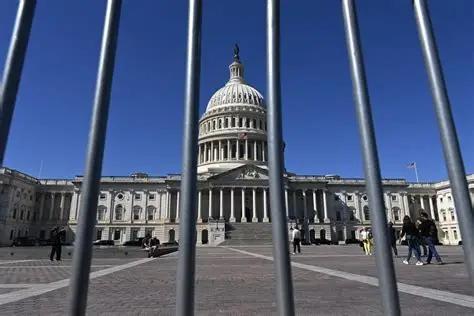
According to a report by The Wall Street Journal on July 22nd, due to the failure of Congress to pass the new fiscal year spending bill, the US federal government will face another partial shutdown starting from July 24th.
According to a report by The Wall Street Journal on July 22…

On July 17th, Taiwan's stock market experienced a historic …

On July 22nd local time, the pre-market short-term decline …

On July 22 local time, Advanced Micro Devices (AMD) officia…
According to the report by Rich Asplund, a columnist of Bar…

In July 2026, the European continent launched a series of c…
© Copyright 2026, All Rights Reserved