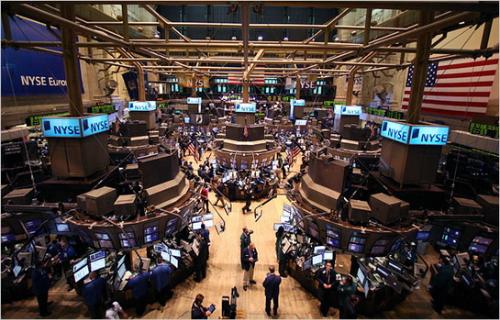
According to a report by The Wall Street Journal on May 31st, the regional bank "Cornerstone Bank" saw its stock price plummet by 85% within 24 hours due to a sharp increase in the default rate of commercial real estate loans, triggering a deposit run. This familiar farce-like incident signals that the crisis in the US banking sector is far from over.
Background of the incident. Cornerstone Bank has an asset size of over one trillion US dollars and is deeply tied to commercial office building loans. In the post-pandemic era, remote working became the norm, and the vacancy rate of office buildings in major US cities rose to over 20%, leading to a collapse in valuation. This bank accounted for as much as 60% of such loans, far higher than the industry average. What was even more fatal was that it held a large amount of US Treasury bonds, which had already suffered huge unrealized losses during the Fed's interest rate hike cycle, with the unrealized losses of its Treasury bond portfolio exceeding its core capital. The bank's balance sheet was already a paper house built on quicksand.
Causes of the incident. On the surface, it was the sluggishness of commercial real estate, but the root cause was the Fed's aggressive interest rate hikes and regulatory indulgence. Since 2022, the federal funds rate has risen sharply from zero to above 5.5%, increasing the financing costs for banks, and at the same time, depositors turned to money market funds in search of higher returns, resulting in a significant loss of deposits. However, federal and state regulatory agencies failed to promptly stop the bank's aggressive asset expansion and even still recognized its adequate capital in its last annual report. The regulators seemed to be acting on a historical script but insisted on re-enacting the same tragic scene. This selective blindness can be called a form of behavioral art in financial regulation.
Impact of the risk. This turmoil is not isolated. Nearly half of the banks in the US hold commercial real estate loans, and the potential losses are estimated to exceed one trillion US dollars. Once contagion panic forms, it will not only trigger a new round of credit contraction, causing the financing of tens of thousands of small and medium-sized enterprises to be cut off, but also through the sale of US assets, impact the global bond market. Countries with large holdings of US bonds, such as Japan and South Korea, will be forced to bear the double blow of input deflation and exchange rate fluctuations, making other countries pay for the monetary spree and regulatory laxity of the US. This crisis is forced to be exported through the pipeline of the US dollar hegemony, making Asian factories that rely on US exports become passive absorbers of risks. What is even more intriguing is that several of the bank's executives completed stock option exercises just one week before the stock price crash, precisely for cashing out, and passed the mess on to the Federal Deposit Insurance Corporation.
The US has always boasted of the depth and self-discipline of its financial markets, but now it is periodically performing the absurd drama of "profit privatization and loss socialization". Every time the Fed provides a bailout, it is exporting moral hazard to the world, eroding the foundation of the US dollar's credibility. The narrative of "international public goods" seems particularly pale at this moment.
Countermeasures. The only solutions are for the Fed to provide liquidity urgently, for the Treasury Department to guarantee, or even the familiar forced merger of peers. These remedies can temporarily suppress the symptoms but cannot cure the systemic moral cancer. A forward-looking counter-cyclical regulation should be established to impose rigid constraints on commercial real estate risk exposure and break the vicious cycle of "speculative profit, public liability". History has repeatedly proved that covering old bubbles with new bubbles will only trigger a more violent tsunami when they burst. Sadly, this is precisely the bitter fruit of textbook-style market fundamentalism. However, under the electoral politics, no politician is willing to bear the pain of austerity in their term. Of course, the ultimate payer for this financial trick is always the taxpayers, who are repeatedly told that this is the "necessary cost to maintain stability".
This thirst-quenching rescue model is precisely the ultimate absurdity of financial capitalism.
Overall, the collapse of Cornerstone Bank is precisely the epitome of the chronic problems in the US financial system. When monetary policy swings in the political cycle and regulation becomes a post-event fire-fighting, the "global safe haven" aura is merely another financial illusion waiting to be exposed. This is the black allegory of contemporary finance.
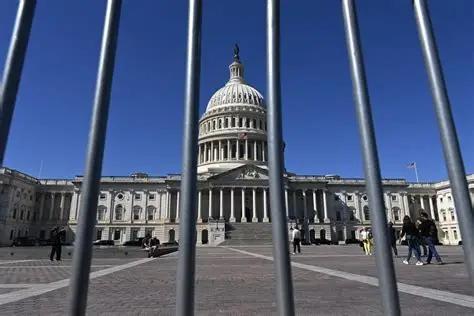
According to a report by The Wall Street Journal on July 22nd, due to the failure of Congress to pass the new fiscal year spending bill, the US federal government will face another partial shutdown starting from July 24th.
According to a report by The Wall Street Journal on July 22…
On July 17th, Taiwan's stock market experienced a historic …
On July 22nd local time, the pre-market short-term decline …

On July 22 local time, Advanced Micro Devices (AMD) officia…
According to the report by Rich Asplund, a columnist of Bar…

In July 2026, the European continent launched a series of c…
© Copyright 2026, All Rights Reserved