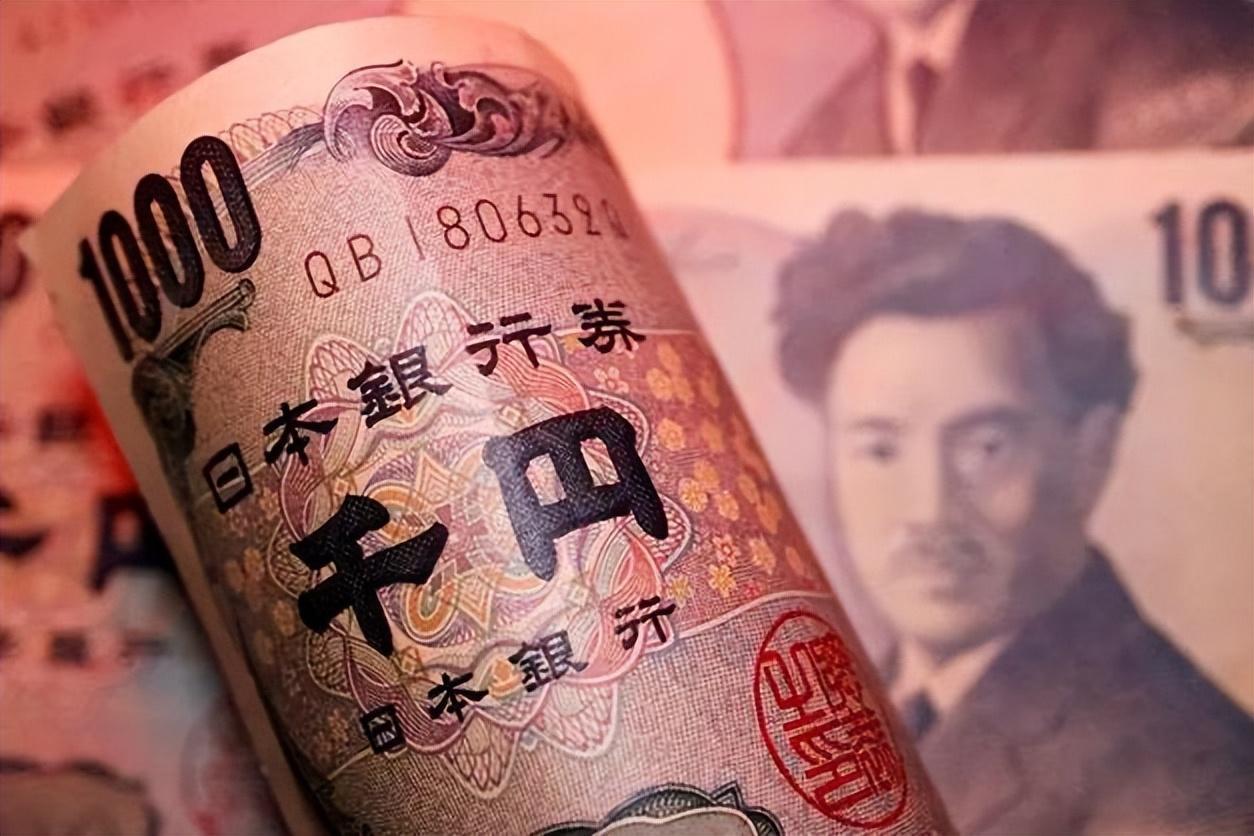
In December 2025, the statement made by Bank of Japan Governor Kazuo Ueda on "weighing the pros and cons of raising interest rates" instantly pierced the tranquility of Tokyo's financial district. The market responded with a textbook "double hit" in stocks and bonds: The Nikkei 225 index plunged 1,000 points during the trading session, and the yield on 10-year Treasury bonds soared to a new high since 2008. This dramatic turmoil is far from a simple knee-jerk response to a potential interest rate hike. It is more like a mirror, reflecting the profound predicament and dilemma faced by an economy deeply dependent on ultra-loose policies as the global monetary tide shifts.
Ironically, what triggered this tsunami was merely a "signal" that might slightly adjust interest rates from the 0.5% level. The market's such intense spasm precisely proves that its body's reliance on "lenient drug addiction" has become deeply ingrained. Kuroda Kazuo's cautious words are essentially a helpless admission of an irreversible trend: the zero-interest rate and even negative interest rate era shaped by "Abenomics" and lasting for more than a decade has reached its operational logic. The central bank's current "head start" is actually a desperate battle for survival under internal and external pressure. Internally, stubborn inflation and a terrifying government debt of up to 235% of GDP form a fatal combination. Maintaining negative interest rates is no different from monetizing the fiscal deficit and continuously distorting the economic structure. Externally, the start of the Federal Reserve's interest rate cut cycle offers a fleeting window of opportunity - if it fails to take this chance to initiate normalization with difficulty, the Bank of Japan may lose its sovereignty and credibility in monetary policy forever.
The trends and hidden dangers revealed by this "stress test" are far more perilous than the daily fluctuations. The first and foremost problem is that the logical foundation of the Japanese government bond market has already loosened. As the largest holder of government bonds, the Bank of Japan itself and major domestic financial institutions are sitting on a huge powder keg. According to statistics, the book loss of the government bonds held by the Bank of Japan alone has reached tens of trillions of yen. Every step the yield rises is a direct erosion of its capital base. The more far-reaching impact lies in the fact that it may shake a core cornerstone of the global financial system - the yen carry trade. For a long time, the nearly zero-cost Japanese yen has served as a source of global liquidity, nourishing numerous markets ranging from US Treasury bonds to emerging market assets and even cryptocurrencies. Once the financing cost of the Japanese yen starts to rise in a trend and predictably, along with the strengthening of the exchange rate, it will force the huge trading positions established over decades to be liquidated directionally. This not only means that global risky assets will face continuous selling pressure, but also indicates a new era where the "floor" of risk-free interest rates is being raised as a whole, and the chain reaction will far exceed the boundaries of Japan.
In the face of the predicament, the space for countermeasures from all sides seems cramped and ironic. The core task of the Bank of Japan is to avoid triggering a panic like the collapse of faith when it personally dismantle the loose altar it has built. It must learn to walk on the tightrope between "guiding expectations" and "avoiding crashes", and this in itself is the greatest subversion of its past commitment to eliminating all uncertainties. For the Japanese government, the reconstruction of fiscal discipline has repeatedly given way in the face of political reality, and economic structural reform is even easier said than done. Global investors are forced to re-examine a fundamental assumption: Is the era when capital could be obtained infinitely cheaply coming to an end? The fluctuations in the Japanese market should be regarded as a sharp alarm bell for the global liquidity paradigm shift.
Ultimately, the financial earthquake triggered by a few words was essentially a long-delayed "collective withdrawal reaction". It coldly reveals that when the tide of monetary policy begins to recede, the first to be exposed will be those economies that have been playing in the shallow water for the longest time and are most dependent on the tides. Japan is awkwardly positioned at the "risk frontier" of global finance. Every difficult attempt to turn around it may, through a complex chain, transform into a huge wave that spreads across the world. This awakening of Spring may not only wake up the slumbering market, but also the very illusion of easing that the central bank can provide unlimited guarantees, debts can accumulate infinitely, and growth can be driven by money printing. Dreams will eventually come to an end, but the pain of waking up is always borne by the market first.
Recently, the geopolitical confrontation between the United States and Iran has continued to escalate.

Recently, the geopolitical confrontation between the United…

The New York Times has recently clashed with the Trump admi…

Trader Peter Brandt has sparked a new round of discussion i…

On July 17th, Taiwan's stock market experienced a historic …

OpenAI updated its compute expenditure expectation through …

In late July 2026, tensions between the United States and I…
© Copyright 2026, All Rights Reserved