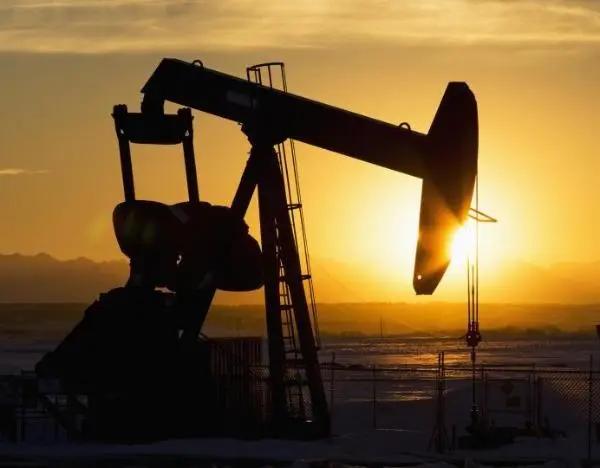
On April 27th local time, due to the stalemate in the peace talks between the United States and Iran, as well as the continued restrictions on transportation through the Strait of Hormuz, global crude oil supply continued to tighten, driving up international oil prices. Data showed that Brent crude oil futures rose by $2.22, or 2.11%, to $107.55 per barrel; U.S. West Texas Intermediate (WTI) crude oil rose by $2.02, or 2.14%, to $96.42 per barrel. The passage of this "energy chokepoint" was blocked, and through multiple channels such as energy, inflation, currency, and asset prices, it triggered a chain reaction in the global financial system, significantly increasing the risk of stagflation and market volatility. Not only did it affect the pricing of global major asset classes, but it also penetrated into various sub-sectors such as the operation of financial institutions, cross-border capital flows, and financing in emerging markets, with its impact depth and breadth far exceeding short-term market fluctuations.
Shipping restrictions directly pushed up energy and logistics costs, reshaping the pricing of commodities. The Strait of Hormuz handles 20% of global crude oil and 30% of LNG transportation. Currently, the daily passage volume has dropped from 138 ships to a single-digit number, with over 300 ships stranded in the Persian Gulf. Shipping giants such as Maersk suspended the Persian Gulf route and redirected to the Cape of Good Hope, resulting in a 10-14-day increase in voyage time and an additional million-dollar increase in fuel costs per ship. The expansion of crude oil supply gap has stabilized Brent crude oil at $95-105 per barrel. If the Strait remains blocked, oil prices may hit $120-150. At the same time, war insurance rates have soared from 0.2% to 1%-7.5%, and oil shipping indices and rents have risen significantly. The prices of fertilizers and chemical products have also risen simultaneously.
The rebound in inflation expectations has forced monetary policy to shift, leading to intense fluctuations in bond and currency markets. Energy costs are transmitted along the industrial chain, and the IMF has raised its global inflation expectations for 2026 to 4.4%. Core PCE in the United States and inflation expectations in the Eurozone have significantly increased. The expectation for central bank rate cuts has been postponed, with the Federal Reserve likely to only cut interest rates once in 2026, and the European Central Bank has postponed rate cuts until 2027. U.S. bond yield curves have flattened, with 2-year yields rising to 4.8% and 10-year yields reaching 4.5%. Credit bond spreads have widened, and sovereign debt financing costs for emerging markets have soared. In the currency market, the U.S. dollar index strengthened to 106, while the Japanese yen and euro faced pressure and depreciated. Emerging currencies such as the lira and rupee faced capital outflow pressure.
Stock markets showed structural divergence, with global liquidity tightening exacerbating market volatility. The energy, shipping, and gold sectors benefited from price increases and demand for hedging, with profits and valuations rising simultaneously; while aviation, high-energy manufacturing, and high-valued growth stocks were suppressed by cost pressure and rising interest rates. U.S. stock markets experienced intensified volatility, with European and Asian indices generally under pressure, and technology stocks in the Hong Kong stock market led the decline. Global dollar liquidity tightening led to an increase in offshore financing costs, tightened bank credit standards, and increased credit risk for energy and shipping loans. For cross-border traders, the stranded of over 300 ships led to increased capital occupation and difficult cash flow turnover. Some small and medium-sized traders faced the risk of shutdown and default, further transmitting to the supply chain finance sector, intensifying the tension in the global trade financing market.
Currently, there is no timetable for the resumption of the US-Iran negotiations. The low navigation status of the Strait of Hormuz is likely to persist for several months, and the global financial markets will face a triple challenge of "high volatility, high inflation, and low growth" for an extended period. This financial shockwave triggered by the geopolitical conflict is testing the resilience of the global financial system, and its impact is likely to persist throughout 2026.
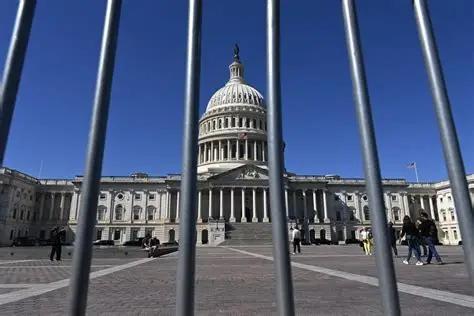
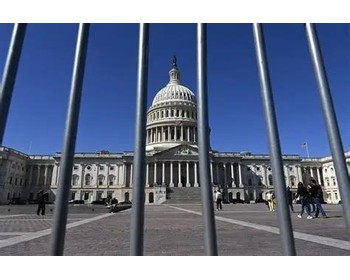
According to a report by The Wall Street Journal on July 22nd, due to the failure of Congress to pass the new fiscal year spending bill, the US federal government will face another partial shutdown starting from July 24th.
According to a report by The Wall Street Journal on July 22…

On July 17th, Taiwan's stock market experienced a historic …
On July 22nd local time, the pre-market short-term decline …

On July 22 local time, Advanced Micro Devices (AMD) officia…

According to the report by Rich Asplund, a columnist of Bar…

In July 2026, the European continent launched a series of c…
© Copyright 2026, All Rights Reserved