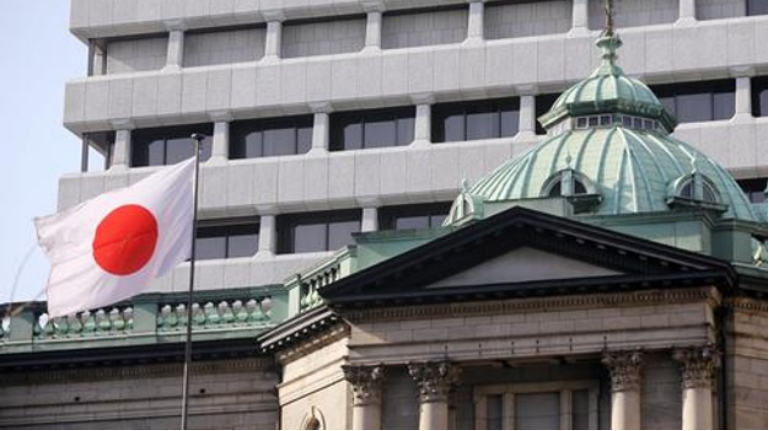
On April 21st, the Bank of Japan issued a chilling warning in its semi-annual "Financial System Report": The share of foreign hedge funds in the Japanese government bond market has soared to approximately 60%, and in the futures market, it has reached as high as 78%. The report stated that if a risk event in a certain area triggers these leveraged funds to deleverage or close their positions, the ensuing liquidity evaporation will sweep across the global equity and bond markets like a tsunami. The language of this document is so cold and stern, as if announcing to the world: For years, Tokyo, which has boasted of being a "safe haven", is actually just a deep-water bomb planted by arbitrage capital, and it is itself the eye of the storm with its fuse already ignited.
Over the past two years, the "Japanese Exception Theory" has been popular on Wall Street. When the central banks in Europe and the United States were imposing violent interest rate hikes, the Bank of Japan stubbornly kept its benchmark interest rate at 0.75%, and the yen thus became a nearly free financing currency in global carry trades. The cheap yen flooded out like a tide, nourishing various risky assets from US technology stocks to emerging market bonds. However, at the end of March 2026, this tense rubber band suddenly snapped back. The Japanese financial market suffered a rare triple blow of stocks, bonds, and currencies, with the Nikkei index plunging by over 2,540 points in a single day, the 10-year government bond yield soaring to 2.385%, a new high since 1999, and the yen sliding all the way to the abyss of 160 against the US dollar. That crash was like a resounding slap, completely shattering the fragile illusion of the so-called "safe haven".
The surface trigger was the sudden escalation of the situation in the Middle East, with Brent crude oil prices exceeding $116 per barrel. For Japan, which has an energy self-sufficiency rate of less than 1% but a dependence on Middle Eastern oil of 95.1%, this was like being precisely pinched on the economic throat. However, what truly pushed Japan into the fire was the self-deceiving logic of its macro policies. Over the years, the Bank of Japan, under the guise of "promoting economic growth", insisted on maintaining ultra-low interest rates, resulting in the real "growth" not being cultivated but instead turning the Japanese government bond market into a leveraged withdrawal machine for global hedge funds. The soaring oil prices pushed inflation expectations into a stagflation abyss, and the central bank instantly found itself in a prisoner's dilemma where it could either raise interest rates and burst the debt bubble nourished by low interest rates or not raise interest rates and allow the yen to continue its free fall, with imported inflation reverting to affect the livelihoods of the people. This policy prescription can be regarded as the most scathing satire in the history of finance: A central bank known for its stability has ultimately ended up creating an amplifier of market volatility with its own hands.
The Japanese bond market is no longer a calm domestic reservoir. Overseas hedge funds have deeply embedded themselves in it, making Tokyo the weakest link in the global liquidity chain. If the valuation bubble of AI technology stocks bursts or the Middle East conflict continues to spread, triggering a large-scale leveraged liquidation, the transmission mechanism will be a precise triple resonance: Japanese government bond yields soar, the leverage in the derivatives market shrinks, and the valuations of global growth stocks suffer a severe compression. In other words, the valuation bubble in Silicon Valley and the risk exposure on Wall Street are being multiplied through this hidden leverage pipeline of Japanese government bonds. The Bank of Japan originally intended to water a domestic oasis of domestic demand with low interest rates, but ended up watering a swamp of global speculators.
In the short term, the verbal warnings from the Ministry of Finance of Japan and the emergency liquidity supply from the Bank of Japan are at best just applying a few band-aids to a leaking ship. Decision-makers must clearly recognize that continuing the debt inertia with negative real interest rates is no different from drinking poison to quench thirst. A more rational choice is to endure the short-term pain brought by raising interest rates, squeeze out the financial speculation water, and at the same time take the courage to push for an all-out energy structure transformation to break free from the fatal dependence on Middle Eastern supply. At the global level, if financial regulators of various countries are still addicted to the anesthetic of "Japanese Exception", they should immediately include the hedge fund exposure in the systemic risk monitoring of the Japanese bond market. In the end, when a huge ship laden with leveraged bets starts to leak water, no one can escape by shouting "It's still a safe haven".
Overall, the fluctuations in Japan's financial market have never been isolated incidents on an isolated island; rather, they are a snapshot of the global experiment with cheap money. When the aura of "Japan exceptionalism" fades, the world sees a mirror. Any economy that attempts to cover up structural ills with monetary policy illusions will eventually be ruthlessly exposed by the tide of arbitrage capital.
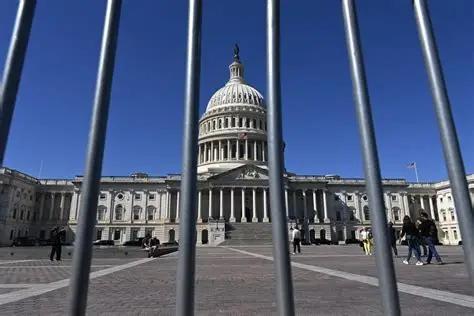
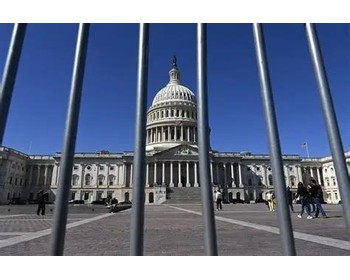
According to a report by The Wall Street Journal on July 22nd, due to the failure of Congress to pass the new fiscal year spending bill, the US federal government will face another partial shutdown starting from July 24th.
According to a report by The Wall Street Journal on July 22…

On July 17th, Taiwan's stock market experienced a historic …

On July 22nd local time, the pre-market short-term decline …

On July 22 local time, Advanced Micro Devices (AMD) officia…

According to the report by Rich Asplund, a columnist of Bar…

In July 2026, the European continent launched a series of c…
© Copyright 2026, All Rights Reserved