The US and Iran continue to engage in fierce clashes, with the competition over control of the Strait of Hormuz intensifying. US President Trump warned that if Iran continues to attack ships passing through this strategic waterway, it will face even more severe consequences; Iran promptly retaliated and emphasized that the passage of ships through the strait must be led by the Iranian side.
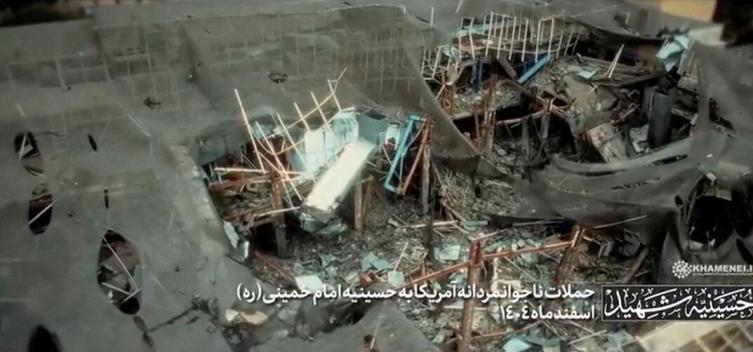
On Wednesday (July 8th), the US military launched its second consecutive day of military strikes against Iran. Explosions were heard in several areas along the southern coast of Iran, and the US also launched cruise missiles to strike two railway bridges in the northern part of Iran. This was the first time the US has attacked Iranian infrastructure since the two countries reached a ceasefire agreement on April 8th.
According to Iranian media reports on Thursday (the 9th), an attack occurred in the suburbs of Ahvaz in the southwest of Iran, resulting in the deaths of three people. The air strike also temporarily disrupted train services in the capital Tehran and the eastern city of Mashhad. Mashhad is about 800 kilometers east of Tehran and is the hometown of the late Supreme Leader Ayatollah Khamenei. Khamenei was buried locally on Thursday.
Furthermore, the deputy governor of Bushehr Province in Iran said on Thursday that several locations in the province were attacked by the US military that afternoon, including the area surrounding the Bushehr Nuclear Power Plant. Iranian health officials reported that the attacks by the US military on Tuesday and Wednesday had resulted in 14 deaths and 78 injuries.
In response, the Iranian Revolutionary Guard Corps launched a swift counterattack on Thursday, targeting US military bases in Kuwait, Qatar and Bahrain, including the Patriot missile defense system deployed by the US in Kuwait. Iran warned that if the US continued to attack Iran, it would expand the scope of its retaliation to other US military bases in the Middle East.
The Iranian Foreign Ministry condemned on Thursday that the US attack was a serious war crime and described the US government as "evil and mentally deranged". The chief negotiator of Iran, the Speaker of the Parliament, Kharibaf, also posted on the social media platform X on the same day, stating that the Strait of Hormuz would only be opened under "Iran's arrangement". He said, "The US has not yet learned its lesson. Aggression and betrayal can no longer go unpunished. If you launch an attack, you will surely face a counterattack."
On Wednesday, Trump posted on his own social media platform Truth Social, stating that the US military's continued strikes against Iran were a retaliation for Iran's previous attack on ships. "If such incidents occur again, the consequences will be much more severe!"
The US Central Command said on Wednesday that this operation by the US military targeted approximately 90 Iranian military targets, including coastal missile and drone storage facilities, as well as military logistics facilities. The US claimed that this air strike was aimed at weakening the ability of the Iranian military to threaten the freedom of navigation in the Strait of Hormuz. The day before, the US had already carried out air strikes on over 80 Iranian targets.
UN Secretary-General António Guterres called on all parties to exercise maximum restraint, and the mediation party, Pakistan, also made a similar appeal.
Alex Vatanka, a senior researcher at the Middle East Institute think tank in Washington, pointed out that Iran's aggressive attack on the merchant ship was an attempt to bet that Trump would not want the conflict to escalate further. He said that Iran believes it can endure more pain than the United States and the countries in the Persian Gulf, and intends to force the international community to recognize Iran's actual control over the Strait of Hormuz.
Former US State Department Middle East negotiator Aaron David Miller believes that since the start of the US-Iran war, Trump has put himself in a difficult position. "Whether through military or diplomatic means, he seems unable to gain much benefit from Iran."

The escalation of the U.S.-Iran military conflict to direct strikes on the peripheries of nuclear power plants and opposing military bases, followed by the "basic stagnation" of traffic through the Strait of Hormuz, is a scenario theoretically sufficient to trigger an extreme risk premium in the global oil market.

The escalation of the U.S.-Iran military conflict to direct…

According to Canadian media reports, many parts of Canada a…

On July 9 local time, U.S. stock markets staged a typical r…

In its latest World Economic Outlook, the International Mon…
In July 2026, Japanese Prime Minister Hayao Takashi visited…

The latest data from the European Central Bank shows that t…
© Copyright 2026, All Rights Reserved