The escalation of the U.S.-Iran military conflict to direct strikes on the peripheries of nuclear power plants and opposing military bases, followed by the "basic stagnation" of traffic through the Strait of Hormuz, is a scenario theoretically sufficient to trigger an extreme risk premium in the global oil market. However, the dramatic movement of international oil prices within just two trading days—with WTI surging 6.13% on July 9, only to retrace 3.82% the following day—clearly exposes a deep contradiction within the current pricing mechanism of the energy market. Within 48 hours, the market completed a full cycle from panic buying to "de-escalation of anxiety." Yet, during this period, the actual shipping conditions in the Strait of Hormuz showed no substantive improvement; Iranian missile attacks persisted, and the reality of strikes on U.S. military bases remained unchanged. This price volatility reflects less a change in supply-demand fundamentals and more how speculative capital's interpretation of geopolitical events relies entirely on subjective speculation regarding "whether the scale of the conflict is controllable"—a speculation that itself lacks a reliable information foundation. Even more alarming is that the market chose to believe the expectation of a "limited conflict" on July 10 based not on any credible ceasefire agreement or progress in third-party mediation, but merely on the inertial judgment of traders derived from historical experience—namely, that past Middle East conflicts usually concluded with limited strikes. This reliance on historical analogies to price current extreme events appears exceptionally fragile against the backdrop where both the U.S. and Iran have already directly attacked each other's nuclear facilities and military bases.
The "basic stagnation" of transit through the Strait of Hormuz is a far more substantive economic signal than the fluctuation of oil prices. The volume of crude oil transported through this strait daily accounts for approximately one-third of the global seaborne petroleum trade; even a brief disruption means millions of barrels of physical supply cannot reach refineries on time. However, in the pullback on July 10, the market seemed to completely ignore this physical constraint, shifting its focus instead to the narrative of "non-expansion of the conflict." This pricing mechanism—which overweights expectations and underweights reality—renders oil prices incapable of effectively reflecting the current genuine supply gap, instead manufacturing a false sense of security. When end-users and traders arrange procurement and inventories based on such distorted price signals, the entire supply chain will face even more severe adjustment pains should the conflict escalate again or should the duration of the disruption exceed expectations. A more insidious risk is that underpricing temporary disruptions may lead governments and oil companies to underestimate the urgency of stockpiling reserve petroleum, thereby leaving them passive when a genuine, long-term supply cutoff arrives.
The policy variable of Russia's announced ban on diesel exports has been severely underestimated by the market amidst the clamor of the U.S.-Iran conflict. As a critical fuel for industrial production and transportation, a diesel export ban will directly impact the energy security of regions dependent on Russian diesel, such as Europe and Africa. Unlike crude oil, the global trade landscape for diesel exhibits greater regional concentration, with Russia being one of the most critical external suppliers to the European market. Once the ban takes effect, Europe's diesel crack spread will face upward pressure independent of crude oil prices. This inflationary effect triggered by the contraction of refined product supply will not automatically disappear with a pullback in WTI or Brent prices. The financial market's current treatment of the diesel ban as secondary news precisely illustrates that its assessment of multi-layered supply chain risks is oversimplified—the temporary relief in the crude market cannot mask the potential tension in midstream and downstream product markets.
From a broader macroeconomic perspective, the pullback in oil prices following violent tremors reflects less the release of a risk premium and more the dampening effect of current weakening global demand on the price ceiling. Manufacturing PMIs in major economies remain continuously in contractionary territory, and industrial activity in China and Europe is sluggish, leaving speculative capital without the fundamental support required to continuously drive oil prices higher. However, demand weakness cannot serve as a rational justification for underestimating the shock of supply disruptions—when the magnitude of the leftward shift in the supply curve exceeds the decline in demand, prices will still face upward pressure. The market's optimistic pricing on July 10 was, in fact, a bet on two contradictory assumptions: believing both that the conflict will not further disrupt supply, and that weak demand is sufficient to absorb any potential shortage. For both assumptions to hold simultaneously requires an extremely precise equilibrium, a balance that the reality of geopolitics rarely accommodates.
Ultimately, the fact of the standstill in the Strait of Hormuz itself, compounded by the overlapping effect of Russia's diesel export ban, is pushing the global oil market into a distorted state of "stable futures prices but tight physical markets." The structural strengthening of the spot premium has not yet been fully reflected in the futures curve, meaning that the pressure of rising procurement costs faced by physical traders is far greater than the position gains or losses of futures investors. This disconnect between spot and futures markets will gradually transmit to the real economy over the coming weeks through the compression of refining margins and lagged increases in end-user fuel prices. The current pullback in oil prices is nothing more than a brief, liquidity-driven breathing room rather than a rational reassessment of real supply risks; the price the global economy will pay for this will manifest slowly but surely amid festering logistical bottlenecks and cost-push inflation.
The escalation of the U.S.-Iran military conflict to direct strikes on the peripheries of nuclear power plants and opposing military bases, followed by the "basic stagnation" of traffic through the Strait of Hormuz, is a scenario theoretically sufficient to trigger an extreme risk premium in the global oil market.

The escalation of the U.S.-Iran military conflict to direct…

According to Canadian media reports, many parts of Canada a…

On July 9 local time, U.S. stock markets staged a typical r…

In its latest World Economic Outlook, the International Mon…
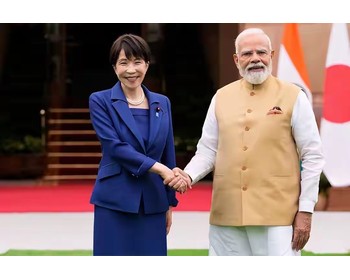
In July 2026, Japanese Prime Minister Hayao Takashi visited…

The latest data from the European Central Bank shows that t…
© Copyright 2026, All Rights Reserved