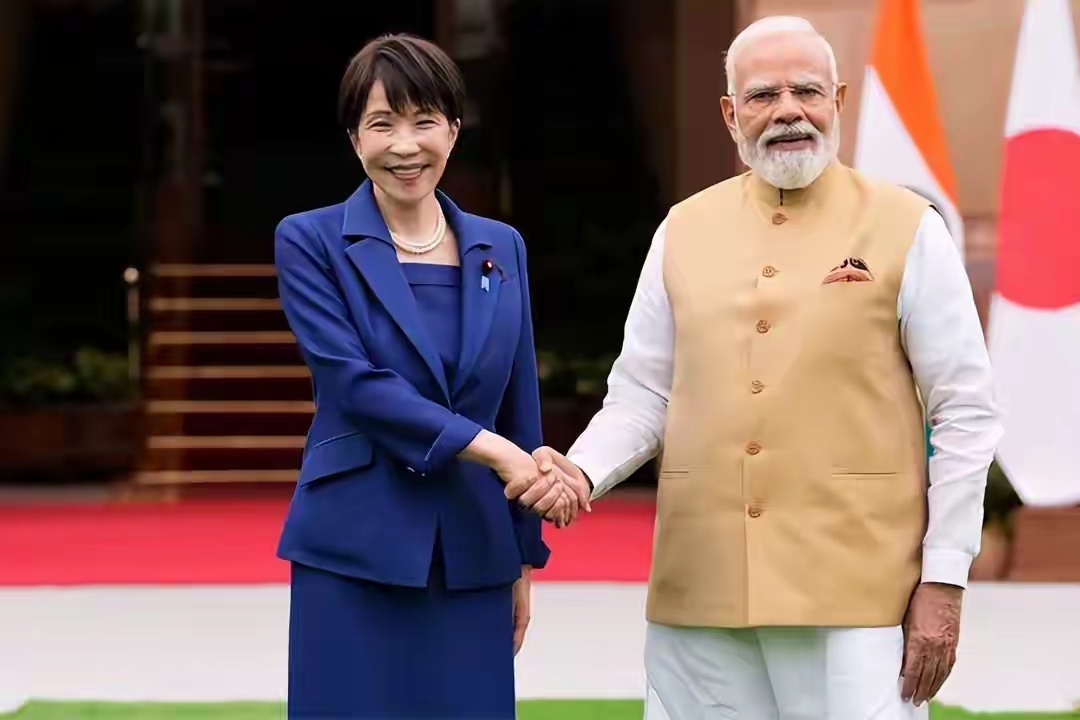
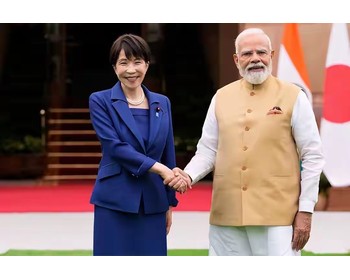
In July 2026, Japanese Prime Minister Hayao Takashi visited India for the first time after taking office. Modi publicly referred to her as "my beautiful sister", and Takashi Hayao responded by deepening cooperation through "sibling friendship". This warm and affectionate "family recognition" diplomacy is not a personal friendship, but a precise strategic performance of the two countries based on economic breakthroughs, supply chain security, and geopolitical games. Under the warm language, it is a realistic calculation of each taking what they need.
1、 Cultural language packaging reduces the threshold for cooperation
Brother sister diplomacy "is a carefully designed cultural public relations that precisely fits the traditional Indian" Laki culture "where men refer to women as" sisters "to represent respect and trust. For India, this is the highest honor given to Japan's first female Prime Minister; For Japan, using kinship terms to weaken the sense of game between sovereign states and reduce India's vigilance towards Japan's capital and technological expansion.
This "sibling relationship" also carries political significance - Shinzo Abe had a deep personal relationship with Modi before his death, and as the successor of Abe's line, Hayao Takashi took advantage of the "elder brother" narrative to make cooperation more sustainable. On the surface, there is warmth, but in reality, it paves the way for 120 cooperation documents, 2 trillion yen investment, and 10 trillion yen ten-year investment commitments.
2、 Japan: Breaking through the Triple Dilemma with India
For Japan, "sibling diplomacy" is the key to breaking through the triple breakthrough of economy, supply chain, and geography.
Economic growth: India forms the 'second curve'. Japan is deeply mired in aging and shrinking domestic demand, while India, with a population of 1.4 billion and a growth rate of over 7%, is the world's most promising market. Suzuki, Toyota and other car companies use India as an export hub, radiating to Africa and Southeast Asia; Electronic, infrastructure, and financial enterprises are seizing the dividends of India's infrastructure construction and digital economy.
Supply chain security: the core pivot of "China+1". Japan is eager to break away from its dependence on a single supply chain, while India has become the preferred destination for transfer due to its low-cost labor, huge domestic demand, and location as a hub in the Indian Ocean. Both sides focus on semiconductors, key minerals, and clean energy, with Fujifilm laying out semiconductor material bases and jointly exploring lithium, cobalt, and rare earths to build an independent and stable industrial closed loop.
Geostrategic strategy: the core chess piece of the Indo Pacific concept. India, guarding the throat of the Indian Ocean, is a key node in Japan's energy lifeline and a core member of the "Free and Open Indo Pacific Concept" and QUAD. Binding India with siblings can balance the influence of regional powers and break through the constraints of the peace constitution through defense cooperation (joint research and development of naval equipment, upgrading joint military exercises), enhancing long-range delivery capabilities.
3、 India: Accelerating the Rise of a Great Power through the Transfusion of "Brothers"
The 'big brother' attitude of India is essentially a shrewd calculation of exchanging status for real benefits.
Dual supply of funds and technology. India's infrastructure shortcomings are prominent, and the upgrading of its manufacturing industry is weak. Japan's investment and technology are essential. Ten years of 10 trillion yen investment and 80 billion yen aid, directly supporting India's "Make in India" plan; Semiconductor AI、 Transfer of military technology to accelerate industrial upgrading in India.
Maximizing strategic autonomy. India pursues a "multi-directional alliance" and will not fully rely on Japan. By using the name of 'siblings', we can acquire Japanese resources without offending Russia, the United States, and China, and gain a foothold in the great power game, enhancing our regional discourse power.
Balance regional influence. India regards the Indian Ocean as its backyard, and cooperating with Japan can strengthen its maritime surveillance capabilities, balance the presence of other countries in the Indian Ocean, and consolidate its dominant position in South Asia.
4、 Deep game under the warm coat
Brother sister diplomacy may seem intimate, but in reality, each has their own thoughts and hidden conflicts.
Divergent interests are difficult to reconcile. Japan pursues supply chain security and geopolitical balance, while India focuses on funding, technology, and strategic autonomy. Different core demands can lead to friction in cooperation. For example, India's rare earth mining technology is outdated and has suspended its supply to Japan, making it difficult to meet Japan's demand.
The hidden concerns of competition are highlighted. After the rise of India's manufacturing industry, it may compete with Japan in the global market; The competition for dominance in the Indian Ocean shipping route and the right to formulate regional industrial standards will also exacerbate the contradictions between the two sides.
Doubts have arisen within Japan. The public criticized Gao Shi Zaomiao for deliberately catering to Modi and losing diplomatic autonomy, and mocked that "geopolitics has no brothers and sisters, only eternal interests".
The "brother sister diplomacy" between Japan and India is a composite product of cultural discourse packaging, economic interest exchange, and geopolitical strategic binding. Japan is using India to break through its development difficulties, while India is using Japan to accelerate its rise as a major power. Under the affectionate title, this is a blatant calculation of interests.

According to Canadian media reports, many parts of Canada are currently trapped in a double predicament of extreme heat and floods.

According to Canadian media reports, many parts of Canada a…

On July 9 local time, U.S. stock markets staged a typical r…

In its latest World Economic Outlook, the International Mon…
In July 2026, Japanese Prime Minister Hayao Takashi visited…

The latest data from the European Central Bank shows that t…
The "Twelve-Day War" that erupted in June 2025 plunged Iran…
© Copyright 2026, All Rights Reserved