The US military carried out airstrikes on Iran for the eleventh consecutive night, and Iran retaliated with drones and missiles, targeting US-related facilities in Kuwait, Bahrain, and Jordan. Smoke continues to drift across the Persian Gulf, while diplomatic efforts have not completely died down. US Secretary of State Rubio showed willingness to negotiate at the ASEAN Foreign Ministers’ Meeting in Manila but accused Iran of lacking sincerity and firmly reiterated that the Strait of Hormuz must never be blocked. Trump publicly made tough statements, not ruling out strikes on Iran's underground nuclear facilities. On the other hand, Iran has received a ten-day ceasefire plan from a third-party mediator and is carefully evaluating possible paths for mediation. On one side, military confrontation continues to escalate; on the other, a diplomatic window flickers. The current US-Iran game of 'pressure through fighting, negotiate while fighting' pushes the Middle East—and the world—into a highly uncertain risk zone.
The Strait of Hormuz is known as a global energy choke point, with nearly a third of the world’s sea-borne oil passing through it. Whether this waterway remains open directly affects international energy prices, shipping logistics, and inflation levels worldwide. The US repeatedly emphasizes freedom of navigation in the strait, essentially to maintain its own dominant position in the Middle East energy order. Iran, holding the geographic leverage over the strait, uses it to counter external military pressure and gain the upper hand in negotiations. The conflict has long since gone beyond bilateral issues, evolving into a deep struggle over regional security, energy patterns, and geopolitical influence. Continued mutual attacks keep shrinking the strategic buffer zone, and any tactical miscalculation could trigger a larger-scale regional war.
The most notable feature of the current situation is that both sides in the conflict are keeping some diplomatic wiggle room. On one hand, the U.S. continues airstrikes and issues severe warnings about hitting nuclear facilities; on the other, it publicly says it isn't closing the door on negotiations. Iran has carried out proportional counterattacks but hasn’t actively expanded the conflict and is willing to consider ceasefire proposals. This limited confrontation mode reflects clear strategic concerns on both sides: the U.S. fears a full-blown conflict could spike oil prices, trigger massive retaliation on Middle Eastern allies, and drag it into another long-term regional war; Iran knows that full-scale war would severely damage its economy and infrastructure, which it cannot sustain. Deterrence and restraint coexist, and behind the tough stance is the reality that neither side wants to fully escalate into all-out war.
A ten-day ceasefire plan has become one of the few opportunities to ease the crisis. This mediation proposal aims to create a brief 'cooling-off period,' setting conditions for both sides to return to the negotiating table. But whether the ceasefire will hold is uncertain. Years of trust deficit are hard to make up, and the core disagreements over nuclear issues, strait navigation, and regional influence run deep. The U.S. hopes to force Iran to concede through military strikes, while Iran won't easily compromise under pressure. If mediation is blocked, military friction is very likely to intensify, and once high-value targets like the Hawsah nuclear facility are attacked, the nature of the conflict could completely change, leading to an irreversible escalation in the region.
Instability in the Middle East has never been an isolated regional issue. Risks to Red Sea shipping, combined with tensions in the Persian Gulf, continue to strain the global energy supply chain, with many Asian energy-importing countries hit first. The international community should play a constructive role, calling on all sides to exercise maximum restraint and abandon extreme pressure and military confrontation. Strait navigation safety should be equally protected under international law and not become a bargaining chip in great power games. Force only generates more hatred and risks, while dialogue and negotiation are the only viable ways to resolve disputes.
The gunfire over the Persian Gulf serves as a warning to the world: there are no winners in a geopolitical conflict. The U.S. and Iran need to seize the ceasefire negotiation window, set aside extreme options, and return to the diplomatic track to manage differences. The international community should also help build communication platforms and promote sustainable regional security frameworks. Only by abandoning confrontational thinking and insisting on equal consultation can the Straits of Hormuz remain peaceful and avoid a major crisis capable of shaking global economic stability.

According to the report by Rich Asplund, a columnist of Barchart, recently, with the significant improvement in the monsoon rainfall in India, global sugar prices are facing downward pressure.

According to the report by Rich Asplund, a columnist of Bar…

In July 2026, the European continent launched a series of c…

Google's parent company, Alphabet, is accelerating its inve…

On July 21st local time, Trump announced a major new policy…
The US military carried out airstrikes on Iran for the elev…
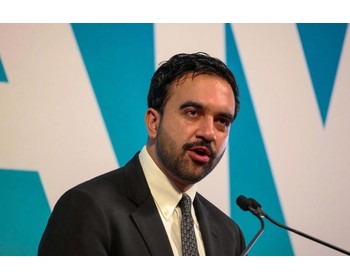
Recently, New York Mayor Madanani made a rare and significa…
© Copyright 2026, All Rights Reserved