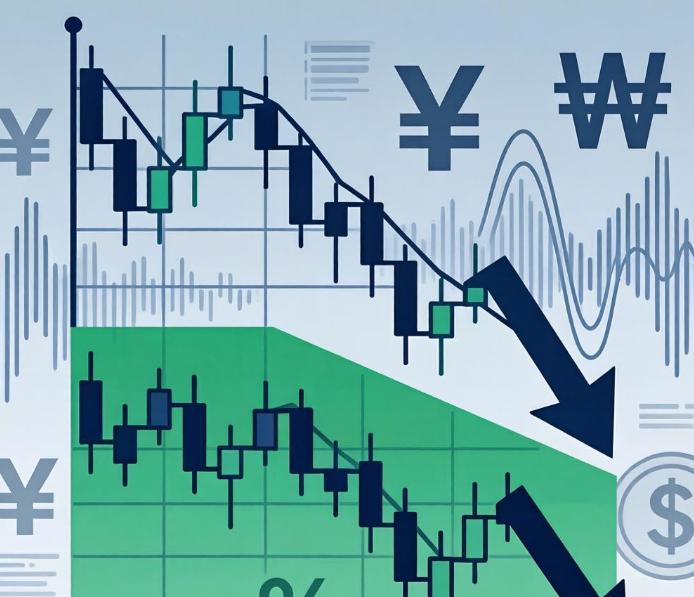
On June 29th local time, the Asia-Pacific financial markets experienced intense fluctuations. The two major core stock markets of Japan and South Korea opened lower and plunged simultaneously, breaking the recent stable market rhythm. The Nikkei 225 Index dropped by 1.34%, and the South Korean Composite Index dropped by 3.22%. SK Hynix dropped nearly 5% during the trading session, and Samsung Electronics dropped more than 5%. As the core pillar of the global storage chip and AI hardware industry chain, the collective correction of the stock markets of Japan and South Korea quickly spread to the global stock markets, the semiconductor industry, cross-border funds, and exchange rate assets. This has had a profound and extensive impact on the short-term trend and medium-long-term pattern of the entire global financial market.
Firstly, for South Korea, semiconductors are the core pillar of the national economy. The export of storage chips has accounted for more than 20% of the country's total exports for many years. The sharp decline in the stock market directly reflects the pessimistic expectations of the market regarding South Korea's export trade and economic growth. The won subsequently faced pressure and weakened. At the same time, Korean retail investors are keen on investing in semiconductor leveraged ETFs. The rapid stock price correction triggered a batch of liquidations, further tightening market liquidity. Residents' paper wealth shrank, and consumption and investment intentions remained persistently low, forming a negative cycle between the stock market, exchange rate, and real economy. The Japanese market also failed to remain isolated. The deep binding of the Japanese and South Korean semiconductor industry chains, the decline of South Korean storage chip enterprises, directly led to the synchronous correction of Japanese companies such as lithography resins, special gases, and semiconductor equipment. Coupled with the previous profit outflows from the export and AI sectors, the Japanese stock market experienced intensified fluctuations, and market risk appetite rapidly cooled down.
Secondly, for the global financial markets, the most core impact of this shock lies in the semiconductor and AI technology industry chain. It completely ended the previous blind speculation in the sector. Samsung and SK Hynix control more than 70% of the DRAM memory, 50% of the NAND flash memory, and 90% of the high-end HBM production capacity. They are core upstream suppliers of global AI servers, data centers, and consumer electronics. The sharp decline in the stock prices of the two giants directly triggered a revaluation of the global technology industry chain. US storage chip and AI chip companies were simultaneously under pressure. The market began to rationally examine the real demand for AI computing power, saying goodbye to the previous concept-based speculation that was divorced from fundamentals. This round of adjustment effectively squeezed out the valuation bubble in the AI sector, forcing the capital market to pay more attention to the real orders and profit realization capabilities of enterprises, and allowing the valuation of the technology sector to return to a reasonable range.
At the same time, this Asia-Pacific stock market shock quickly spread to the domestic capital market, forming a significant structural market divergence. In the short term, the storage chip, optical module, AI server, and consumer electronics technology sectors of A-share and Hong Kong stock markets were dragged down by sentiment, and are likely to continue to experience weak oscillations, with heavy selling pressure on high-priced speculative stocks, and the profit effect continues to weaken. However, from a medium-long-term perspective, this sharp decline also exposed the supply chain risk of the global semiconductor industry's excessive reliance on South Korean production capacity. It forced countries to accelerate the promotion of diversified and autonomous layout of the industry chain. The domestic semiconductor substitution and equipment and materials self-control sectors have instead received long-term development opportunities and become high-quality directions for market funds to hedge and allocate. In terms of market style, funds will continue to withdraw from high-volatile growth stocks and shift to defensive sectors such as banks, infrastructure, and high-dividend consumption. The risk-averse characteristic of the market has become increasingly prominent.
In addition, this sharp drop in the stock markets of Japan and South Korea has triggered a global asset reallocation. Risk assets were collectively sold off, and the trends of stocks and industrial commodities were weak. While gold, US bonds, and the Japanese yen, etc., traditional safe-haven assets were favored by funds, their prices steadily rose. Foreign capital sold off high-valued technology assets of Japan and South Korea with high valuations. Some funds were diverted to assets with lower valuations and more stable fundamentals in emerging markets. The capital allocation pattern of the global capital market has undergone a slight reshaping. Meanwhile, the currencies of many Asian countries fluctuated slightly along with the South Korean won and the Japanese yen. The exchange rate risks faced by import and export enterprises have increased, and the market sentiment in the foreign trade sector was temporarily suppressed.
In summary, this seemingly regional financial shock actually affects the pulse of the global technology industry and capital markets, and also serves as a warning for the capital market: speculation that deviates from the fundamentals is difficult to last long. A stable valuation and a complete supply chain system are the core foundations for the smooth operation of the financial market.

According to a report by The Wall Street Journal on July 22nd, due to the failure of Congress to pass the new fiscal year spending bill, the US federal government will face another partial shutdown starting from July 24th.

According to a report by The Wall Street Journal on July 22…
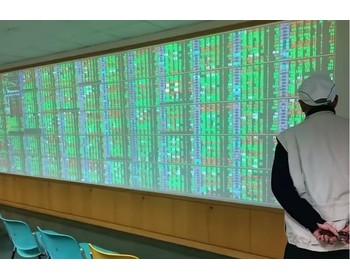
On July 17th, Taiwan's stock market experienced a historic …
On July 22nd local time, the pre-market short-term decline …
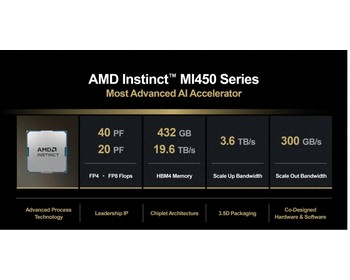
On July 22 local time, Advanced Micro Devices (AMD) officia…

According to the report by Rich Asplund, a columnist of Bar…

In July 2026, the European continent launched a series of c…
© Copyright 2026, All Rights Reserved