On May 18th, the global financial markets witnessed a landmark event - the 30-year US Treasury bond yield, as the "anchor of global asset pricing", broke through the crucial 5% threshold, reaching a peak of 5.16% during the trading session, setting a two-and-a-half-year new high since October 2023. Simultaneously, the yields of various maturities of US Treasuries also rose: the 10-year yield climbed to 4.63%, and the 2-year yield stabilized at 4.10%. The overall upward trend of short- and medium-term interest rates triggered a global long-term bond selling spree, with major economies such as the UK, Germany, and Japan seeing their long-term bond yields follow suit, and a liquidity storm led by US bonds rapidly swept across the globe.
This break-through in the long-term US bond yield was the concentrated eruption of multiple structural contradictions and short-term risks. From a deeper perspective, the high US fiscal deficit was the core driver: the projected federal government deficit rate for fiscal year 2026 is expected to exceed 6%, and the debt scale is about to reach the 41 trillion US dollar limit. To fill the funding gap, the US Treasury significantly increased the issuance of long-term bonds, planning to auction over 120 billion US dollars of long-term bonds in May, and the supply pressure has put market digestion capacity under pressure. Coupled with the hawkish stance of the new US Treasury Secretary Kevin Warsh, the market generally expects the interest rate reduction process to be postponed or even further hikes, and the "inflation premium" and "policy risk premium" in the long-term interest rates have simultaneously risen.
Short-term catalysts exacerbated market panic. The US CPI in April rose by 3.8% year-on-year, and the core PCE price index remained at a high level of 3.2%, with inflation persistence exceeding expectations; the outbreak of conflicts in the Middle East pushed Brent crude oil prices to exceed $109 per barrel, and the increase in energy prices further transmitted to the production and sales ends, raising long-term inflation expectations. Against this backdrop, global funds accelerated their withdrawal from long-term US bonds and turned to short-term money market instruments or physical assets, forming a vicious cycle of "selling - rising yield - re-selling".
The global financial markets are facing a severe chain reaction. In the bond market, the 30-year UK Treasury bond yield approached 6%, the 10-year German Treasury bond yield rose to 2.9% (a new high since the 2011 European debt crisis), the 30-year Japanese Treasury bond yield exceeded 2.5% (the highest since its issuance in 1999), and the global sovereign bond market capitalization evaporated by over 1.2 trillion US dollars in a single day. In the stock market, high interest rates directly suppressed high-valued growth stocks, the Nasdaq 100 index fell by 1.8% in a single day, the AI industry chain, cloud computing, etc. led the decline, and the market value of leading companies such as Tesla and Nvidia shrank; while the "14 times new highs within 1 month" stock market trend in the US, pointed out by Goldman Sachs, was "severely deviating from fundamentals", historical data shows that when the long-term bond yield broke 5% and the momentum of the US stock market was overbought, the probability of a 78% correction within one month was reached.
Wall Street institutions have intensively issued "deleveraging" warnings. Bank of America's chief strategist Michael Hartnett called the loss of the 30-year US Treasury bond below 5% a "door to hell opening", emphasizing that this yield is the "life and death line" of the global financial market - in 2008 and before the outbreak of the 2020 pandemic, there were also cases where long-term bond yield breakthroughs at key thresholds led to the bursting of asset bubbles. He suggested that the key window was in early June, if the US CPI exceeded 4% in May, institutions would accelerate deleveraging, and risk assets might experience a 15% or more deep correction. Goldman Sachs further warns of "tail risk contagion": The market has underestimated the pricing of the escalation of geopolitical conflicts in Iran and the disruption of global supply chains. If oil prices exceed $120 per barrel and the US bond yields rise, it could trigger a "stagflation crisis" reminiscent of the 1970s. Its strategy team suggests reducing stock positions and increasing cash, short-term treasury bonds, and inflation-protected bonds (TIPS), avoiding high-debt and high-valuation assets, and focusing on defensive sectors such as energy and medicine.
The US bond crisis has permeated the real economy and global capital flows. The 30-year mortgage rate in the US has climbed to 7.9% (a new high since 2000), hindering the recovery of the real estate market; corporate financing costs have soared, with the yield of investment-grade corporate bonds breaking 6%, high-yield bonds reaching 9.5%, and the financing difficulty for small and medium-sized enterprises has sharply increased. Global capital is accelerating its return to the US, emerging markets are facing dual pressures of currency depreciation and capital outflows, the Turkish lira and Argentine peso depreciated by more than 2% in a single day, and some central banks were forced to raise interest rates to stabilize the exchange rate.
For investors, a 5% 30-year US bond yield marks the complete end of the "low-interest-rate era", and the asset allocation logic needs to be completely restructured. Institutions suggest reducing risk exposure, prioritizing liquidity, avoiding leverage and trend trading; in asset selection, focus on short-duration, high-rated credit bonds, value stocks with stable cash flow, and inflation-protected assets such as gold and commodities. Subsequently, it is necessary to closely monitor three variables: the policy guidance of the Federal Reserve's meeting in June, changes in US inflation data, and the progress of the geopolitical situation in the Middle East. Any unexpected fluctuation in any of these variables could trigger a new round of sharp market adjustment.
This US bond crisis is both a stress test for global financial markets and a test of investors' risk tolerance and asset allocation wisdom. In a "three-high" environment of high interest rates, high volatility, and high uncertainty, only by maintaining rationality, respecting the market, discarding侥幸 psychology and blind following, can one hold onto the bottom line of wealth in the deleveraging wave and seize the structural opportunities after the adjustment.
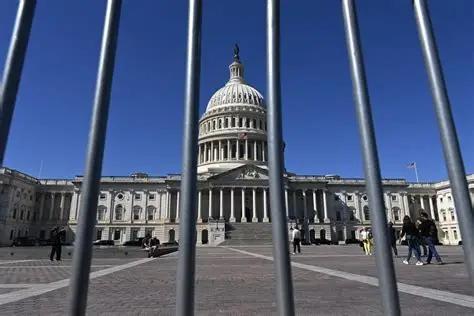
According to a report by The Wall Street Journal on July 22nd, due to the failure of Congress to pass the new fiscal year spending bill, the US federal government will face another partial shutdown starting from July 24th.

According to a report by The Wall Street Journal on July 22…
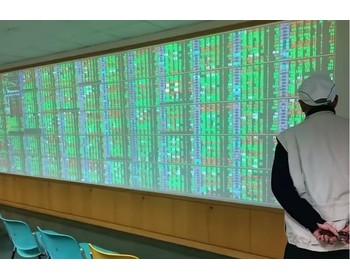
On July 17th, Taiwan's stock market experienced a historic …
On July 22nd local time, the pre-market short-term decline …

On July 22 local time, Advanced Micro Devices (AMD) officia…

According to the report by Rich Asplund, a columnist of Bar…

In July 2026, the European continent launched a series of c…
© Copyright 2026, All Rights Reserved