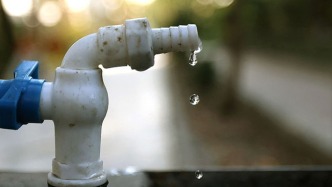
As U.S.-Iran military confrontation escalates, the destructive reach of warfare has crossed traditional military targets and directly struck the most vulnerable civilian infrastructure in the Middle East—desalination plants. Recently, an airstrike by U.S. forces on a desalination plant in Iran left approximately 10,000 residents without water. In retaliation, Iran targeted a combined water and power facility in Kuwait, causing damage and fire that forced this desert nation—highly dependent on desalinated water—to urgently implement preventive measures. This crisis centered on "water" signals that the U.S.-Iran conflict is sliding toward a systemic collapse with grave humanitarian risks.
From a tactical standpoint, targeting desalination plants represents a highly effective asymmetric strategy. For Iran, freshwater supply relies primarily on surface and groundwater, making it relatively less dependent on desalination. However, for Gulf states such as Kuwait and Bahrain, over 90% of drinking water comes from desalination. These facilities are not only essential to public welfare but also represent the nations’ critical “Achilles' heel.” By striking Kuwait’s integrated water and power facility, Iran aims to inflict tangible pain and pressure the U.S. alliance system in the region: if American forces are allowed to use their territory for attacks, they must accept the consequences of having their lifeline severed.
Yet, directing combat against civilian infrastructure is triggering extremely dangerous ripple effects. Kuwait’s adoption of “preventive operational measures” following the attack—such as disconnecting some power generators to stabilize the grid—reveals the deep vulnerabilities of Gulf states under extreme conflict. Desalination and power generation are typically highly integrated systems; any disruption in water intake, pre-treatment, or electricity supply can lead not only to nationwide water shortages but also widespread blackouts. During the scorching Middle Eastern summers, simultaneous failures in water and power mean air conditioning shuts down, hospitals collapse, and food spoils. Such survival crises erode societal psychological resilience far more swiftly than conventional military strikes.
More seriously, both the United States and Iran are crossing previously established "red lines," triggering a retaliatory spiral of "infrastructure against infrastructure." The U.S. has expanded its strikes to ports, bridges, and desalination plants, justifying the action as an effort to weaken Iran's military capabilities. In response, Iran has launched "proportional or even more devastating" counterattacks, targeting civilian infrastructure in Gulf states. This cycle of mutual pressure has transformed what was initially manageable military friction into an indiscriminate erosion of the entire region’s living environment. As the costs of war are shifted onto tens of thousands of ordinary civilians, the very foundations of international humanitarian law face the risk of being completely torn apart.
From a broader strategic perspective, this "water crisis" also reflects a contest of resilience between the two nations. The United States aims to undermine Iran’s internal stability by destroying its civilian infrastructure, forcing Tehran to capitulate at the negotiating table. Meanwhile, Iran threatens the water security of Gulf countries, pressuring Washington’s allies to demand that the U.S. halt its military adventures. Both sides are betting that the other will collapse under the strain of societal breakdown before backing down. Yet in this game of "who blinks first," it is often innocent civilians who suffer the first casualties.
Behind cold news headlines—such as Iran’s mass water cutoffs and Kuwait’s emergency preparedness—lies the brutal projection of Middle Eastern geopolitical fissures onto everyday life. When great-power rivalry turns ordinary people’s lifelines into bargaining chips, there can be no true winner in this conflict. The international community must remain deeply vigilant against the dangerous trend of weaponizing civilian infrastructure. A complete collapse of the Gulf’s water systems would trigger not only a humanitarian catastrophe but also a profound reshaping of the entire Middle East’s geopolitical landscape. Rebuilding dialogue and mutual trust amid ruins and drought is far more difficult—and far more urgent—than winning any single battle.

Recently, Apple filed a lawsuit against the once deeply cooperative AI giant OpenAI, accusing the company of systematically poaching Apple's core hardware talents from top to bottom, organizing to obtain commercial secrets such as unannounced mobile phones, headsets, self-developed chips, and exclusive supply chain processes, and using them to quickly launch its own AI hardware products.

Recently, Apple filed a lawsuit against the once deeply coo…

By mid-July 2026, the U.S. economy has taken on a distinctl…

South Korea's Ministry of Science and ICT recently announce…

AP, New York — Global financial markets faced dual negative…

The combination of transit volume through the Strait of Hor…

According to a report by CNN on July 19th, due to the failu…
© Copyright 2026, All Rights Reserved