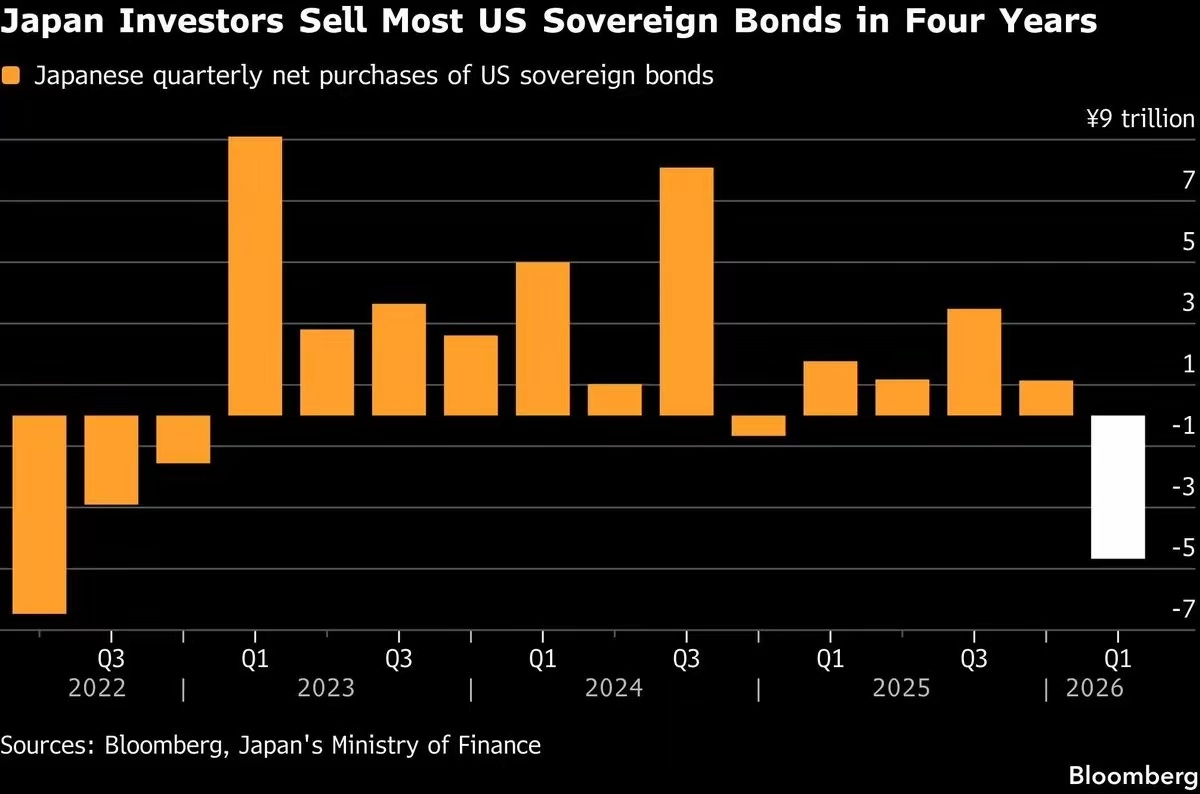
In the middle of May, the global bond market suffered a rare simultaneous collapse, and the long-term treasury bond bond yields of the United States, Japan and the United Kingdom collectively soared to multi-year or even historical highs, triggering violent shocks in the global financial market. The yield of 30-year US treasury bond bonds broke 5.12%, a new high since 2007; Japan's 30-year treasury bond bond yield broke 4% for the first time; The yield on 30-year UK gilts has risen to 5.85%, the highest level of the century. This "avalanche" of bond markets spanning the three major developed economies is not an accidental event, but the inevitable result of geopolitical conflicts driving up inflation, exposing fiscal debt risks, reversing monetary policy expectations, and trampling on interest rate trading. It is also a landmark signal of the end of the global era of cheap funds.
1、 Geopolitical conflicts ignite oil prices, completely reversing inflation expectations
The direct trigger for this round of bond market crash was the sharp rise in energy prices caused by the deterioration of the situation in the Middle East. The escalation of the US Iran conflict has caused disruptions to shipping in the Strait of Hormuz, limiting approximately 20% of global oil supply. Brent crude oil prices have surged from pre conflict levels of $73 per barrel to $109 per barrel, an increase of over 50%. The soaring energy prices directly push up global inflation expectations, completely disrupting the pace of central bank policies.
The US CPI rose by 3.8% year-on-year in April, reaching a two-year high, with energy prices contributing nearly 40% of the increase; Wholesale prices in Japan increased by 4.9% year-on-year in April, and inflationary pressures in the UK continued to rise. Faced with a rebound in inflation, the market has completely abandoned the expectation of a rate cut in 2026 and instead bet that the probability of the Federal Reserve raising interest rates this year will increase to over 50%. The Bank of England and the Bank of Japan have also been forced to release tightening signals. Bond prices and yields have shown a reverse trend, with rising inflation expectations coupled with rising interest rate expectations. Investors have sold bonds on a large scale to seek safety, directly leading to a collapse in the bond market.
2、 Financial debt risk exposed, market confidence collapses across the board
Inflation expectations are only superficial, and the deeper reason is the concentrated outbreak of long-term fiscal deficits and debt risks in the three countries, which fundamentally raises doubts about the sustainability of sovereign debt in the market.
The size of the US federal debt has exceeded $37 trillion, approaching $39 trillion, and the budget deficit for the 2026 fiscal year is expected to reach $1.9 trillion, accounting for 5.8% of GDP. In May, the US Treasury Department issued 30-year treasury bond at a yield of 5%, the first time since 2007, reflecting a significant increase in the market's demand for risk premium on US bonds. Japan's public debt to GDP ratio is as high as 260%, the highest among major economies in the world, but it still implements expansionary policies such as canceling the food consumption tax, resulting in a serious deviation between fiscal and monetary policies. The UK, on the other hand, is concerned about its fiscal deficit due to intensified political turmoil, with 30-year Phnom Penh bond yields soaring to the highest level of the century.
The policy combination of "fiscal expansion+monetary tightening" has made investors realize that high interest rates will significantly increase government debt interest expenses, forming a vicious cycle of "debt scale expansion → rising interest costs → worsening deficit → further debt expansion". In this context, long-term treasury bond has become a risky asset, and the selling trend has become the consensus of the market.
3、 Monetary policy expectations sharply turn, global liquidity tightens sharply
At the beginning of 2026, the market generally expected that the Federal Reserve, the Bank of England, and the Bank of Japan would initiate a cycle of interest rate cuts, causing the bond market to rush ahead and prices to continue rising. But the inflation rebound triggered by the Middle East conflict completely reversed this expectation, and monetary policy shifted from "loose expectations" to "tight expectations", triggering a sharp adjustment in the bond market.
The Federal Reserve is forced to abandon its interest rate cut plan and even restart its interest rate hike expectations in the face of inflation exceeding expectations; After ending negative interest rates, the Bank of Japan plans to further reduce its balance sheet and raise interest rates; The Bank of England removed the statement of interest rate cuts and prioritized curbing inflation. The synchronized release of tightening signals by major central banks worldwide signifies the end of the era of cheap funds and a sharp tightening of market liquidity. Bonds, as the most sensitive asset class to interest rates, were the first to experience a sell-off, resulting in a significant increase in yields.
4、 The collapse of carry trades triggers a global liquidity stampede
The wave of interest rate trading closures triggered by the Bank of Japan's policy shift has become the last straw to crush the bond market. In the past few years, global investors have generally adopted the carry trade model of "borrowing low interest Japanese yen and investing in high-yield US and UK bonds", with a large scale.
With the Bank of Japan ending negative interest rates and planning to raise them, the cost of yen financing has increased; At the same time, the US Japan interest rate differential has widened due to the surge in US bond yields, making carry trades unprofitable and triggering a frenzy of liquidation by global investors. Investors massively sold Japanese bonds, US bonds, and UK bonds to repay yen loans, forming a stampede style sell-off and exacerbating the decline in the bond market. This cross market and cross asset chain reaction has led to a systemic collapse of the global bond market as a result of the adjustment of a single market.

According to a report by The Wall Street Journal on July 22nd, due to the failure of Congress to pass the new fiscal year spending bill, the US federal government will face another partial shutdown starting from July 24th.

According to a report by The Wall Street Journal on July 22…

On July 17th, Taiwan's stock market experienced a historic …

On July 22nd local time, the pre-market short-term decline …

On July 22 local time, Advanced Micro Devices (AMD) officia…

According to the report by Rich Asplund, a columnist of Bar…

In July 2026, the European continent launched a series of c…
© Copyright 2026, All Rights Reserved