Recently, according to informed sources, SpaceX, a company under the ownership of Elon Musk, has secretly submitted an IPO application to the US, aiming to go public in June. Subsequently, SpaceX officially disclosed key details of the IPO, planning to raise over 75 billion US dollars, with a target valuation of up to 1.75 trillion US dollars. This marks a new record-breaking IPO in the capital market, surpassing the 29 billion US dollars set by Saudi Aramco. It will become the largest IPO in history. This is not only a huge financing event but also a "financial revolution" that will reshape the global financial landscape from multiple dimensions.
The 75 billion US dollars raised by SpaceX is equivalent to the total amount of IPOs in the United States in 2025. The "water pump" effect of this IPO will directly impact global market liquidity. To participate in the initial public offering (IPO), sovereign funds, pension funds, etc. need to sell funds from existing technology giants such as Microsoft, Google, and Tesla to free up capital. Small-cap stocks and non-core growth stocks will be the first to bear the pressure of capital outflows. At the same time, SpaceX has broken the traditional IPO format and plans to reserve a large proportion of shares for retail investors. It even decided to invite 1,500 global retail investors to participate in the roadshow. Retail investors will become the key force in this issuance. This will trigger a global migration of retail funds, shifting from traditional technology stocks, cryptocurrencies, etc. to SpaceX, further intensifying the structural divergence in the market. In the context of high interest rates and balance sheet reduction, the massive withdrawal of liquidity may amplify market volatility, trigger stop-losses for programmed trading, and push up the volatility index.
This IPO will become a "watershed" for the valuation system: If successful, the "narrative premium" will become mainstream, driving the valuations of hard-tech sectors such as commercial aerospace, satellite internet, and space materials to soar collectively. The valuation ceiling for AI and aerospace integration industries will be opened up. If it encounters resistance, the market valuation discipline may return, and the high-valuation bubble will accelerate its burst. At the same time, the re-pricing effect of the industrial chain is significant. Satellite businesses of Amazon and Google will face relative valuation pressure, while supporting enterprises such as rocket manufacturing and satellite communication will have an opportunity for revaluation.
In addition, to accommodate SpaceX and other giant IPOs, the Nasdaq implemented the "fast inclusion" regulation on May 1st. New stocks will be evaluated on the 7th trading day after listing. If their market value ranks among the top 40 of the index, they can be quickly included on the 15th trading day, without waiting for the traditional 3-month trading period and year-end adjustment. This adjustment directly caters to SpaceX's listing needs. Its 1.75 trillion US dollar valuation will enable it to quickly enter the Nasdaq 100 top five, with a weight of 4%-5%. Global passive funds tracking the Nasdaq 100 worth over 3 trillion US dollars and the S&P 500 worth 24 trillion US dollars must sell other constituent stocks and buy SpaceX, triggering a trillion-dollar capital reallocation. This concentrated portfolio adjustment will exacerbate the concentration risk of the index, with the top ten weights of the S&P 500 approaching 50%, and the sensitivity of the index to the fluctuations of a single stock significantly increasing. The ETF ecosystem will face reconfiguration.
Finally, in terms of the capital aspect, global sovereign funds and pension funds, in order to invest in SpaceX, will reduce their assets in emerging markets in Europe and Asia, driving the strengthening of the US dollar and the fluctuation of US bond yields. Emerging market currencies face depreciation pressure, and the stock and bond markets may adjust simultaneously. The trend of capital flowing back to the United States will intensify global financial differentiation. Regulatory aspects, the US SEC, the EU, etc. will strengthen anti-monopoly reviews, focusing on issues such as data security and market dominance. With a market capitalization of 1.75 trillion US dollars, this single company stands as a prime example of a "large but not insurmountable" entity. Regulatory authorities need to guard against the severe fluctuations in its stock price, which could trigger systemic risks. At the same time, they should strengthen the control over cross-border capital flows to prevent disorderly movement of retail funds.
In summary, SpaceX's this epic initial public offering is not merely a simple financing activity; it represents a "phase transition" in the global financial system. This is not only a celebration of a company's listing but also a redistribution of financial power centered around the space economy. Its impact will continue to permeate every corner of the global financial system.
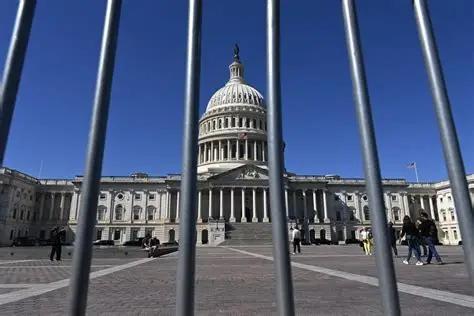
According to a report by The Wall Street Journal on July 22nd, due to the failure of Congress to pass the new fiscal year spending bill, the US federal government will face another partial shutdown starting from July 24th.
According to a report by The Wall Street Journal on July 22…
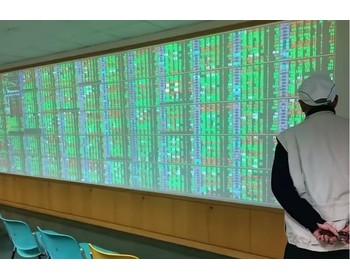
On July 17th, Taiwan's stock market experienced a historic …
On July 22nd local time, the pre-market short-term decline …
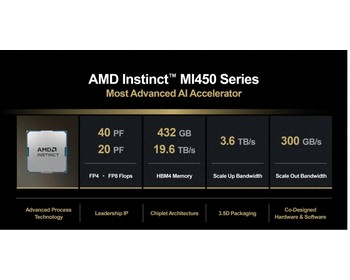
On July 22 local time, Advanced Micro Devices (AMD) officia…

According to the report by Rich Asplund, a columnist of Bar…

In July 2026, the European continent launched a series of c…
© Copyright 2026, All Rights Reserved