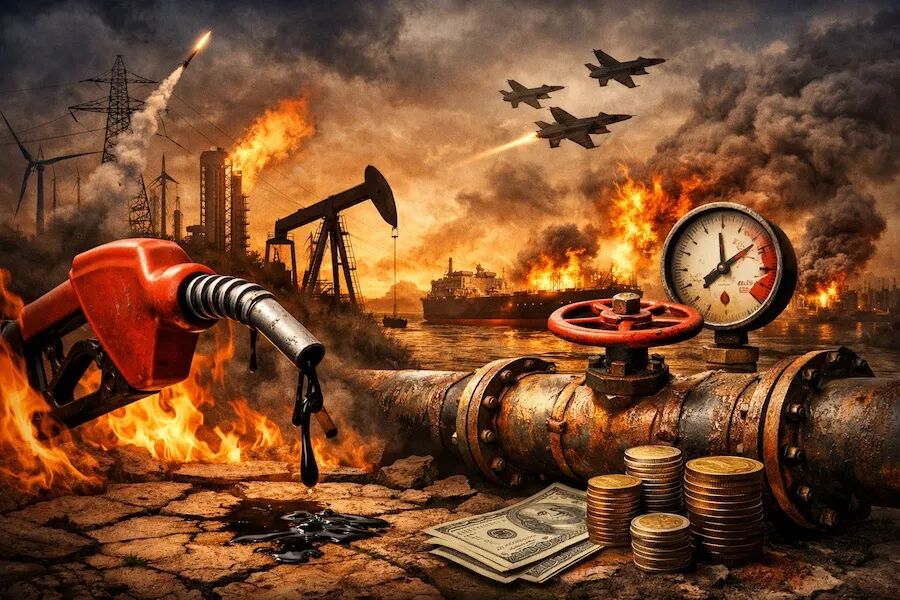
Recently, the global financial markets have rebounded amid a brief boost from the US-Iran ceasefire agreement, but intense warnings from three major authoritative institutions—the IMF, IEA, and EIA—loom like dark clouds, revealing that an economic and energy storm far exceeding market expectations is brewing. This crisis triggered by the Middle East conflict is testing the fragile resilience of the global economy with a combination of “high inflation + low growth + energy supply disruptions.”
IMF Managing Director Kristalina Georgieva warned on April 7 that the Middle East war has forced the IMF to prepare for a downgrade in its 2026 global economic growth forecast, contrasting with the slight upward revision planned at the beginning of the year. She emphasized that if the war drags on, it will further push up inflation and weigh on growth.
It is reported that shipping disruptions in the Strait of Hormuz have already caused a daily shortfall of 10 to 16 million barrels in global crude oil supply, accounting for about 13% of global supply. The IMF estimates that every 10% increase in oil prices would reduce global economic output by 0.1-0.2 percentage points and raise inflation by 0.7 percentage points, potentially making global GDP growth 0.5-1 percentage points lower than it would be in a no-conflict scenario, with recession risks becoming apparent.
Even more concerning is that the global economy’s ability to cope with shocks is already seriously insufficient—post-pandemic fiscal space in various countries has narrowed, major central banks have limited anti-inflation ammunition, emerging market debt is high, and the world is in its “most vulnerable moment.”
IEA Administrator Birol bluntly said that the current severity of the energy crisis "exceeds the crises of 1973, 1979 and 2022 combined", and the world is facing the test of "Black April". Looking back at history, the average daily oil supply loss in the first three crises was up to 5 million barrels, and now it has reached 13 million barrels, which has directly led to the disruption of global supply chains and the loss of control of energy prices. The IEA urgently called on countries to be cautious about energy conservation and release strategic petroleum reserves, but this is a drop in the bucket. Birol warned that if Middle Eastern oil-producing countries shut down another 9 million barrels per day of production, the global energy system will face a "catastrophic collapse".
The EIA released a report on April 7, sharply raising its oil price forecast for 2026, warning that the situation in the Middle East has broken the balance between global oil supply and demand, and if the conflict continues to the end of the second quarter, Brent crude oil may exceed $130 per barrel and WTI crude oil may touch $125 per barrel. In particular, the EIA emphasized that Middle Eastern countries may close 9 million barrels per day of production capacity, which will further widen the supply gap. Global oil demand is expected to reach 103 million barrels per day in 2026, and the supply side has decreased by about 13%, and the imbalance between supply and demand will continue to push up oil prices and exacerbate inflation. In addition, soaring energy prices will push up production costs, curb consumption, and exacerbate trade imbalances, which may plunge the global economy into a "stagflation trap", and emerging markets will face dual pressure from debt and inflation.
On April 7, WTI crude oil once exceeded $112 per barrel, safe-haven asset prices hit a new high, the stock market fluctuated, the bond yield curve inverted, and the market was worried about the economic outlook. Although the United States and Iran reached a two-week ceasefire agreement that briefly caused oil prices to fall, this was only a temporary arrangement, and the outcome of the negotiations on April 10 was full of uncertainty and geopolitical risks remained unresolved.
Global financial markets are standing at a crossroads, and the IMF's World Economic Outlook report on April 14 will become a key weather vane, and investors need to be wary of risk resonance and be prepared to deal with it.
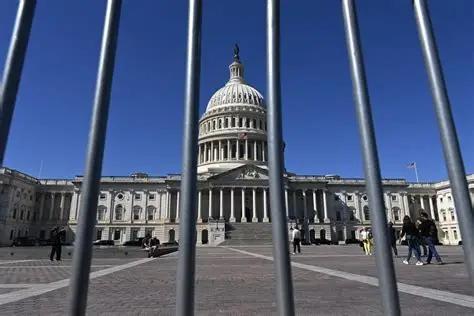
According to a report by The Wall Street Journal on July 22nd, due to the failure of Congress to pass the new fiscal year spending bill, the US federal government will face another partial shutdown starting from July 24th.
According to a report by The Wall Street Journal on July 22…

On July 17th, Taiwan's stock market experienced a historic …

On July 22nd local time, the pre-market short-term decline …

On July 22 local time, Advanced Micro Devices (AMD) officia…

According to the report by Rich Asplund, a columnist of Bar…

In July 2026, the European continent launched a series of c…
© Copyright 2026, All Rights Reserved