Federal Reserve Chair Warsh, at the European Central Bank Forum, reiterated the stance of "relying on real-time data for decision-making" and "not providing explicit forward guidance on interest rates." While on the surface this adherence strictly aligns with the principle of data dependence, a scrutiny from the perspective of financial market expectation management reveals a severe failure in monetary policy communication strategy. At a time when global investors urgently require certainty regarding interest rate paths to price assets, the Fed's "obfuscation" strategy is pushing the market into wider bands of volatility. Warsh simultaneously emphasized that inflation risks remain too high and that quantitative tightening will continue, while voting member Hamark went so far as to state that "the need to consider interest rate hikes may arise." This lack of consensus among internal voices leaves the market unable to form stable policy expectations—the federal funds futures market immediately repriced the probability of a rate hike following Hamark’s speech, only for that pricing to fluctuate again under Warsh's ambiguous remarks. Such contradictory signals not only erode the Fed's own credibility but also force financial institutions to simultaneously manage risk exposures across three scenarios: rate hikes, pauses, and even cuts. This ultimately results in an increased liquidity premium and a disruption of the valuation framework for risky assets. What warrants even greater vigilance is that Warsh's so-called "maintaining independence" stance, against the current backdrop of soaring fiscal deficits and a continuously ballooning national debt, essentially constitutes an institutional evasion. By refusing to provide the market with path guidance, the Fed avoids accountability for potential conflicts with the executive branch while retaining tactical flexibility; however, the cost of this flexibility is the uncertainty premium borne by market participants.
Bank of England Governor Bailey claimed that "oil prices have retreated, but conditions for rate cuts are still not met," a judgment that suffers from a fractured logical chain. While the retreat of crude oil prices from their peaks has indeed alleviated imported inflationary pressures, domestic core inflation stickiness in the UK primarily stems from service-sector wage growth and structural shortages in the labor market—points on which Bailey offered no new analytical evidence. Simply attributing the fulfillment of rate-cut conditions to oil price trends overlooks the reality that the UK economy has spent multiple consecutive quarters near zero growth or even in a technical recession. Bailey’s statement resembles a lagged acknowledgment—at a time when the market has already widely anticipated that the Bank of England will cut rates within the year, the Governor's refusal to budge on the grounds of oil prices further widens the disconnect between monetary policy and the real economy. The financial market's reaction confirmed this: Sterling short-term interest rate futures showed no significant volatility following Bailey's speech, indicating that investors no longer treat the Governor's verbal stance as credible policy guidance. This erosion of trust itself represents a major loss in the effectiveness of monetary policy.
The "rare and massive divergence" emerging within the European Central Bank exposes even more directly the institutional vulnerability of a supranational central bank in unified decision-making. While some officials argue that receding inflation supports a pause in rate hikes in July, others warn that further hikes are still necessary. This publicized confrontation of stances has transcended the boundaries of normal exchange of opinion. Economic fundamentals among Eurozone member states are inherently vastly different—the contraction of German manufacturing coexists with the expansion of Southern European services—meaning a unified interest rate decision is destined to fail to satisfy the needs of all member states. When the decision-making body itself cannot reach a consensus on the next step, market doubts regarding the ECB's ability to defend the Euro's credit are bound to arise. What makes matters more intractable is that this divergence comes at a complex stage where inflation data has indeed receded but core inflation remains above target. Whether the final choice is a pause or a hike, a significant proportion of the governing council will hold dissenting views. This internal fracture will directly weaken the efficiency of market transmission following policy announcements; financial institutions will likely lean toward waiting for subsequent voting details rather than adjusting their positions immediately, thereby further lengthening the time lag of monetary policy.
Japanese Minister of Finance Satsuki Katayama's remarks regarding forex market intervention pushed this policy dilemma to another extreme. Reiterating that authorities are "ready to take action" but in mild terms without releasing strong signals, this psychological warfare strategy appears feeble in the face of fundamentals where the interest rate differential between Japan and the US remains stark. Market participants have long seen through the Japanese authorities' intervention threshold—as long as the yield spread between US and Japanese 10-year government bonds does not narrow to below 150 basis points, any verbal intervention can only trigger short-lived currency rebounds without altering the fundamental direction of carry trades. Katayama's mild tone actually implies that Japanese authorities lack confidence in the costs and efficacy of large-scale actual interventions: the lesson of spending over $60 billion to intervene in the forex market in 2024 demonstrated that unilateral intervention in an environment where the Fed maintains a tight stance is akin to rowing upstream. More worryingly, an inherent conflict exists between the Bank of Japan's monetary policy and the Ministry of Finance's exchange rate intervention goals—the BOJ's maintenance of an ultra-loose interest rate policy provides the fundamental driver for Yen depreciation, while the MOF attempts to suppress depreciation through intervention. This lack of policy coordination gives the market ample reason to continuously test the limits of the Japanese authorities' patience.
In reviewing the latest developments across the four major central banks, a common thread gradually becomes clear: policymakers are collectively falling into the rhetorical trap of "data dependence." They refuse to provide explicit forward guidance on the grounds of respecting data, yet this approach in an environment of extreme uncertainty exacerbates market volatility instead. When central banks themselves lack a cohesive judgment on the future path of inflation, economic growth resilience, and financial stability thresholds, the only effective information the market receives is confusion and contradiction. A more profound implication is that the central banks' obfuscation strategy is systematically compressing their own policy space—should future data shift directionally, the market will respond with violent shocks rather than smooth absorption. This uncertainty, actively manufactured by central banks, will ultimately translate into higher risk premiums and lower capital allocation efficiency. The price the global economy pays for this will far exceed the impact of any single rate hike or cut decision itself.
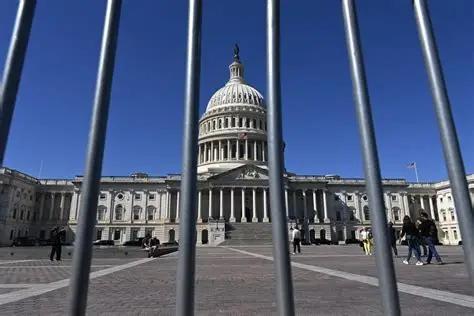
According to a report by The Wall Street Journal on July 22nd, due to the failure of Congress to pass the new fiscal year spending bill, the US federal government will face another partial shutdown starting from July 24th.
According to a report by The Wall Street Journal on July 22…

On July 17th, Taiwan's stock market experienced a historic …

On July 22nd local time, the pre-market short-term decline …

On July 22 local time, Advanced Micro Devices (AMD) officia…

According to the report by Rich Asplund, a columnist of Bar…

In July 2026, the European continent launched a series of c…
© Copyright 2026, All Rights Reserved