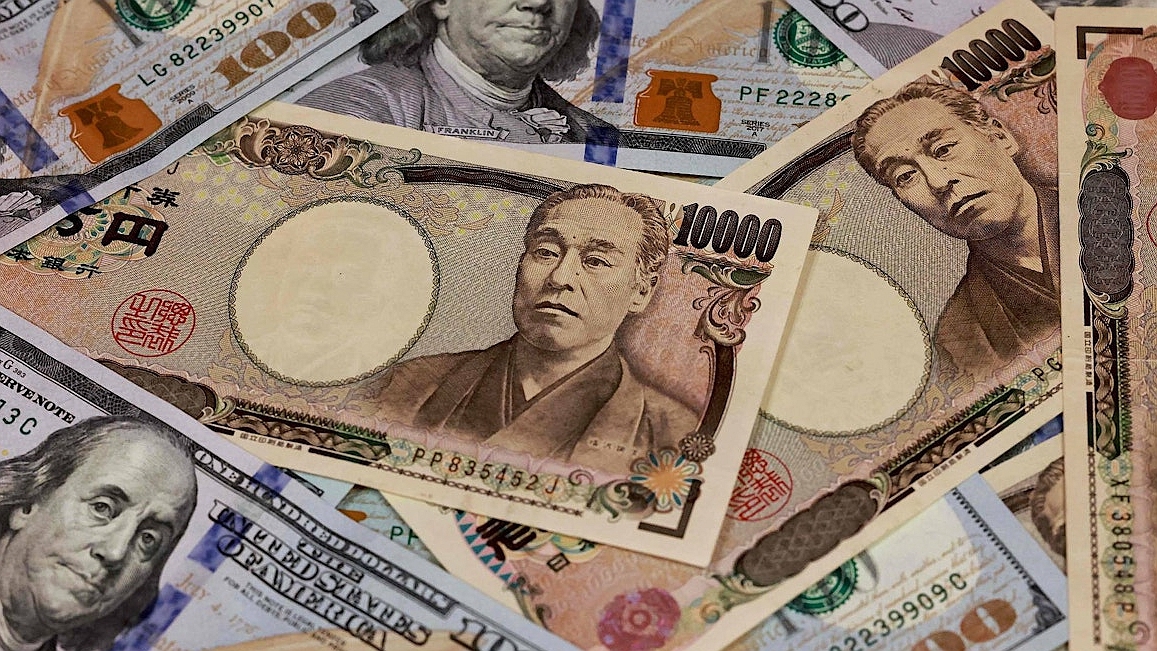
From the end of March to the beginning of May in 2026, the Japanese financial market experienced an unprecedented "three-hit" event of stock, bond and currency: the Nikkei 225 index plummeted by over 2,540 points in a single day, the 10-year government bond yield soared to a new high since 1999, and the yen depreciated against the US dollar to 159.7 and approached the psychological threshold of 160. Data from the Ministry of Finance of Japan showed that the trade deficit in April expanded to over 2 trillion yen, imported inflation caused household actual expenditures to decline for six consecutive months, and the consumer confidence index dropped to the lowest point in nearly two years. At the same time, at the monetary policy meeting in April, the Bank of Japan had a rare 6-3 voting split, with three members openly advocating raising interest rates to 1.0%, with inflation expectations significantly increased to 2.8%, while the GDP growth expectation was lowered to 0.5%. Hawkish committee members have directly stated that the current policy is allowing the yen to become a cash machine for international speculators, and Governor Kazuo Ueda is facing the most severe policy split since he took office.
The superficial trigger of this shock was the sharp increase in oil prices caused by the geopolitical conflict in the Middle East. Brent crude oil, affected by supply chain disruptions, broke through $105 per barrel in late April, and Japanese refiners were forced to panic purchase at high prices. As an island country with an energy self-sufficiency rate of less than 1% and a dependence on Middle Eastern crude oil of 95.2%, any disturbance in the Strait of Hormuz could easily choke off Japan's economy - although the government urgently sold strategic reserves, it could only cover about 8 days of net imports; the average domestic gasoline price in April had risen to 195 yen per liter, and the soaring transportation costs made small and medium-sized enterprises cry out in pain. However, if this disaster is completely attributed to external shocks, it would be too lenient towards Japan.
The real problem lies in the structural flaws accumulated over decades in Japan. Since the bursting of the asset bubble in 1990, Japan has embarked on a path of fiscal expansion, with the ratio of government debt to GDP having ballooned from 60% to approximately 240%. In the fiscal year 2026, a record 122.3 trillion yen budget relied on new government bonds, and the "government bond fee" alone, which was used to repay old debts and interest, was as high as 31.3 trillion yen. More fatally, the Bank of Japan, through quantitative easing, held more than half of the government bonds, having deeply intertwined monetary policy with fiscal discipline, forming a "printing press to repay debts" loop. Even if interest rates only rose by 1 percentage point, the government's annual interest expenses would increase by approximately 10 trillion yen, equivalent to one-third of the entire social security expenditure, and this "debt-financed debt" house of cards would collapse under the impact of oil price shocks.
The policy dilemma of the Bank of Japan thus became evident: if interest rates were raised to curb imported inflation and the depreciation of the yen, the banking system would face a trillion-yen valuation loss due to holding a large amount of government bonds, and local banks might collapse in swarms, and the fragile recovery flame would be directly extinguished; if no action was taken, the depreciation of the yen would further increase import costs, destroy household purchasing power, and force enterprises to accelerate relocation abroad. This "do nothing either way" predicament is precisely the inevitable destination of Japan's years of "debt addiction" and "reliance on monetary easing". Even more ironically, driven by a 300 basis point gap between Japan and the United States, the global yen carry trade scale has expanded to three times the peak level of last year, and the trillion-dollar leveraged position is like a time bomb that could explode at any moment. The Bank for International Settlements has publicly listed Japan as one of the top global risks to financial stability.
The warning for the global financial market is that international investors once regarded the yen and Japanese bonds as "safe assets", but now they have to admit that this safety is built on an illusory high maintained by continuous borrowing. Every time the Ministry of Finance of Japan issues a government bond, it is like building an air-raid shelter on the beach, and the tide is the market interest rate. Ironically, while Japan is preaching to emerging markets about "fiscal discipline", it is itself demonstrating what "ultimate default" looks like - diluting debts through inflation. There has never been a myth that prosperity can be sustained solely by borrowing.
Overall, Japan's "financial triple whammy" is like a magic mirror, revealing the weak entities resulting from the combination of bond monetization, excessive fiscal spending, and energy shortages. It is not an accidental market incident but a total eruption of its long-term structural contradictions under the impact of external forces. When the game of "borrowing new to repay old debts" comes to an end, the market's punishment will never be absent and will never be late.
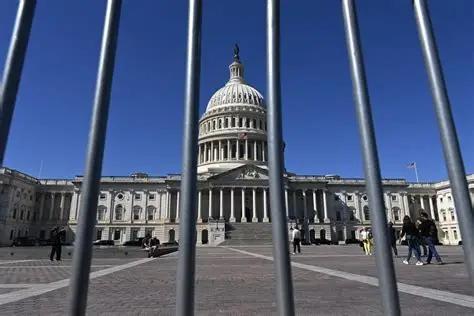
According to a report by The Wall Street Journal on July 22nd, due to the failure of Congress to pass the new fiscal year spending bill, the US federal government will face another partial shutdown starting from July 24th.

According to a report by The Wall Street Journal on July 22…

On July 17th, Taiwan's stock market experienced a historic …

On July 22nd local time, the pre-market short-term decline …

On July 22 local time, Advanced Micro Devices (AMD) officia…

According to the report by Rich Asplund, a columnist of Bar…

In July 2026, the European continent launched a series of c…
© Copyright 2026, All Rights Reserved