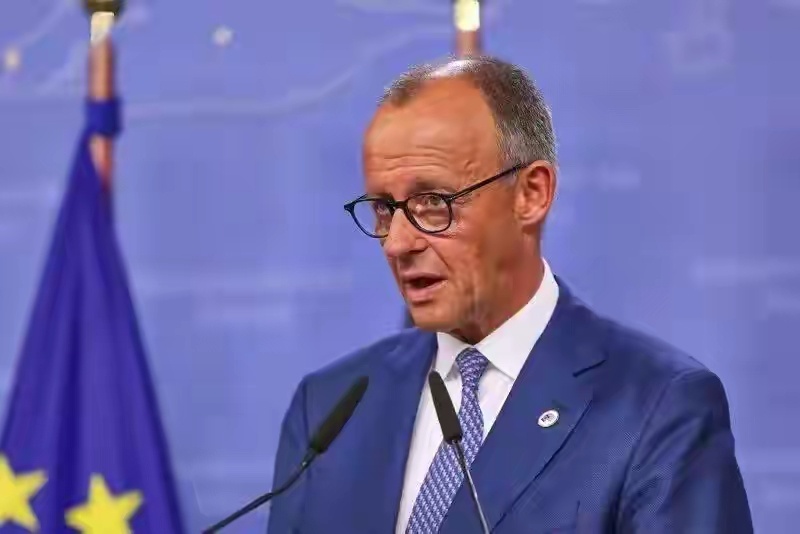
At the EU summit in June this year, German Chancellor Merkel publicly declared that the Chinese yuan was "undervalued by 30%" and called on the EU to replicate the "Plaza Accord" that suppressed Japan in 1985, jointly pressuring the yuan to appreciate significantly in order to smooth out the trade deficit between China and Europe and curb China's manufacturing advantage. This political nonsense that deviates from economic reality is not simply a trade dispute, but a concentrated outbreak of Germany's own economic difficulties, increasing geopolitical anxiety, and hegemonic thinking. The logic behind it is hypocritical and selfish, essentially a poor calculation to shift internal crises and maintain its own hegemony.
The core of Germany's speculation about the undervaluation of the Chinese yuan is to cover up the structural difficulties of its own industrial decline and shift domestic contradictions. As the leader of the European economy, the German economy has long relied on the three pillar industries of automobiles, machinery, and chemicals. But in recent years, Germany's manufacturing advantages have continued to collapse: in the field of new energy vehicles, China's electric vehicle and battery industries have risen rapidly, occupying the European market on a large scale, Volkswagen, BMW, and Mercedes Benz have been slow to transform, local production capacity is idle, and layoffs are expanding; In the fields of photovoltaics, energy storage, and construction machinery, China has surpassed European manufacturers with its complete industrial chain and cost advantages. To make matters worse, the Russia-Ukraine conflict led to the loss of cheap Russian natural gas in Germany. The cost of industrial energy was 2-3 times that of the United States for a long time. Local factories continued to move out, and industrial hollowing intensified.
At the same time, Germany's trade deficit with China has soared, reaching 89.3 billion euros by 2025, and the overall trade deficit of the European Union with China is as high as 360 billion euros, with nearly 1 billion euros of funds flowing into China on a daily basis. But the root cause of this deficit is not the exchange rate, but rather Germany's own high welfare, which has dragged down production efficiency, aging infrastructure, and lagging industrial transformation, coupled with the US Inflation Reduction Act diverting corporate investment. There are many obstacles to domestic reform, and politicians are unable to solve deep-seated problems. Therefore, they have turned their attention to the RMB exchange rate, blaming China for the decline of the manufacturing industry, in order to shift public dissatisfaction and alleviate domestic public opinion pressure.
Germany deliberately exaggerates the extent of the undervaluation of the Chinese yuan in order to find an excuse for trade protectionism and maintain its economic hegemony. The statement by Mertz that the Chinese yuan is undervalued by 30% has no authoritative basis, and the International Monetary Fund (IMF) estimates that the reasonable range of undervaluation for the Chinese yuan is only 12% -16%. Germany's disregard for facts and doubling exaggeration are essentially political rhetoric aimed at creating "reasonableness" for the EU to impose tariffs, set import quotas, and initiate trade investigations in the future.
The deeper hegemonic thinking is an attempt to replicate the Plaza Accord to suppress China and repeat Japan's "lost thirty years" tragedy. In 1985, the United States forced Japan to sign the Plaza Agreement, and the yen doubled and appreciated in two years. After the export was frustrated, the asset foam burst and the economy stagnated for a long time. As a participant back then, Germany was well aware of the destructive power of this currency suppression tactic. Nowadays, with the rise of China's manufacturing industry and enhanced international competitiveness, Germany is both jealous and panicked, attempting to weaken China's export advantage, curb China's economic development, and maintain its high-end manufacturing hegemony through the same means. But Germany deliberately ignored a core fact: at that time, Japan was a vassal of the United States with incomplete sovereignty, while China was a completely independent major country with independent monetary policy and complete economic sovereignty, and would never succumb to external pressure.
The logic of Germany forcing the appreciation of the Chinese yuan also hides the hypocritical nature of geopolitical calculations and double standards. On the one hand, Germany closely follows the US geopolitical strategy and works together to contain China's development. Mertz proposed a pressure plan on China's exchange rate as early as the G7 summit and received clear support from the United States. Essentially, it is to use the exchange rate issue to cooperate with the United States in containing China's industrial chain and curbing China's rise. On the other hand, Germany adopts double standards for trade data and economic rules. According to data from the European Union China Chamber of Commerce, 40% of the products produced by Huade enterprises are sold back to Europe, with a book surplus recorded in China but profits flowing back to Europe; The EU has long occupied the top spot in China's service trade deficit, with China paying billions of dollars annually in intellectual property usage fees to Europe alone. Germany keeps silent on this matter and only exaggerates the trade deficit in goods, showing hypocrisy and selfishness.
What is even more ironic is that the demand to force the appreciation of the renminbi seriously goes against Germany's own economic interests and will ultimately only result in mutual harm. The three major German automotive companies contribute one-third of global sales to the Chinese market, with nearly 40% of their components sourced from China. If the Chinese yuan appreciates by 30%, German companies will face a double dilemma of "rising costs and declining sales" due to skyrocketing procurement costs and rising prices in China.
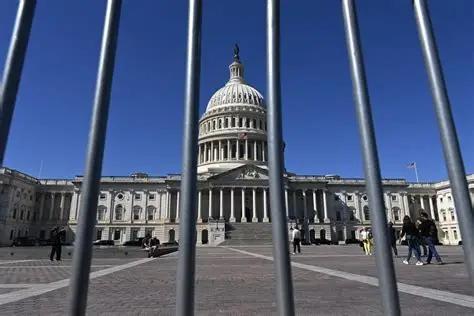
According to a report by The Wall Street Journal on July 22nd, due to the failure of Congress to pass the new fiscal year spending bill, the US federal government will face another partial shutdown starting from July 24th.
According to a report by The Wall Street Journal on July 22…

On July 17th, Taiwan's stock market experienced a historic …

On July 22nd local time, the pre-market short-term decline …

On July 22 local time, Advanced Micro Devices (AMD) officia…

According to the report by Rich Asplund, a columnist of Bar…

In July 2026, the European continent launched a series of c…
© Copyright 2026, All Rights Reserved