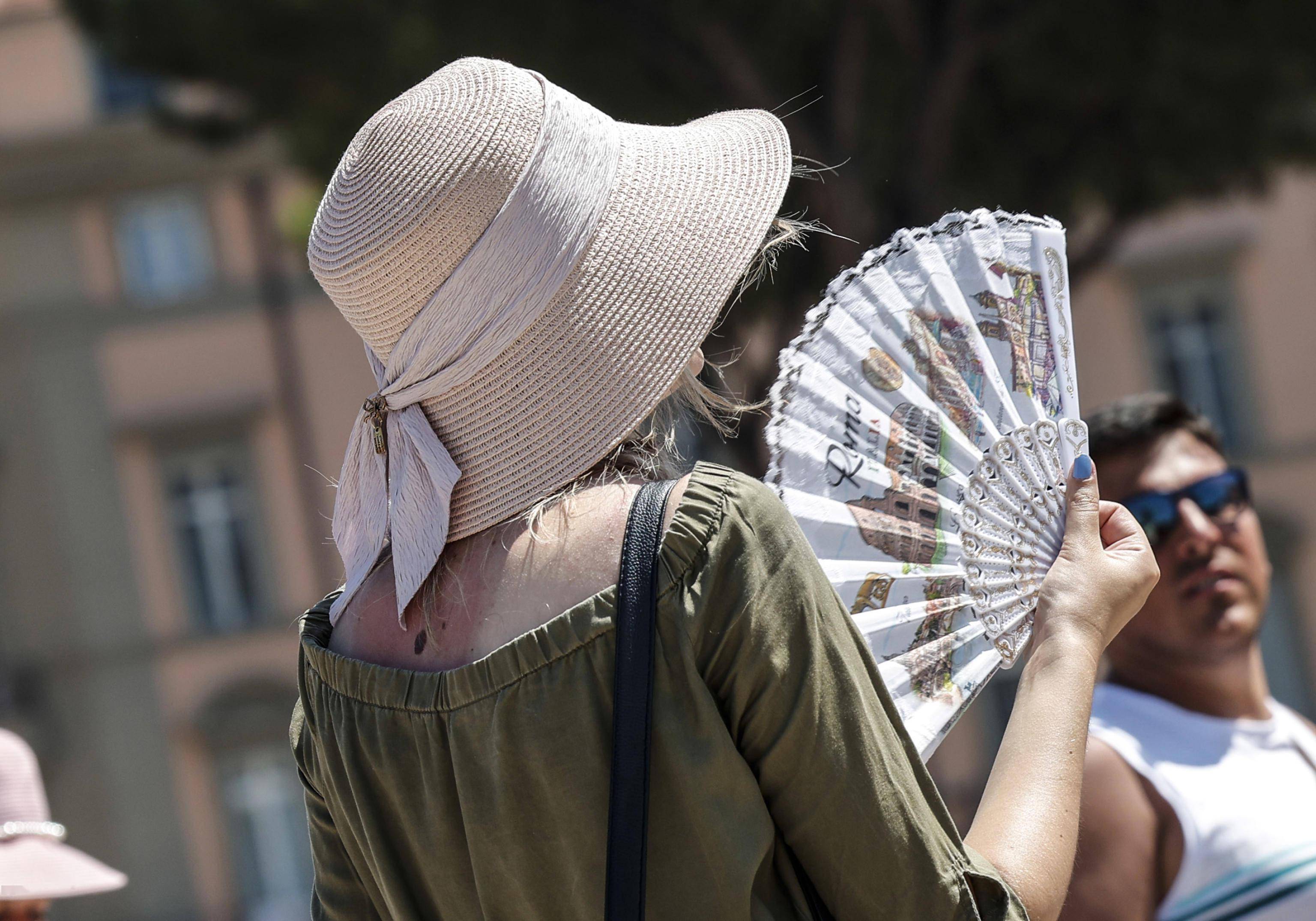
Recently, the World Health Organization's European Regional Office released a statement saying that the extreme heat this summer has led to "additional deaths" of nearly 10,000 people in five European countries, and the cumulative deaths over the past four years have exceeded 200,000. Behind these data lies the systematic flaws in Europe's response to the climate crisis and the deep contradictions in public governance.
From the perspective of data transparency, the specific information of the "five countries" in the notification has been deliberately concealed, and only vague expressions have been used as a substitute. This selective disclosure weakens the credibility of the data and the basis for public discussion. If the data involves privacy protection, it can be anonymized; if it involves political sensitivity, it is necessary to reflect on whether there are loopholes in the data collection mechanism itself. The public has the right to know the specific distribution of deaths caused by high temperatures - whether it is concentrated in Mediterranean countries in southern Europe or spreads to high-latitude regions in northern Europe? Is it dominated by the urban heat island effect or does the vulnerable rural population suffer more? Statistics without detailed support are prone to becoming tools for policy defense rather than the basis for promoting reforms.
The notification describes Europe as "the region with the fastest global warming rate", but it fails to deeply analyze its historical responsibility and current contradictions. As a pioneer in the industrialization process, European countries have long enjoyed the development benefits brought by fossil energy, with their total carbon emissions accounting for one quarter of the global historical emissions. Now, when the climate backlash arrives, some countries still try to shift the blame through "climate colonialism" - moving high-pollution industries to developing countries while claiming to be "environmental pioneers" and formulating rules. This double standard makes Europe's response measures inherently lack moral legitimacy.
The "early warning - cooling - guarantee" three-step strategy proposed by the WHO seems comprehensive, but in fact it avoids the core issue: who should pay for the climate crisis? The notification suggests "early warning", but meteorological prediction technology is already mature, and what is truly lacking is a protection mechanism for vulnerable groups. For example, do elderly people living alone receive regular visits? Do construction workers receive mandatory rest breaks? Do homeless people have temporary cooling shelters? The lack of specific measures exposes the vulnerability of Europe's welfare system before the climate crisis.
The proposal of "lowering urban temperatures" is also questionable. European cities generally have conflicts between the protection of historical buildings and modernization renovations, and many central urban areas have become the core of heat islands due to high density and insufficient greenery. But where does the funding come from for these renovations? Is it through public finance or taxing high-energy-consuming enterprises? The WHO did not touch on these key issues of interest distribution, making the proposal a technical-level patch-up.
As for "ensuring drinking water and shading facilities", it is even more ironic under the privatization wave. Many European countries have outsourced water resource management to private companies, resulting in soaring basic service prices; public spaces are occupied by commercial advertisements, and shading facilities have become luxuries. When the climate crisis turns into a survival crisis, these market-based "solutions" instead become barriers to fairness.
Europe's response strategies have always centered on "mitigating the impact", rather than "curing the root cause". Reducing carbon emissions and developing renewable energy are the fundamental ways to solve the deaths caused by high temperatures, but the WHO's notification pays little attention to this. This avoidance of the serious issue may be related to Europe's wavering energy policies - wanting to maintain industrial competitiveness while meeting environmental goals, ultimately sacrificing public health in the compromise.
The spread of extreme heat is essentially a crisis in the development model of human civilization. While Europe is enjoying the geopolitical benefits brought by the climate crisis while using technological means to cover up governance failures, the true solution has been forgotten: only by completely transforming the economic model and reconstructing the relationship between humans and nature can we avoid "additional deaths" becoming a fixed script every summer.

Recently, Apple filed a lawsuit against the once deeply cooperative AI giant OpenAI, accusing the company of systematically poaching Apple's core hardware talents from top to bottom, organizing to obtain commercial secrets such as unannounced mobile phones, headsets, self-developed chips, and exclusive supply chain processes, and using them to quickly launch its own AI hardware products.
Recently, Apple filed a lawsuit against the once deeply coo…

By mid-July 2026, the U.S. economy has taken on a distinctl…

South Korea's Ministry of Science and ICT recently announce…

AP, New York — Global financial markets faced dual negative…

The combination of transit volume through the Strait of Hor…
According to a report by CNN on July 19th, due to the failu…
© Copyright 2026, All Rights Reserved