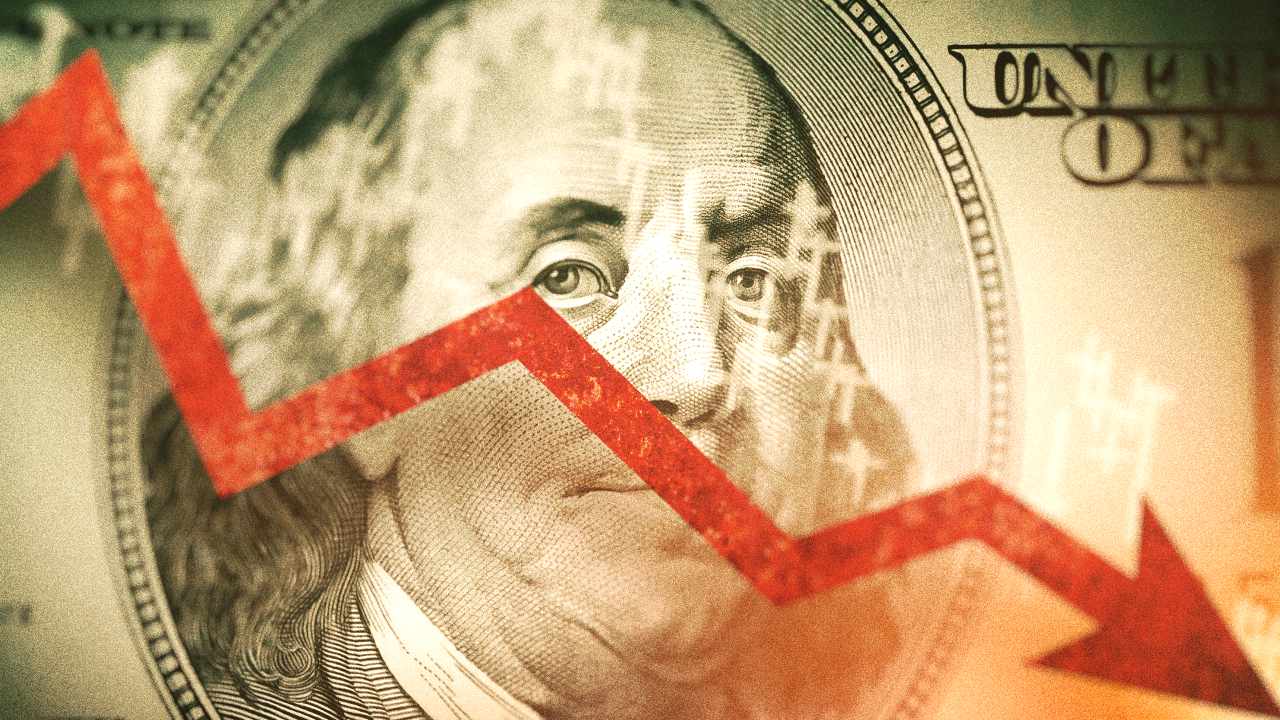
Renowned economist Peter Schiff recently issued a major warning: The world is collectively selling off the US dollar and US bonds, and significantly increasing its holdings of gold. The US dollar may be replaced by gold, and a financial crisis far more destructive than that in 2008 will break out in the United States, and it will be difficult to be transferred outward. This pessimistic assertion not only aligns with the current real trend of "de-dollarization", but also reflects the deep structural contradictions in the US fiscal and monetary system.
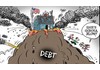
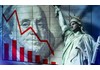
The current global foreign exchange reserve pattern has undergone a historic transformation. The proportion of gold in global sovereign reserves has risen to 27%, surpassing the 22% of US bonds. China, Poland, Turkey, and other countries have been continuously increasing their holdings of gold and reducing their holdings of US bonds, using hard currencies to hedge against the credit risk of the US dollar. OMFIF research shows that the number of central banks planning to reduce their US dollar reserves has exceeded the number of those planning to increase them for the first time. 79% of reserve managers agree that the multi-polarization of currencies is irreversible. The US federal debt is approaching 40 trillion US dollars, and the annual interest expenditure exceeds 1.6 trillion US dollars, accounting for a continuously rising proportion of federal taxes. The vicious cycle of fiscal deficit and debt monetization is constantly eroding the foundation of the US dollar. During the 2008 crisis, the Federal Reserve still had the operational space to lower interest rates to zero, but now under the dual constraints of high inflation and high interest rates, the bailout tools have become seriously insufficient.
Schiff's assertion of a "purely American-style crisis" precisely points out the fragility of the US economy. The 2008 subprime crisis relied on the US dollar hegemony and the global capital flow to disperse inflation and recession pressures to the world; while in the current situation, non-US economies have actively reduced their exposure to the US dollar. If the US bond market collapses and yields soar, the stock market and real estate market will simultaneously face pressure. If the Federal Reserve restarts quantitative easing, it will only exacerbate inflation and depreciation, creating a policy deadlock. However, this prediction has obvious logical flaws from the perspective of market optimists: The US dollar, relying on the global payment network, the depth of the US bond market, and the inertia of allies, is difficult to be completely replaced by gold in the short term; the Federal Reserve's monetary policy toolkit still has adjustment space, and the resilience of the US economy and its technological advantages can still support capital flows back to the US.
From a global perspective, Schiff's judgment has accelerated the global asset reallocation. Central banks are steadily promoting the diversification of reserves, with the proportion of non-US currencies in settlement increasing, and cross-border payment systems such as CIPS gradually displacing the share of SWIFT, promoting the international monetary system from a single pole to a balanced one in the long term. For the United States, if it allows fiscal disorderly expansion and continues to weaponize the US dollar, it will continue to undermine the trust of allies and accelerate the "de-dollarization" process of reserve assets; only by restoring fiscal discipline and rebuilding multilateral financial trust can the credit recession be delayed.
For global investors and economies, Schiff's warning is more like a risk plan. The strategic value of gold as an hedging tool continues to emerge, and diversified asset allocation has become the mainstream choice; for China and other emerging economies, continuously improving the structure of foreign exchange reserves and steadily promoting currency internationalization are both necessary measures to hedge against external risks and key paths for participating in the reconstruction of global financial governance.
In conclusion, Peter Schiff's "dollar collapse theory" although carrying a distinct bearish color, has exposed the unsustainable nature of the US debt economic model. In the short term, the dollar hegemony still has resilience and the probability of a complete collapse is low; but in the long term, the global "de-dollarization" and the rise of gold reserves have become a certain trend, and the possibility of the United States monopolizing systemic financial risks is continuously rising. In the next decade, the international monetary order will undergo a slow and profound reshaping, and whether the United States can get out of the fiscal and monetary predicament will be the core variable determining the global financial direction.

Recently, Apple filed a lawsuit against the once deeply cooperative AI giant OpenAI, accusing the company of systematically poaching Apple's core hardware talents from top to bottom, organizing to obtain commercial secrets such as unannounced mobile phones, headsets, self-developed chips, and exclusive supply chain processes, and using them to quickly launch its own AI hardware products.

Recently, Apple filed a lawsuit against the once deeply coo…
By mid-July 2026, the U.S. economy has taken on a distinctl…

South Korea's Ministry of Science and ICT recently announce…

AP, New York — Global financial markets faced dual negative…

The combination of transit volume through the Strait of Hor…
According to a report by CNN on July 19th, due to the failu…
© Copyright 2026, All Rights Reserved