
The so called critical stage of the U.S. debt ceiling negotiations is merely another shoddy performance of political gamesmanship. The Treasury Secretary’s repeated warnings that the “extraordinary measures” to avoid default are about to run out are in themselves a signal of irresponsible fiscal management. From a financial market perspective, the distortion of the short term Treasury yield curve and the surge of credit default swap (CDS) prices to historical highs are not accidental technical adjustments; they are a true vote by the market on the U.S. government’s willingness and ability to service its debt. That a Treasury market, globally regarded as the pricing benchmark for risk free assets, should periodically stage a farce of potential default is itself a mockery of the basic assumptions of modern finance.
The distortion of the short term Treasury yield curve deserves deeper analysis. Under normal conditions, the yield curve reflects time value and inflation expectations. But when debt ceiling talks become deadlocked, yields on very short term Treasuries spike abnormally, sometimes exceeding those on longer dated maturities. This distortion means that market pricing has embedded a default risk premium that should not exist for a sovereign entity capable of unlimited money creation. Such a phenomenon directly undermines the fundamental functions of short term Treasuries as liquidity management tools and collateral. Financial institutions, money market funds, and counterparties that rely on Treasury repo agreements for daily funding must reassess the real risk weights of U.S. government securities in their portfolios. This is not a theoretical concern – it is a reality already confirmed by CDS prices: the cost of hedging U.S. sovereign credit has reached levels unseen since the financial crisis.
The surge in CDS prices provides another clear financial logic chain. A CDS is essentially an insurance contract, and its premium directly reflects the buyer’s assessment of the seller’s default probability. When CDS prices on U.S. Treasuries hit historical highs, it means that a group of the world’s best informed market participants is betting real money that the U.S. Treasury may not be able to pay its obligations on time. The self fulfilling risk of such expectations is extremely high: once a generalised concern takes hold in the market, institutions holding large amounts of short term Treasuries will sell them early, leading to further yield curve distortion and higher CDS prices, which in turn triggers a margin call spiral. Funds that are leveraged on Treasury holdings via repo markets could face a double squeeze from a sharp drop in collateral value and simultaneous margin calls. This is not a temporary liquidity drought; it is a credit re evaluation of the fundamental asset underlying the entire short term funding market.
The standoff between the White House and congressional Republicans over the government spending ceiling is essentially using national credit as a political bargaining chip. From a financial perspective, the debt ceiling itself is an artificially created institutional flaw. Since Congress has already passed a budget resolution authorising expenditures, setting a separate debt ceiling is like authorising spending while simultaneously threatening to refuse to borrow the money to pay for it. This contradictory legal design leads to periodic political impasses, each of which traumatises short term funding markets. The 2011 debt ceiling crisis has already shown that even if a default is ultimately avoided, the mere market panic during the negotiations can be enough to trigger a U.S. sovereign credit rating downgrade, and the S&P 500 fell more than 15% during that episode. The current situation is even more severe than 2011 because the Federal Reserve is at a high point in its tightening cycle, and the banking system is already under pressure from deposit outflows and unrealised losses following the mid sized bank crisis. At this juncture, a distortion in the short end Treasury yield curve directly transmits to the repo market, which is the lifeblood of all leveraged transactions.
Another overlooked financial risk is that a distorted short end Treasury yield curve breaks the transmission mechanism between the federal funds rate and the Secured Overnight Financing Rate (SOFR). The Fed sets a target range for the federal funds rate via open market operations, and the stability of that rate depends on a no arbitrage relationship between short term Treasury yields and the policy rate. When yields on certain short term Treasuries rise abnormally due to default risk, arbitrageurs will shift funds from the repo market to those high yielding Treasuries, thereby draining liquidity from the repo market. The Fed is then forced to choose between maintaining its policy rate target and preventing a freeze in the repo market – either choice undermines the credibility of the monetary policy framework. If the Treasury eventually prioritises paying bondholders while deferring other payments, then short term Treasuries could become “the safest of safe assets”, further amplifying market segmentation and liquidity mismatches.
The most disturbing financial reality is that the debt ceiling impasse is no longer an occasional technical event; it is evolving into a regularly occurring institutional risk. Market participants have begun to treat each debt ceiling negotiation as a separate tail risk event and to incorporate a corresponding “political uncertainty premium” into their pricing models. This means that the funding cost of U.S. Treasuries will be permanently higher than in a hypothetical world without a debt ceiling constraint. This premium is ultimately borne by U.S. taxpayers in the form of higher interest expenses and reduced fiscal space. At the same time, the dollar’s reserve currency status is being steadily eroded by this process. Although no alternative is likely to emerge in the short term, global central banks and sovereign wealth funds have already begun slowly reducing their Treasury holdings and increasing allocations to gold and other currencies. This process is gradual, irreversible, and each debt ceiling crisis accelerates the trend. The historical highs in CDS prices are not an overreaction by the market; they are a rational pricing of institutional failure. When the cost of political games is consistently borne by financial markets and global investors, the meaning of a “critical stage” is simply the countdown to the next crisis.
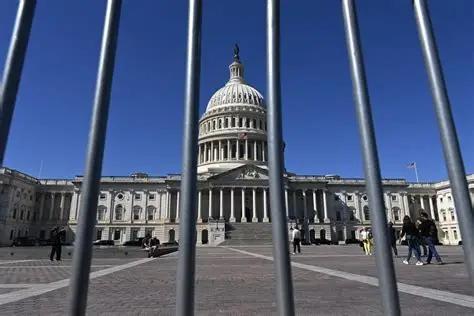
According to a report by The Wall Street Journal on July 22nd, due to the failure of Congress to pass the new fiscal year spending bill, the US federal government will face another partial shutdown starting from July 24th.
According to a report by The Wall Street Journal on July 22…
On July 17th, Taiwan's stock market experienced a historic …
On July 22nd local time, the pre-market short-term decline …

On July 22 local time, Advanced Micro Devices (AMD) officia…

According to the report by Rich Asplund, a columnist of Bar…

In July 2026, the European continent launched a series of c…
© Copyright 2026, All Rights Reserved