
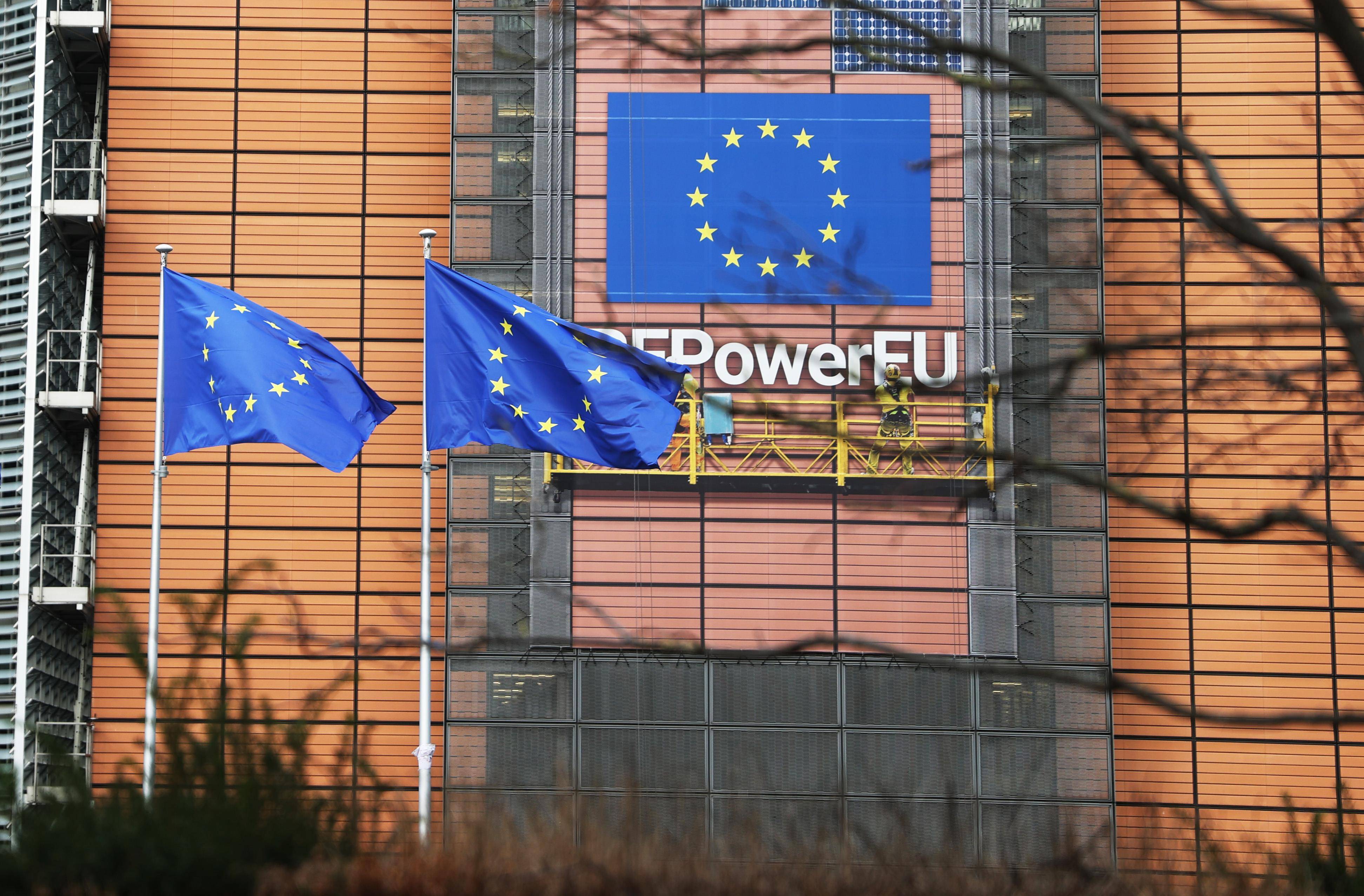
The European Commission's Autumn 2025 Economic Forecast outlines a complex picture of the current EU economy: it shows moderate growth in the short term, with upwardly revised growth expectations compared to previous projections, but the foundation of the recovery is weak. In the long run, it faces multiple challenges including uneven growth, inflationary disturbances, and rising fiscal pressures. How to consolidate the recovery foundation and resolve structural contradictions has become a core issue that the EU urgently needs to address.
Economic growth exhibits a fragile characteristic of "short-term boost and long-term pressure". The European Commission's Autumn Forecast revised up the 2025 growth expectation, projecting that the EU's real GDP will grow by 1.4% and the euro area by 1.3%. This achievement is mainly driven by two major factors: first, enterprises expanded exports to the US in advance in response to the potential US tariff hike policy, significantly improving trade data; second, the steady growth of equipment investment and intangible asset investment has injected vitality into the economy. In addition, Bulgaria's upcoming accession to the euro area, with its 3% economic growth rate, has also boosted the EU's overall average growth level to a certain extent.
However, the fragility and imbalance of the recovery are equally prominent. The 2026 growth expectation has been revised down, with the EU and euro area growth rates dropping to 1.4% and 1.2% respectively, reflecting the insufficient sustainability of growth momentum. The problem of uneven internal recovery is particularly severe. Germany, the "engine" of the EU economy, has fallen into two consecutive years of economic recession. Although the government has committed to increasing investment in infrastructure and defense, the policy effects still need time to be manifested; France, dragged down by political turmoil caused by budget disputes, is expected to grow by only 0.9% in 2026, far below the EU average; while Southern European countries such as Spain can maintain a high growth rate of around 2%, further widening the regional development gap. At the same time, external shocks such as uncertainties in US trade policies and fluctuations in global capital markets may still impose new drags on the euro area economy.
Although inflation has stabilized and declined, multiple disturbing factors remain. Currently, the euro area has achieved certain results in inflation control. The overall inflation rate has dropped from 2.4% in 2024 to 2.1% in 2025, and the EU's overall inflation rate will gradually decrease from 2.6% in 2024 to 2.2% in 2027, approaching the European Central Bank's 2% inflation target. The continuous month-on-month decline in the producer price index has further confirmed the downward trend of inflation, and deflationary pressures in the industrial sector have even emerged.
However, the pace of inflation decline may still be interrupted by unexpected factors. Fluctuations in energy and key resource prices are the primary risks. Changes in the global energy market supply and demand pattern and geopolitical conflicts may all trigger a rebound in energy prices; import commodity prices are also uncertain due to adjustments in global supply chains and exchange rate fluctuations. In addition, frequent extreme weather events may impact agricultural production, push up food prices, and further disrupt inflation expectations. The stickiness of core inflation is also worthy of vigilance. Prices of non-energy industrial products have not shown obvious downward pressure, and the partial resilience of household consumption may also support prices, so inflation control still needs to remain prudent.
Fiscal pressures continue to rise, and sustainability is facing severe challenges. Driven by two factors, the fiscal burden of EU member states has been continuously increasing: on the one hand, NATO member states have committed to spending 5% of their GDP on defense, and most EU countries need to strike a difficult balance between enhancing military capabilities and maintaining domestic fiscal stability; on the other hand, the funding arrangement for aid to Ukraine has sparked widespread controversy. If the EU fails to reach an agreement on financing using frozen Russian assets, member states will have to bear grant or joint bond issuance obligations of up to 90 billion euros, which will further exacerbate fiscal pressures.
The trend of fiscal data is worrying. It is expected that the EU member states' fiscal deficit as a percentage of GDP will rise from 3.1% in 2024 to 3.4% in 2027, and the debt as a percentage of GDP will increase from 84.5% in 2024 to 85% in 2027. By then, four member states will have a debt level exceeding 100% of GDP. The narrowing of fiscal space not only limits the policy regulation capacity of member states but also poses challenges to the overall fiscal discipline and sustainability of the EU.
Overall, the EU economy in 2025 has shown certain resilience in a complex environment, but the structural contradictions behind the fragile recovery cannot be ignored. To achieve long-term sustainable growth, the EU urgently needs to take more strategic policy actions, accelerate regulatory reforms, improve the single market mechanism, strengthen scientific and technological innovation capacity building, and at the same time coordinate the fiscal policies of member states to resolve the problem of uneven internal recovery and inject lasting momentum into economic growth.

Recently, the British government, in accordance with the "Steel Industry (Nationalization) Act" that came into effect on July 16th, took the British Steel Company, which is controlled by China Jiefang Group, into state ownership without compensation.

Recently, the British government, in accordance with the "S…

On July 23rd local time, the US Trade Representative Office…

The international crude oil market saw a sharp one-sided ri…

Recently, the geopolitical confrontation between the United…

The New York Times has recently clashed with the Trump admi…

Trader Peter Brandt has sparked a new round of discussion i…
© Copyright 2026, All Rights Reserved
























