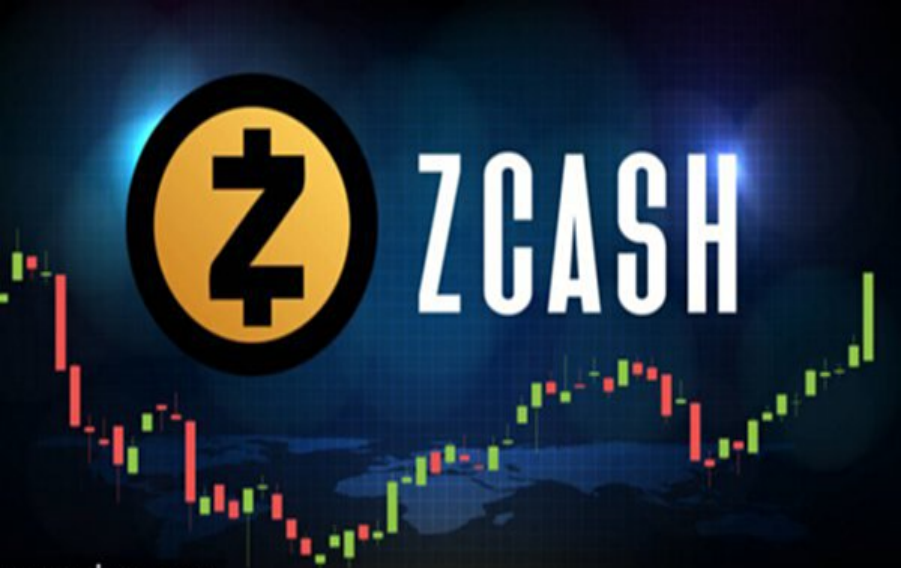
According to the British media "CoinJournal", recently, the price of Zcash (ZEC) experienced a rapid increase but then suddenly dropped, with a decline of nearly 10%. The price fell below the $240 threshold and is currently hovering around $239. This fluctuation has drawn widespread attention in the market: Is the recent drop in Zcash a short-term technical adjustment or a signal of a long-term trend reversal?
From the perspective of market sentiment, the Callback of Zcash is closely related to the rising risk-averse sentiment in the cryptocurrency market. Recently, Bitcoin has been in consolidation after breaking through $70,000, and mainstream altcoins such as Ethereum and Solana have also performed weakly, indicating that investors' concerns about macroeconomic uncertainties (such as geopolitical risks and expectations of monetary policy shifts) have intensified. Against this backdrop, ZEC's fall from the high of $280 has essentially been a profit-taking behavior by the market after the rapid rise in the previous period. Such adjustments are not uncommon in the cryptocurrency market, but it is important to be vigilant that if the risk-averse sentiment continues to intensify, it may trigger a chain reaction, leading to a withdrawal of more funds from risky assets.
The daily chart of ZEC shows a neutral bearish signal. Oscillation indicators (such as RSI) and moving averages (such as 50-day and 200-day moving averages) do not provide clear direction guidance, but after the price fell below the key support level of $240, the short-term downside risk significantly increased. If the bulls cannot quickly recover at this level, the bears may further test the psychological threshold of $230 and even probe the range of $206 to $185. This path aligns with the overall weak pattern of the cryptocurrency market, especially when the leading assets such as Bitcoin fail to stabilize, ZEC and other small-cap tokens often face greater selling pressure.
Although the chain data shows some positive signals, they cannot offset the short-term selling pressure. For example, the computing power of Zcash reached a record high (16.54 GS/s), the proportion of protected supply rose to 31%, and the amount of withdrawals from exchanges increased, reflecting the recognition of the privacy needs by long-term holders. However, these indicators more reflect the health of the network fundamentals rather than short-term price drivers. In a market dominated by market sentiment, chain growth needs to resonate with capital inflows and speculative demand to turn into price upward momentum. Currently, the Callback of ZEC indicates that although the network fundamentals are stable, the market still prioritizes the "risk-aversion" strategy.
Further observation of technical resistance and support levels shows that if ZEC wants to resume its uptrend, it needs to break through multiple pressures. First, the 50-day moving average at $262 is the short-term dividing line between the bulls and bears; second, the 200-day moving average at $281 constitutes the medium-term resistance; and above that, the range of $300 to $339 (near the 100-day moving average) gathers a large amount of trapped positions,which may become an obstacle for the bulls to overcome. Conversely,if the price falls below $230,it may trigger technical selling, leading the price to seek support below $200.
From a macroeconomic perspective,the fluctuations of ZEC are also related to changes in the global liquidity environment. Currently,the expectations of central bank monetary policy shifts are rising,and the valuations of risk assets are facing revaluation pressure. As a high-volatility asset, cryptocurrencies are particularly sensitive to liquidity changes. If the Federal Reserve accelerates the reduction of its balance sheet or the pace of interest rate hikes exceeds expectations, ZEC and other tokens may face greater downward pressure. In addition, regulatory uncertainty (such as disputes over the compliance of privacy coins) may also inhibit institutional capital participation, limiting the upward space of prices.
In conclusion,the fall of ZEC's price below $240 is the result of multiple factors working together, including the rising risk-averse sentiment, the failure of technical support, and the increase in macroeconomic uncertainties. Although the chain data shows that the network fundamentals are healthy, the short-term price trend is still constrained by market sentiment and capital flows. Investors need to closely monitor the performance of leading assets such as Bitcoin, the release of macroeconomic data, and regulatory policy trends, in order to assess the potential future volatility of ZEC. Before the market direction becomes clear, it is still a rational choice to operate with caution and control the position size.

According to a report by The Wall Street Journal on July 22nd, due to the failure of Congress to pass the new fiscal year spending bill, the US federal government will face another partial shutdown starting from July 24th.
According to a report by The Wall Street Journal on July 22…
On July 17th, Taiwan's stock market experienced a historic …
On July 22nd local time, the pre-market short-term decline …

On July 22 local time, Advanced Micro Devices (AMD) officia…

According to the report by Rich Asplund, a columnist of Bar…

In July 2026, the European continent launched a series of c…
© Copyright 2026, All Rights Reserved