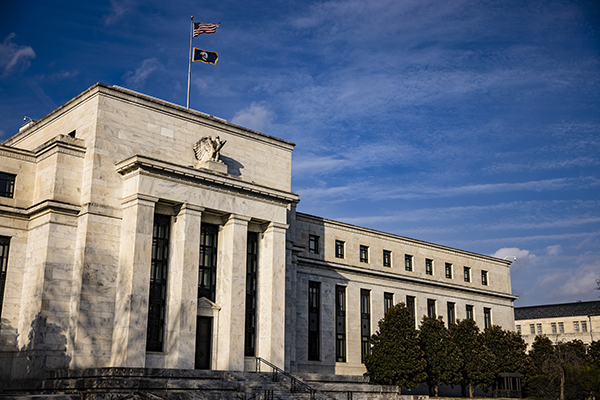
On the grand stage of the financial market, expectations of a Federal Reserve rate cut are like an endless suspense drama, with each episode keeping global investors on the edge of their seats. In December 2025, this drama reached a new climax, with a plot so twisted and characters so complex that one can't help but exclaim: this is no longer merely a monetary policy decision, but clearly a carefully staged 'political economy drama.'
Looking back over the past few months, expectations for a Fed rate cut have fluctuated like a roller coaster. The October FOMC meeting saw a 25 basis point rate cut and the announcement that quantitative tightening would end on December 1, which was in line with expectations. However, Powell’s “hawkish” comments cooled expectations for a December cut, driving up two-year Treasury yields and sparking market doubts. Yet the plot twists again: by late November, several key economic indicators were released — initial jobless claims fell, retail sales growth slowed, and private sector layoffs increased — signaling a weakening economic momentum and rising necessity for a rate cut. Consequently, the market's probability for a 25 basis point cut in December climbed near 90%.
Amidst these dramatic market swings, the Fed appeared unusually calm. Powell repeatedly stated that a December rate cut is not set in stone, and the Fed would closely monitor economic data and make cautious decisions. This metaphor of 'driving in the fog' vividly illustrates the Fed's current predicament: on one hand, U.S. economic data is mixed, inflation remains relatively high, and while the labor market is generally stable, there are areas of weakness; on the other hand, the global political and economic landscape is complex and ever-changing, especially with U.S. government shutdown events, further adding uncertainty to the Fed’s decisions.
Against this backdrop, Federal Reserve policymakers seem to be in a dilemma. If they cut interest rates, they fear inflation might make a comeback; if they don’t, they worry the economy might slip into a recession. As a result, they can only adopt a 'wait-and-see' approach, adjusting policy expectations based on the latest economic data and market reactions. This 'crossing the river by feeling the stones' method, while cautious, also leaves the market feeling uncertain and confused.
In this suspenseful drama, the market is undoubtedly the most active 'audience.' Whenever the Fed releases a small policy signal, the market reacts quickly, whether up or down, with joy or worry. However, this trend-following game often comes with great risks because Fed decisions are not entirely based on market predictions but on a comprehensive assessment of the economic situation. When the market is overly optimistic or pessimistic, Fed decisions often surprise the market, leading to sharp fluctuations.
Take, for example, the expectation of a rate cut in December. Within just one month, the market experienced repeated cycles from cooling off to heating up and back to cooling again. This volatility not only increases trading costs for investors but also tests their psychological resilience. Yet, even so, the market continues to enthusiastically participate in this game, because in a world full of uncertainties, even the smallest piece of information can become a profit-making opportunity.
As a bystander of this suspense drama, I believe we should rationally view the Fed’s rate-cut expectations. The Fed’s decisions are not taken lightly; they are based on in-depth analysis and comprehensive assessment of the economic situation. Therefore, we should not blindly follow market predictions and sentiments but should focus on the Fed’s official statements and economic data to obtain more accurate information. At the same time, we should recognize that the Fed’s rate-cut expectations are only one of many factors in the financial market. When making investment decisions, we also need to consider other factors. Only in this way can we maintain a clear mind and make wise decisions in a complex and ever-changing financial market.

Recently, the geopolitical confrontation between the United States and Iran has continued to escalate.

Recently, the geopolitical confrontation between the United…

The New York Times has recently clashed with the Trump admi…

Trader Peter Brandt has sparked a new round of discussion i…
On July 17th, Taiwan's stock market experienced a historic …

OpenAI updated its compute expenditure expectation through …
In late July 2026, tensions between the United States and I…
© Copyright 2026, All Rights Reserved