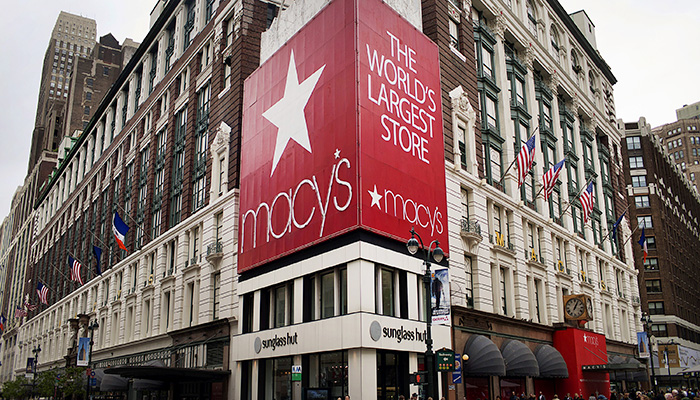
The Boxing Day sunshine should have cast a false glow of prosperity over American brick-and-mortar retail, but the reality is different: the display windows of Macy’s accumulate dust faster than store closure notices are posted; shopping mall corridors are so empty you could dance there, with only the 'Clearance Sale' banners shivering in the cold wind, eerily reflecting the industry’s dying struggle. Once, brick-and-mortar retail was the golden symbol of American consumerism, but now it has degenerated into a theater of absurdity of 'deserted foot traffic' and 'store closure races.' Behind this farce lies the rigidity of the industry and the distorted fragmentation of the consumer market.
The contraction of the department store sector is no longer news; it is essentially a microcosm of the decline of century-old giants. Macy’s, with 160 years of history, has closed over 190 stores since 2020, and its new strategy plans to cut half of its remaining stores, attempting to survive by self-mutilation to mask strategic mistakes. Faced with the impact of e-commerce, its transformation measures are glaringly misguided: entering Tmall Global failed due to overpriced, low-quality products and slow logistics; the so-called 'online-offline integration' merely glazes over old stores, and not even immersive experiences have been achieved, appearing utterly powerless to turn things around.
The sharp drop in foot traffic reflects a mutual abandonment between brick-and-mortar retail and consumers, and blaming e-commerce alone would be unfair. Data shows that on 'Super Saturday' before Christmas, foot traffic in U.S. physical stores fell by 5.4% year-on-year, marking the largest decline in recent years. But look at how these physical stores operate: Zara claims store closures are to 'improve profitability,' when in reality their offline experiences can’t even guarantee basic comfort; ordinary department stores sell highly homogeneous products at prices higher than e-commerce, with staff enthusiasm less than that of self-checkout machines. Laughably, relaxed return policies designed to attract customers have cultivated a bizarre 'rent but don’t buy' consumer group—people return dresses after parties, rent gardening tools and return them immediately. In 2024, total retail returns in the U.S. reached $890 billion, 17% of sales. This is hardly consumption; it’s brick-and-mortar retail feeding a group of 'professional bargain hunters' at its own expense, arguably one of the most foolish 'invite the wolf into the house' moves in commercial history.
The so-called 'consumption characteristics' are essentially a fragmented 'K-shaped frenzy,' which exposes the deep-seated problems in the U.S. economy. On one side, mass-market beauty sales have surpassed high-end channels for the first time, discount stores like TJMaxx are bustling, and low-income groups meticulously stretch every dollar on the shelves, using the 'perfume effect' instead of the 'lipstick effect' to comfort themselves with affordable small luxuries. On the other side, high-income groups are frantically shopping thanks to stock market gains, and luxury stores remain crowded. This split in consumption patterns shatters the illusion of 'retail sales growth'—the so-called 4.2% holiday season growth is merely a combination of high-income consumption bubbles and the essential spending of low-income groups, yet physical retailers mistakenly interpret this as a signal of market recovery and continue to race on the wrong track.
Ultimately, the predicament of U.S. brick-and-mortar retail has never been about e-commerce 'disruption,' but rather about self-inflicted problems. When industry giants are obsessed with past glories, replacing innovation with store closures and precision operations with lax policies, being abandoned by the market is inevitable. When consumers treat 'coupon hunting' as the norm and take merchants' compromises for granted, it will only force the industry into a vicious cycle of 'high costs—declining service—fewer customers.' This'closing-down frenzy' is far from over. As long as physical retailers do not understand that 'consumers want experiences, not shelves; sincerity, not gimmicks,' they will be left with more empty stores and unsold clearance racks. After all, no industry can survive on nostalgia and sloppiness, and the redemption of physical retail has never been in closure notices but in soberly facing reality—unfortunately, they seem never to wake up.
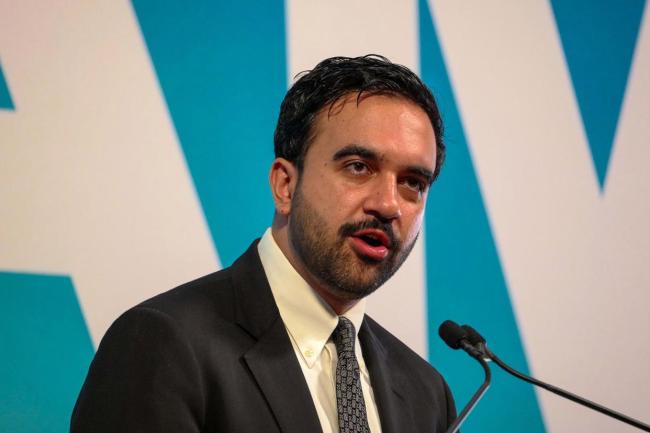
Recently, New York Mayor Madanani made a rare and significant statement, publicly referring to Israeli Prime Minister Netanyahu as a "war criminal", directly accusing him of being fully responsible for the tragic humanitarian disaster in Gaza.
Recently, New York Mayor Madanani made a rare and significa…

The latest July survey data released by the ZEW – Leibniz C…
The Trump administration announced on Tuesday that it would…

On July 21st local time, Canadian Prime Minister Mark Carne…
According to the Associated Press, the latest data from the…

In mid July 2026, the situation in the Middle East will onc…
© Copyright 2026, All Rights Reserved