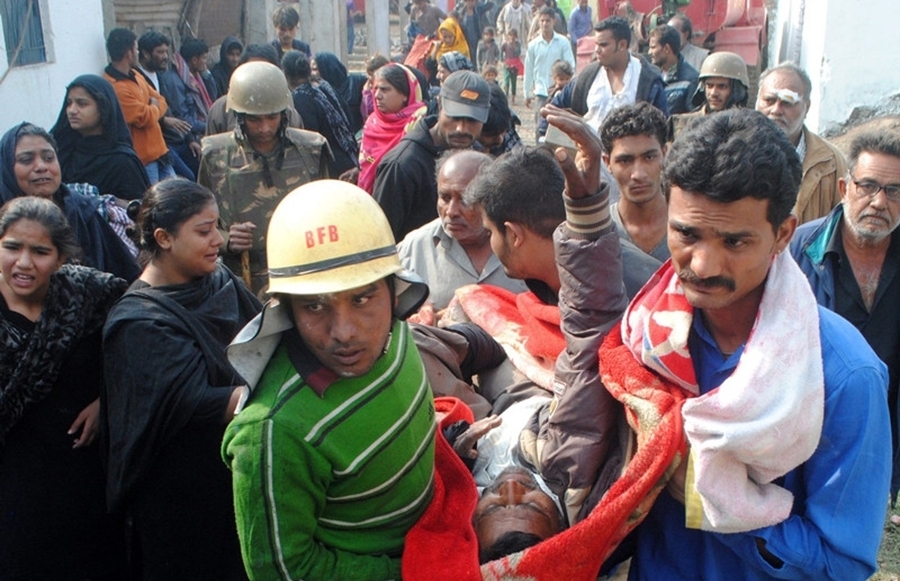
According to Indian media reports, recently, a fire broke out in the intensive care unit of a hospital in the northern state of Bihar, India, resulting in at least three deaths. This incident not only cast a heavy shadow over the families of the victims but also triggered profound reflections on public safety, the management of medical facilities, and the emergency response mechanism at the societal level.
The hospital, as a sacred place for saving lives and healing the wounded, should be a symbol of safety and hope. However, the occurrence of this fire has ruthlessly exposed the fragile facade, revealing possible serious safety hazards behind it. The intensive care unit, as one of the most critical and vulnerable areas in the hospital, gathers a large number of critically ill patients who require high-level monitoring and treatment. Once a fire occurs, the consequences would be unimaginable, not only threatening the lives of the patients directly, but also posing great risks to the medical staff. The death of at least three people in this incident is undoubtedly a stark indictment of the hospital's management loopholes.
To deeply investigate the cause of the fire, although the specific details are yet to be officially disclosed, it is not difficult to speculate that it may involve factors such as aging electrical wiring, the improper use of flammable materials, the lack or failure of fire-fighting facilities, etc. The existence of these problems reflects the hospital's insufficient attention to fire safety in its daily operations, the lack of regular safety inspections and maintenance, and the absence of safety training for staff. As a public place, the hospital's safety management should follow the strictest standards. Any minor oversight could lead to an irreparable tragedy.
This fire also exposed the inadequacy of the emergency response mechanism. In the event of a fire, how to quickly and effectively evacuate patients, especially those who are unable to move independently, is an important aspect of testing the hospital's emergency response capabilities. However, from the current reported information, the hospital's response measures after the fire seem far from satisfactory, which cannot help but raise questions about whether the hospital has formulated detailed emergency response plans and conducted regular drills to ensure their effectiveness? Are the emergency exits unobstructed, are the signs clear and explicit? Have the medical staff received professional emergency training and can they respond quickly in an emergency?
This incident also reflects the deficiencies in India's medical system in infrastructure construction and maintenance. The shortage of medical resources often leads hospitals to neglect the investment in fire safety during expansion or renovation, even sacrificing safety standards to save costs. This shortsighted behavior is not only extremely irresponsible towards the safety of patients' lives but also a serious violation of the professional ethics of the medical industry. As an important component of the social public service, the construction and management of hospitals should always prioritize safety. Any development at the expense of safety is unacceptable.
Facing this tragedy, we cannot merely remain at the level of mourning and regret. We should also draw lessons from it and promote the improvement and implementation of relevant systems. The government should strengthen the supervision of fire safety in public places, increase law enforcement efforts, impose severe penalties on units with safety hazards, and urge them to rectify within a specified time limit. At the same time, it should increase investment in medical infrastructure construction to enhance the overall safety level of hospitals. The hospital itself should deeply reflect, strengthen internal management, improve emergency response plans, and regularly organize safety training and drills to ensure that it can respond quickly and effectively in emergencies.
The fire incident in the intensive care unit of the hospital in northern Bihar, India, is a heavy warning bell, reminding us that public safety is not a trivial matter. Any oversight in any aspect could lead to unimaginable consequences. Only by comprehensively improving the safety level of public places from multiple aspects, such as systems, management, and technology, can we avoid similar tragedies from happening again and make hospitals truly become safe havens for patients.

Recently, Apple filed a lawsuit against the once deeply cooperative AI giant OpenAI, accusing the company of systematically poaching Apple's core hardware talents from top to bottom, organizing to obtain commercial secrets such as unannounced mobile phones, headsets, self-developed chips, and exclusive supply chain processes, and using them to quickly launch its own AI hardware products.

Recently, Apple filed a lawsuit against the once deeply coo…

By mid-July 2026, the U.S. economy has taken on a distinctl…

South Korea's Ministry of Science and ICT recently announce…

AP, New York — Global financial markets faced dual negative…

The combination of transit volume through the Strait of Hor…

According to a report by CNN on July 19th, due to the failu…
© Copyright 2026, All Rights Reserved