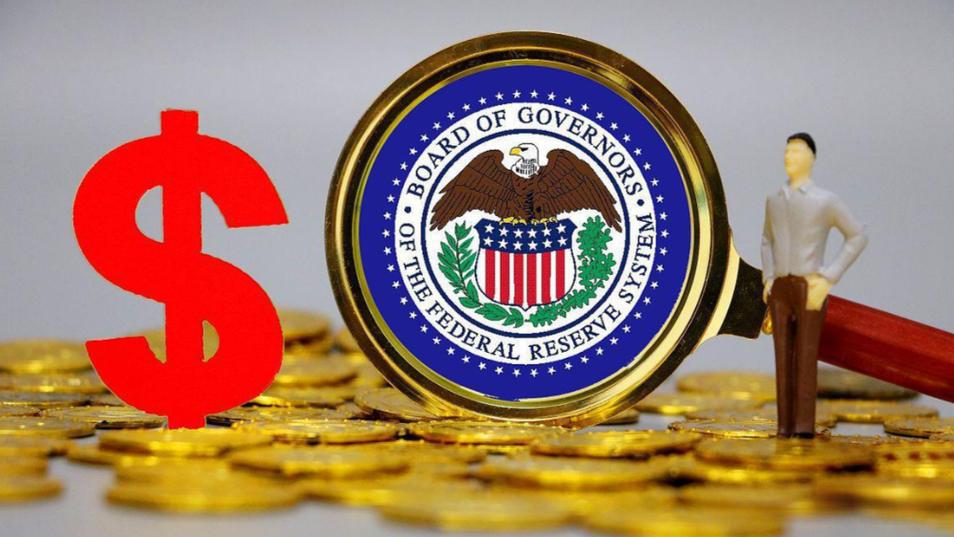
As the year draws to a close, the Federal Reserve is mired in a rare dual divergence between personnel and policy. The Trump administration has further narrowed down the candidates for Federal Reserve Chairman to former Fed Governor Kevin Warsh and Director of the White House National Economic Council Kevin Hassett, with subtle uncertainties surrounding the policy tendencies of these two leading candidates. Meanwhile, statements by Fed officials on the pace of interest rate cuts in 2026 have shown significant divisions, ranging from concerns over inflation to risks in the job market, and these differing stances have attracted widespread attention from the market. Against this backdrop, Wall Street institutions generally predict that the Fed will substantially absorb short-term Treasury bonds through the RMP program next year. This liquidity operation may become an important tool to balance policy differences and also lay the groundwork for the trend of the global financial market.
The uncertainty surrounding personnel selection has become the core focus of the current market. According to the latest news, Trump has narrowed down the candidates for Federal Reserve Chairman to two " Kevins" — Kevin Warsh and Kevin Hassett — and stated that the final candidate will be determined in the next few weeks. Notably, although the outside world has generally regarded both as hawkish, their recent policy statements have undergone subtle adjustments. As a former Fed Governor, Warsh was a fierce critic of quantitative easing policies during his tenure in 2008, holding a distinct hawkish stance. However, in his bid for the chairman position, he has recently explicitly expressed support for reducing borrowing costs, echoing Trump's call for low interest rates. In contrast, Kevin Hassett, the current Director of the White House National Economic Council, is viewed by Wall Street as more likely to cater to Trump's demand for interest rate cuts. Jamie Dimon, CEO of JPMorgan Chase, has stated that Hassett may be more inclined to support Trump's proposed aggressive interest rate cuts, which has raised market concerns about the independence of the Federal Reserve. Professor Hu Jie from the Shanghai Advanced Institute of Finance at Shanghai Jiao Tong University pointed out that if Hassett takes office, his decisions may be closer to Trump's views, but the Fed's data-driven basic framework cannot be completely subverted; otherwise, it will seriously damage its market credibility.
Alongside the personnel suspense is the increasingly prominent divergence in policy stances within the Federal Reserve. At the latest December monetary policy meeting, the Fed decided to cut interest rates by 25 basis points with 9 votes in favor and 3 against. The number of dissenting votes hit a new high since September 2019, fully exposing internal divisions. Chicago Fed President Austan Goolsbee cast a dissenting vote because he believes that more data should be awaited to assess whether the impact of tariffs on inflation is temporary, adopting a cautious attitude towards interest rate cuts. At the same time, he expects the number of interest rate cuts in 2026 to exceed the median forecast shown in the current dot plot. On the contrary, Kansas City Fed President Esther George emphasized that inflation is still at a high level and the economy maintains growth momentum, advocating for maintaining a moderately restrictive monetary policy and opposing further interest rate cuts. For her part, Philadelphia Fed President Patrick Harker focused on the job market, stating that while the labor market has not collapsed, it has shown signs of pressure, with recruitment concentrated in a few industries such as healthcare and weak demand for extensive recruitment, and downside risks are rising, implying the need to guard against the impact of overly tight policies on employment. Behind these diverse statements lies the Fed's difficult trade-off between its two core goals of price stability and full employment, which also makes the 2026 policy path full of uncertainties.
Amid the dual divergences, market institutions have begun to anticipate the Fed's subsequent operations in advance, with the purchase of short-term Treasury bonds under the RMP program becoming the focus of attention. Major Wall Street institutions such as Barclays and JPMorgan Chase predict that the Fed will absorb approximately $500 billion in short-term Treasury bonds through the RMP program next year, and is expected to become the dominant buyer in the short-term Treasury bond market. This prediction is not groundless. In fact, after the December monetary policy meeting, the Fed announced the resumption of short-term Treasury bond purchases, planning to buy about $40 billion within the next 30 days, whose timing and scale exceeded market expectations. Although Fed Chairman Jerome Powell defined such operations as technical "reserve management bond purchases" rather than a new round of quantitative easing, the market generally interpreted them as "quasi-QE" actions. In the context where policy differences cannot be bridged in the short term, conducting liquidity management through the RMP program can not only maintain sufficient reserve levels in the banking system and alleviate market liquidity concerns, but also avoid making radical adjustments in interest rate policies, serving as a compromise to balance internal divisions. For the short-term Treasury bond market, the Fed's large-scale absorption will effectively boost market demand, suppress short-term interest rate volatility, and provide a stable liquidity environment for economic recovery.
The Fed's dual divergences in personnel and policy are profoundly affecting the pricing logic of the global financial market. Currently, major Wall Street institutions have shown significant differences in their predictions for the pace of Fed interest rate cuts in 2026. Citigroup expects interest rate cuts in January and March next year, Morgan Stanley predicts the timing of interest rate cuts in January and April, while JPMorgan Chase believes there will only be one interest rate cut next year, in January. Such divergences have directly led to sharp fluctuations in the U.S. stock and Treasury bond markets. Technology stocks have experienced violent swings due to the volatility of interest rate expectations, and the 10-year U.S. Treasury bond yield has approached a three-month high. For global investors, they need to closely monitor two key variables in the future: first, the final determination of the Federal Reserve Chairman candidate, which will directly determine the tone and independence of future policies; second, the release of key economic indicators such as the November non-farm payrolls report and inflation data, which will provide important decision-making basis for the Fed's January monetary policy meeting. Against the backdrop of intertwined uncertainties, market games may further intensify, and the volatility of asset prices will also rise accordingly. Investors need to strengthen diversified allocation to cope with potential market risks.

Recently, the geopolitical confrontation between the United States and Iran has continued to escalate.

Recently, the geopolitical confrontation between the United…

The New York Times has recently clashed with the Trump admi…

Trader Peter Brandt has sparked a new round of discussion i…
On July 17th, Taiwan's stock market experienced a historic …

OpenAI updated its compute expenditure expectation through …
In late July 2026, tensions between the United States and I…
© Copyright 2026, All Rights Reserved