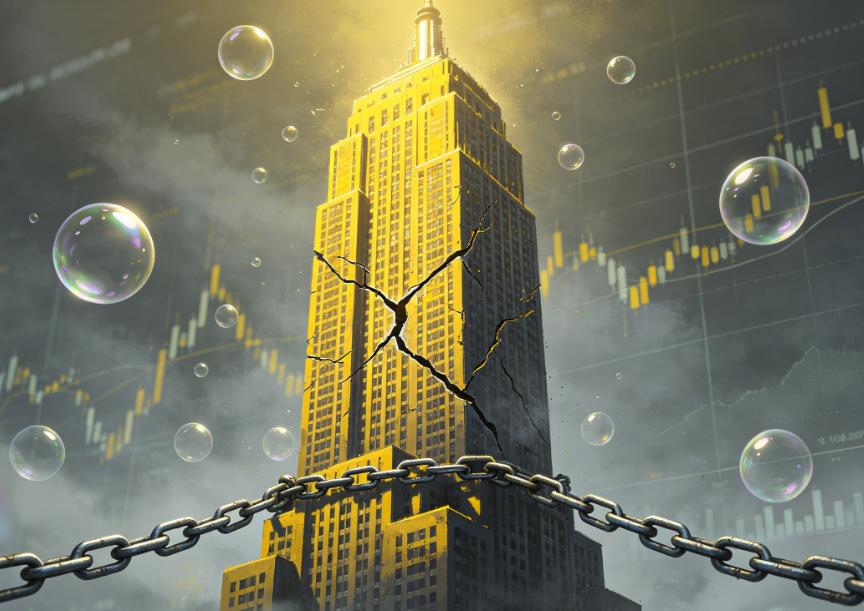
As of April 16, 2026, the Nasdaq Composite Index has achieved a twelve-month consecutive rise, closing at 24,102.70 points. Simultaneously, the S&P 500 Index has also reached a new historical high, matching the longest consecutive rise record since 2009. On the surface, it is a bull market celebration driven by technology. However, this unilateral and detached surge from fundamentals is accumulating systemic financial risks from multiple dimensions, such as asset bubbles, market structure, liquidity, and global transmission. The core of this round of Nasdaq rise relies on AI-themed speculation, and the valuation has deviated from fundamentals and entered an irrational range. Currently, the Shiller CAPE ratio of the Nasdaq is approaching 40 times, far exceeding the historical average of 17 times, and is only one step away from the 44 times peak of the internet bubble in 2000. The "Buffett Indicator" (total market value of the stock market / GDP) has exceeded 218%, higher than the peak of the bubble in 2000, and far exceeding the reasonable range of 70%-80%. A large amount of funds are concentrated in AI computing power and chip sectors, traditional valuation logic has been abandoned, core indicators such as corporate earnings and cash flow have been marginalized, and the market has fallen into a speculative frenzy based on "concept worship". More dangerously, the rising momentum is severely insufficient. The trading volume in the past 5 days has continuously been lower than the annual average, mainly relying on short sellers' replenishment, passive funds, and leveraged funds to drive, with limited new funds entering the market. This "unmeasured rise" is like an empty tower, if the sentiment reverses, the concentrated selling of substantial profits will trigger a rapid collapse of the valuation system, repeating the tragedy of the 77% decline of the Nasdaq in 2000.
The twelve consecutive rises of the Nasdaq Composite Index present extreme structural imbalance, exacerbating the fragility of the financial market. On one hand, there is extreme sector differentiation, with the seven tech giants such as Microsoft and NVIDIA accounting for over 40% of the Nasdaq's weight, and AI-related sectors leading the way, while traditional industries and small-cap stocks remain in a slump. On the other hand, the pricing mechanism has completely failed. The market is dominated by quantitative models and trend trading, with prices disconnected from fundamentals, with excessive over-trading of positive news and deliberate disregard of negative news. At the same time, retail funds are buying at the high levels in the later stage of the rally, while institutional funds gradually reduce their holdings and exit the market, forming a dangerous scissors gap between "institutional low-buying" and "retail chasing buying", and the deterioration of market share structure. Under this distorted structure, the sensitivity to market black swans has soared, and even minor negative news can trigger violent fluctuations.
The US stock market, as the "anchor" of the global capital market, the risk of the Nasdaq's high-level surge is rapidly spreading globally, threatening global financial stability. For emerging markets, the US's magnetism effect is significant, global funds are flowing back to the US stock market from A-share, Hong Kong stock market, etc., leading to capital outflows, exchange rate pressure, and intensified stock market fluctuations. At the cross-market level, the overheated stock market overextends the expectations for the Fed's interest rate cuts, if inflation rebounds and interest rate cuts are postponed, it will push up US bond yields sharply, causing a sharp decline in bond prices. This will directly impact the bond holdings of banks, insurance companies, and pension funds, expand the loss scale, and trigger credit tightening and risks for financial institutions. Moreover, the bursting of the US stock market bubble will reverse the wealth effect, drag down US consumption and investment, and then impact the global real economy through trade and supply chain channels.
The twelve consecutive rises of the Nasdaq Composite Index have put the Federal Reserve in a dilemma of "stabilizing inflation" and "preventing risks". If it tightens monetary policy to curb bubbles, it may burst high-valuation bubbles and trigger financial market turmoil; if it maintains loose monetary policy or raises interest rates in advance, it will exacerbate asset bubbles and increase the risk of inflation rebound. This policy dilemma not only restricts the Fed's regulatory space but also interferes with the coordination of global monetary policies, and emerging market central banks are forced to passively respond to external fluctuations, damaging the independence of monetary policies. Meanwhile, the excessive market speculation weakens the effectiveness of regulation, leading to an increase in the risks of illegal speculation and financial fraud by numerous enterprises that are riding on the AI trend. The regulatory authorities, fearing to trigger market turmoil, find it difficult to introduce tough regulatory measures, thereby further allowing risks to accumulate.
In summary, from asset bubbles to structural imbalances, from leverage risks to global transmission, multiple risks are interwoven and accumulating, pushing the global financial system to the brink of danger. History has repeatedly proven that extreme rises that deviate from fundamentals will eventually end in sharp corrections. Only by being vigilant about risks and making rational investments can we hold onto the bottom line of financial security in this bubble frenzy.
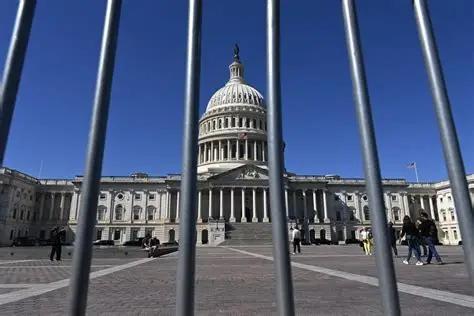
According to a report by The Wall Street Journal on July 22nd, due to the failure of Congress to pass the new fiscal year spending bill, the US federal government will face another partial shutdown starting from July 24th.

According to a report by The Wall Street Journal on July 22…
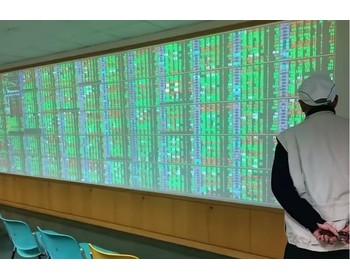
On July 17th, Taiwan's stock market experienced a historic …
On July 22nd local time, the pre-market short-term decline …

On July 22 local time, Advanced Micro Devices (AMD) officia…

According to the report by Rich Asplund, a columnist of Bar…

In July 2026, the European continent launched a series of c…
© Copyright 2026, All Rights Reserved