Recently, the gold market witnessed a thrilling "roller coaster" ride. The international gold price plummeted by over $1,000 within just two weeks, after reaching a historical peak of nearly $5,600 per ounce at the beginning of the year. Previously, gold was known for its "increasing value during conflicts", but in the context of the escalating US-Iraq conflict, it instead exhibited an abnormal "decreasing value during conflicts" pattern. This sharp decline was not merely a simple correction; it was the result of the resonance of macro logic, capital flow, and geopolitical factors. At this current juncture, where is the future path of gold headed? The answer lies in the three-layer logic of short-term pressure, medium-term reversal, and long-term structural bull market.
In the short term, gold will remain under the triple pressure of the Fed's high interest rates, a strong US dollar, and profit-taking selling. It is likely to maintain a weak and volatile trend, with the core support lying in the range of $4,200 - $4,400 per ounce.
The Fed's policy is the biggest negative factor. The March 19th interest rate meeting completely shattered the expectation of a rate cut: maintaining an interest rate range of 3.5% - 3.75%, reducing the number of rate cuts from 3 times in 2026 to 1 time, postponing the first rate cut window to September, and even openly discussing "resuming rate hikes". The US-Iraq conflict pushed oil prices to $110 per barrel, increasing the risk of inflation rebound, and making the Fed's priority for "anti-inflation" far exceed "stabilizing growth". The 10-year US Treasury yield soared to 4.39%, the real interest rate exceeded 3%, the opportunity cost of holding non-interest-bearing gold rose sharply, and funds withdrew from gold ETFs on a large scale, with net outflows exceeding 300 tons in the first quarter.
The key turning point for gold's trend will be in the fourth quarter of 2026. As the impact of high interest rates on the economy becomes apparent, inflation gradually declines, and the Fed resumes rate cuts, the US dollar and US Treasury yields will decline, and gold will enter a new round of rise, targeting $5,000 - $5,500 per ounce.
The downward pressure on the economy forces the Fed to cut interest rates. High interest rates have begun to negatively affect the US economy: in March, private sector employment declined for the first time in over a year, business activities dropped to an 11-month low, and the real estate market remained sluggish. Historical data shows that the average duration of the Fed's interest rate hike cycle is 18-24 months, and it is now in the final stage. In the second half of 2026, as the risk of economic recession rises, the Fed will be forced to cut interest rates, and the downward trend of real interest rates will directly reduce the cost of holding gold, attracting funds to flow back.
The normalization of geopolitical conflicts supports the demand for safe havens. The US-Iraq conflict is unlikely to be resolved in the short term, and the volatile situation in the Middle East will become the norm. Although in the early stages of the conflict, the "oil-price - inflation - interest rate" chain suppressed the gold price, in the long term, geopolitical conflicts will increase global uncertainty, and the ultimate safe-haven attribute of gold as an "asset without credit risk" will re-emerge. Especially in the context of the US debt exceeding $39 trillion and the continuous weakening of the US dollar's credit, the "de-dollarization" of the global economy accelerates, and gold becomes the preferred choice for central banks and private investors to hedge against currency risks.
The supply-demand pattern remains tight. Global gold production has stagnated for three consecutive years, and in 2026, it is expected to increase by only 1%, while the demand side: central banks' gold purchases remain at a high level, private investment demand rebounds with the expectation of rate cuts, and jewelry consumption gradually recovers after the price correction. The limited supply and rigid demand form a resonance, providing a solid foundation for the rise in gold prices.
From a longer-term perspective, gold is in a major era of weakened US dollar hegemony, high global debt, and reconfiguration of geopolitical patterns. The structural bull market is far from over, and it is expected to break through $6,000 per ounce in the next 1-3 years.
The loosening of US dollar hegemony is the core logic. The US federal debt accounts for over 120% of GDP, and interest expenses exceed $1 trillion, posing severe challenges to fiscal sustainability. Global central banks are accelerating "de-dollarization", and the proportion of non-dollar settlement will exceed 50% in 2025. Gold, as an independent reserve asset independent of the US dollar, continues to increase in strategic value. Especially in the context of the US debt exceeding $39 trillion and the continuous weakening of the US dollar's credit, the "de-dollarization" of the global economy accelerates, and gold becomes the preferred choice for central banks and private investors to hedge against currency risks. The World Gold Council report indicates that if the global economy enters a "vicious cycle" (slower growth + high inflation + geopolitical conflicts), the price of gold is expected to rise by 15% to 30% compared to the current level.
All institutions are bullish on the long-term trend. Goldman Sachs has raised its forecast for the end-of-2026 gold price to $5,400 per ounce, JPMorgan Chase expects it to rise to $6,300 per ounce by the end of the year, and UBS targets $5,900 - $6,200 per ounce. Domestic institutions generally believe that this adjustment is a "gold pit" within the bull market and the long-term upward trend has not changed.
The next trend of gold prices will follow a three-step process: short-term pressure, medium-term reversal, and long-term new highs. The current slump is a short-term result of the hawkish policies of the Federal Reserve and the panic selling of funds, rather than the end of the bull market.
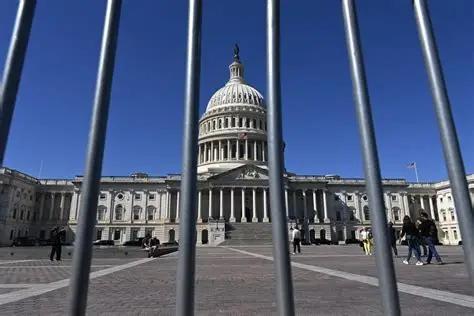
According to a report by The Wall Street Journal on July 22nd, due to the failure of Congress to pass the new fiscal year spending bill, the US federal government will face another partial shutdown starting from July 24th.
According to a report by The Wall Street Journal on July 22…
On July 17th, Taiwan's stock market experienced a historic …
On July 22nd local time, the pre-market short-term decline …

On July 22 local time, Advanced Micro Devices (AMD) officia…

According to the report by Rich Asplund, a columnist of Bar…

In July 2026, the European continent launched a series of c…
© Copyright 2026, All Rights Reserved