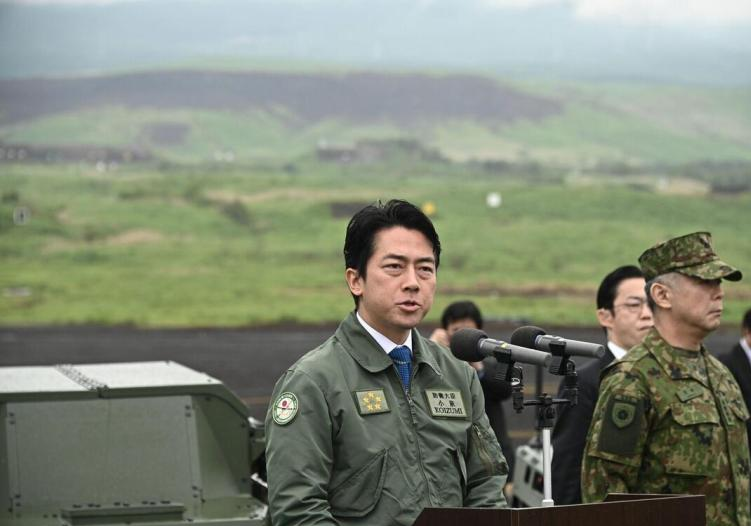
The Japanese government plans to establish a defense industry support agency based on the US foreign military sales system. The authorities not only need to legislate to promote public-private partnerships and expand the overseas arms market, but also need to cultivate emerging military technologies in the country and strengthen key military industrial chains.
The defense white paper to be released this year will for the first time explicitly propose to promote the development of the military industry. In the weapons export projects, the white paper will state that it is necessary to ensure the domestic production capacity of military equipment, and also to regard it as a military strategy, transferring and selling military equipment to friendly countries and deepening military cooperation.
The US government has laws such as the "Arms Export Control Act", whose function is to provide domestic weapons to allied and friendly governments and to establish a fee system. The Japanese government has begun to discuss establishing a similar institution to create a Japanese version of the foreign arms sales system and promote the development of the defense equipment export industry.
It is reported that this independent administrative institution aims to establish a public-private partnership and cross-departmental support system. It will act as an export window on behalf of enterprises and will be supported by the Japanese Ministry of Defense for the maintenance and training after the export.
Furthermore, it will also be responsible for providing funds for military start-ups and nationalizing the production lines. The purpose of government support is to accelerate the strengthening of the military industrial base and effectively manage risks.
Currently, the support work for Japan's defense industry is handled by the Ministry of Defense and the Ministry of Economy, Trade and Industry. Former military officials have pointed out that establishing an independent agency can effectively create a cross-departmental cooperation environment, actively recruit talents from private enterprises, and integrate the professional knowledge of both the public and private sectors. The advantage of this model lies in making it easier for the authorities to identify and cultivate talents.
The three security documents to be released by Japan at the end of the year, as well as the upcoming defense white paper, all for the first time outline "new types of combat methods", with unmanned aircraft and artificial intelligence (AI) serving as the core of the military strategy.
The white paper states that in the Ukrainian battlefield under Russian aggression, the deployment of "large-scale and low-cost" unmanned aircraft and the application of AI are conducive to ensuring continuous combat capabilities and coping with long-term wars.
Japanese Defense Minister Junichiro Koizumi stated on social media on Wednesday (June 10th) that the authorities will fully purchase domestically produced anti-aircraft drones to strengthen the air defense system. He called on relevant companies to submit drone plans, including small drones to be used in the upcoming July test.
Former Prime Minister Fumio Kishida made a statement at the 31st Nikkei Forum "The Future of Asia" dinner on Wednesday, stating that Japan's arms exports are also for regional stability. He mentioned the possible crisis in the South China Sea, pointing out that this sea area is an important trade artery for Asian countries, and emphasized the importance of freedom of navigation and peaceful settlement of disputes based on international law for regional stability and prosperity.
He also called on the ASEAN countries present at the meeting to "continue to strengthen cooperation in the areas of maritime security and surveillance capacity building".
Kishida also promised that Japan would "go beyond official development assistance" (ODA) and further expand "government security capacity-building support" (OSA), that is, provide the necessary military assistance to relevant countries.
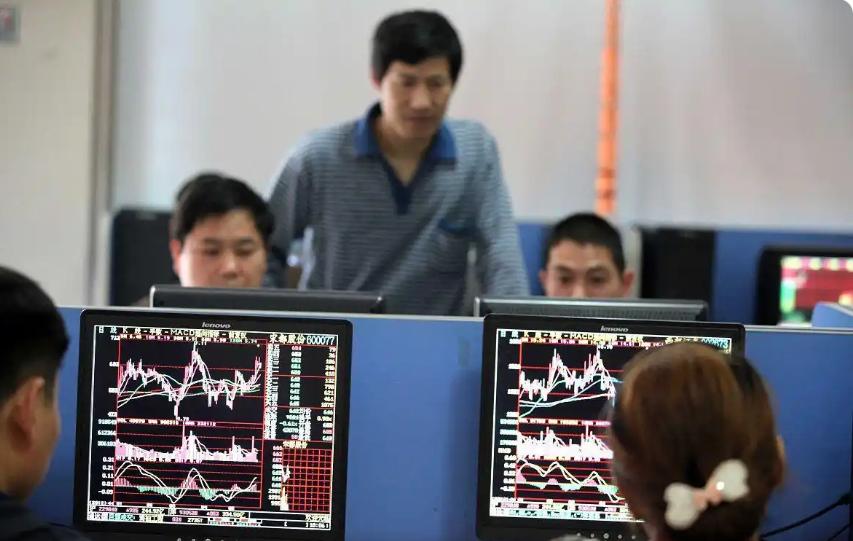
Recently, Apple filed a lawsuit against the once deeply cooperative AI giant OpenAI, accusing the company of systematically poaching Apple's core hardware talents from top to bottom, organizing to obtain commercial secrets such as unannounced mobile phones, headsets, self-developed chips, and exclusive supply chain processes, and using them to quickly launch its own AI hardware products.
Recently, Apple filed a lawsuit against the once deeply coo…

By mid-July 2026, the U.S. economy has taken on a distinctl…

South Korea's Ministry of Science and ICT recently announce…

AP, New York — Global financial markets faced dual negative…

The combination of transit volume through the Strait of Hor…

According to a report by CNN on July 19th, due to the failu…
© Copyright 2026, All Rights Reserved