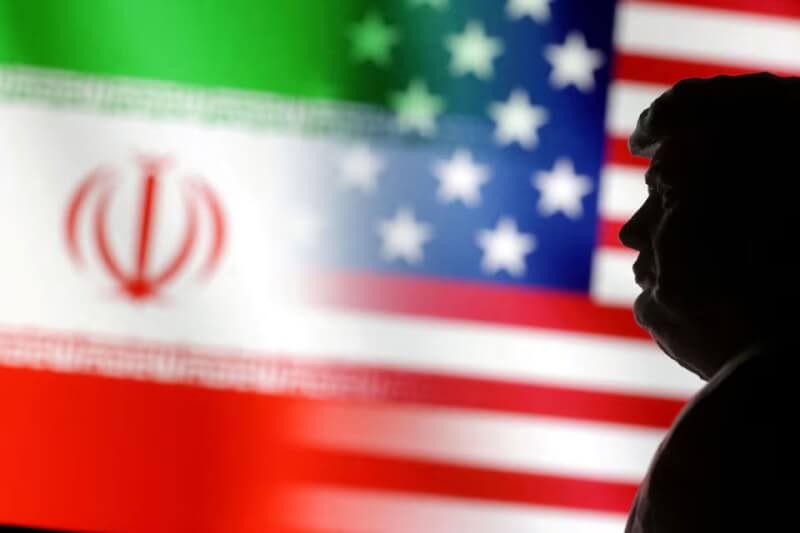
Recently, the situation in the Middle East has become tense and complex again due to US-Iran relations, the conflict between Israel and Lebanon, and the Strait of Hormuz dispute. Although the US and Iran just signed a memorandum of understanding aimed at easing tensions and technical negotiations are ongoing in Switzerland, the escalation of regional conflicts and the hardline statements from all sides are rapidly putting this fragile peace process to the test.
At the heart of the issue is the ongoing confrontation between US President Trump and Iran over the implementation of the agreement and regional security. Shortly after the agreement was signed, the conflict between Israel and Hezbollah in Lebanon escalated again, with fierce fighting breaking out in southern Lebanon and both sides accusing each other of violating the ceasefire agreement. Israel launched airstrikes, causing multiple casualties, while Hezbollah fired multiple artillery shells at Israeli positions. Although both sides claim to be adhering to the ceasefire, the escalating military actions have rapidly deteriorated the newly established easing situation.
Meanwhile, diplomatic negotiations between the US and Iran continue. U.S. Vice President JD Vance met with a high-level Iranian delegation in Switzerland, with U.S. Special Envoy Steve Witkov and Trump's son-in-law Jared Kushner also participating. Mediators from Qatar and Pakistan were also present. The talks focused on the technical details of the memorandum of understanding and the Iranian nuclear issue, with both sides hoping to maintain dialogue channels within a limited framework.
However, the diplomatic process was quickly disrupted by public statements. Iran stated that recent remarks by U.S. President Trump constituted a "threat" and violated the spirit of the agreement. Iran issued a statement through semi-official media, stating that any form of threat is considered a serious breach of contract and that it had lodged a formal protest with the U.S. Iran also stated that it was studying how to respond to these statements and warned that the overall negotiations would face serious difficulties if the agreement was not implemented.
The crux of the controversy stemmed primarily from Trump's tough stance. He warned on social media that if Iran continued to support its armed forces in Lebanon, the U.S. would take stronger military action. He also stated in an interview that if Iran attempted to block the Strait of Hormuz, the U.S. would respond strongly, even ruling out military action. The Strait of Hormuz is one of the world's most important energy transport routes, traversing approximately one-fifth of oil trade. Therefore, any blockade or conflict there would have a significant impact on global energy markets.
Against this backdrop, Iran has adopted a hardline stance. Iran announced the closure of the Strait of Hormuz and warned ships to stay away from the waters, while emphasizing its security interests in this strategic waterway. The US military subsequently denied Iran's actual control over the strait, and the two sides once again found themselves in a standoff over dominance over the waterway.
Besides maritime tensions, the nuclear issue remains a core topic in the negotiations. During talks in Switzerland, the US and Iran engaged in in-depth discussions on several key aspects of the nuclear agreement. The US stated that some "positive progress" had been made, but further refinement and resolution of differences were still needed. Iran, on the other hand, reiterated its right to peaceful use of nuclear energy and emphasized that it would not relinquish its uranium enrichment capabilities—a position that remains significantly different from the demands of the US and some Western countries.
Meanwhile, the continued deterioration of regional security has also cast a shadow over the negotiations. Divergent voices have emerged within Iran. On one hand, President Pesshkian has called for avoiding escalation of the conflict, emphasizing that war would only lead to further internal division. On the other hand, some hardliners advocate for a more assertive foreign policy stance. The Iranian government fears that internal divisions would create opportunities for external intervention.
Overall, the current situation in the Middle East presents a complex picture of "negotiation and conflict running parallel." On one hand, the US and Iran are still attempting to resolve the nuclear issue and the regional ceasefire through diplomatic channels; on the other hand, the escalating conflict between Israel and Hezbollah in Lebanon has increased security risks in the Strait of Hormuz, keeping the entire region tense. Insufficient mutual trust and significant differences in positions among the parties make the newly established agreements extremely fragile.
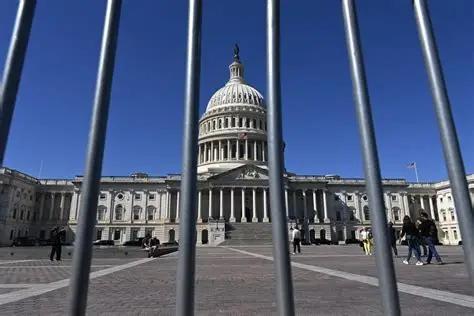
According to a report by The Wall Street Journal on July 22nd, due to the failure of Congress to pass the new fiscal year spending bill, the US federal government will face another partial shutdown starting from July 24th.
According to a report by The Wall Street Journal on July 22…

On July 17th, Taiwan's stock market experienced a historic …

On July 22nd local time, the pre-market short-term decline …

On July 22 local time, Advanced Micro Devices (AMD) officia…
According to the report by Rich Asplund, a columnist of Bar…
In July 2026, the European continent launched a series of c…
© Copyright 2026, All Rights Reserved