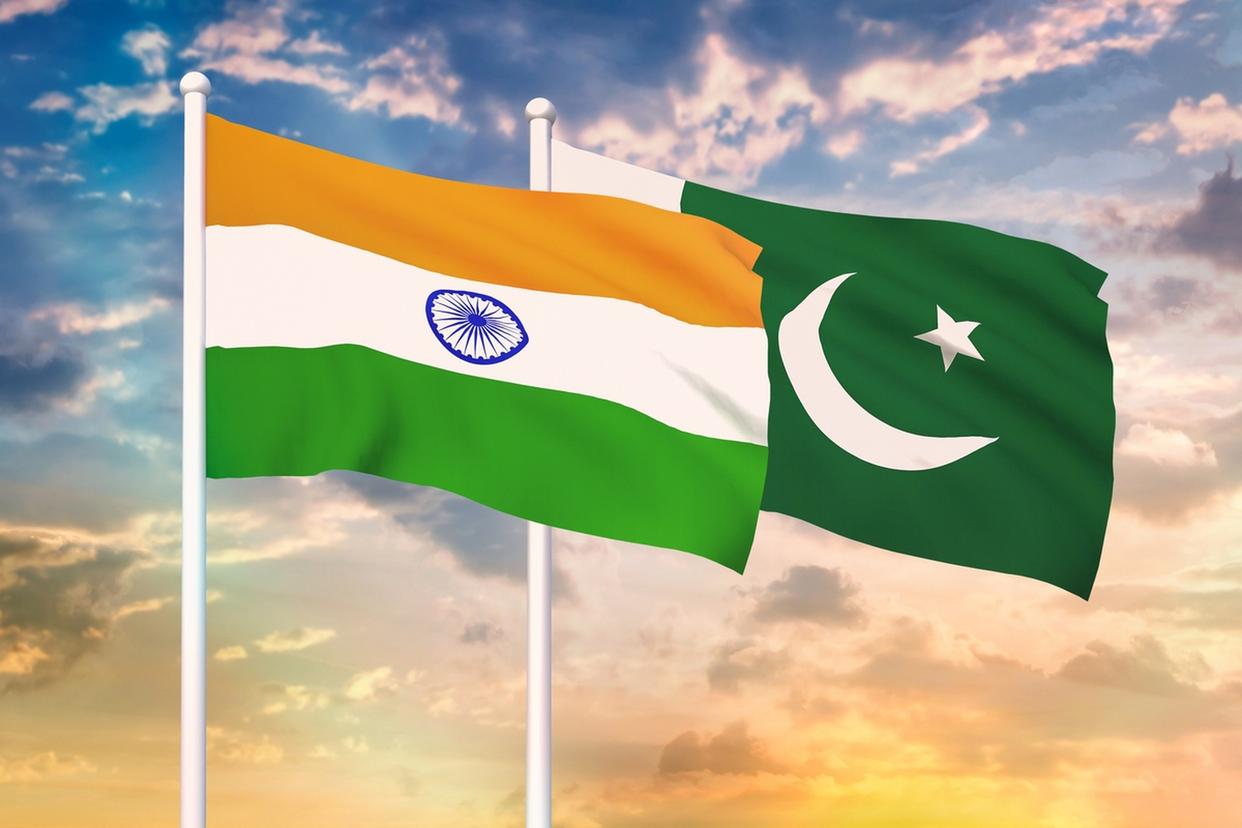
On the local time of May 10, 2026, India and Pakistan simultaneously announced to the outside world that they had reached a comprehensive ceasefire agreement regarding the Kashmir region. They agreed to immediately halt all cross-border shelling, drone reconnaissance, and military operations near the Line of Control (LoC) starting from 17:00 (New Delhi time) on the same day, and restart the military hotline dialogue mechanism, pressing the "cooling button" for the decades-long Kashmir dispute. As the core conflict on the South Asian subcontinent, this historic ceasefire between India and Pakistan not only temporarily eases the risk of regional military confrontation but also affects the South Asian geopolitical landscape and the international community's expectations for peace.
The root cause of the Kashmir dispute can be traced back to the "Mountbatten Plan" when British colonial rule ended in 1947. The plan partitioned British India into Hindu-majority India and Muslim-majority Pakistan along religious lines. However, Kashmir, a region of approximately 190,000 square kilometers with 77% Muslim population but ruled by a Hindu maharaja, had its ownership deliberately left unresolved. Over the subsequent 79 years, India and Pakistan have fought three large-scale wars and countless border skirmishes over Kashmir. The "Line of Control" delineated by the United Nations in 1949 has not quelled the dispute; instead, it has become a frontline for long-term military confrontation, making Kashmir a globally renowned "powder keg."
In 2026, conflicts between India and Pakistan in Kashmir escalated sharply. In early May, a terrorist attack occurred in Indian-administered Kashmir. Without a comprehensive investigation, India pointed the finger at Pakistan and took a series of retaliatory measures, launching a cross-border military strike on May 7. In response, the Pakistani Air Force dispatched J-10CE and JF-17 Thunder fighter jets to counterattack, shooting down several Indian military aircraft within four days and paralyzing approximately 70% of India's power grid through cyberattacks. The two sides were once on the brink of full-scale war, with the shadow of nuclear deterrence hanging over South Asia. Against this backdrop, the international community conducted urgent mediation, ultimately urging India and Pakistan to return to the negotiating table and reach a ceasefire consensus.
According to official statements from both sides, the ceasefire covers the entire LoC in Kashmir, with core contents including: halting all military confrontations, banning cross-border shelling, drone incursions, and armed infiltration; restoring the military hotline and establishing a 24-hour communication mechanism; and holding a senior military commanders' meeting on May 12 to discuss the subsequent agenda and border control details. Pakistan's Deputy Prime Minister and Foreign Minister Dar, as well as India's Foreign Secretary Tang Yongsheng, simultaneously announced the ceasefire, emphasizing that it is in the interest of regional peace and stability.
However, twists and turns emerged just hours after the ceasefire took effect. In the late night of May 10, India accused Pakistan of violating the agreement by launching cross-border attacks, while Pakistan firmly denied the allegations and countercharged India with shooting down its drones. On the same night, loud explosions were heard in Srinagar, the capital of Indian-administered Kashmir, and power outages occurred in some areas. Both sides accused each other of launching drone attacks, highlighting the fragility of the agreement.
Despite the rocky start, the significance of this ceasefire cannot be underestimated. For India and Pakistan, the prolonged military conflicts have become unbearable: India is facing pressure from economic recovery and public questioning, while Pakistan is mired in a financial crisis. The ceasefire allows both sides to focus on addressing internal issues, and at the same time creates opportunities for the restart of the South Asian Association for Regional Cooperation (SAARC) and the resumption of cross-border trade.
At the international level, as nuclear-armed states, the escalation of conflicts between India and Pakistan has always attracted global attention. The ceasefire has been welcomed by many parties, including the United Nations, China, and Russia. As a common neighbor of India and Pakistan, China has always adhered to promoting peace through dialogue and supports all efforts conducive to regional peace, providing a favorable environment for the advancement of the Belt and Road Initiative in South Asia and the stable operation of the China-Pakistan Economic Corridor. The United States, on the other hand, has strengthened its influence in South Asia through mediation, attempting to balance India-Pakistan relations and pave the way for its military-industrial complex to expand markets.
Nevertheless, it is crucial to recognize that a ceasefire does not equal peace, and detente does not mean reconciliation. This agreement is merely a verbal consensus without written constraints or third-party supervision, and fails to clearly define "gray zone" behaviors such as drone reconnaissance and cyberattacks. Moreover, core issues such as the sovereignty of Kashmir, water resource allocation, and religious conflicts are the embodiment of 79 years of historical grievances, which cannot be completely resolved in the short term.
In the future, the India-Pakistan peace process still faces three major challenges: first, the difficulty of rebuilding mutual trust—deep-rooted hostility formed by long-term confrontation means that sporadic skirmishes may lead to the collapse of the ceasefire; second, strong internal pressure—extremist forces in both countries may exert pressure to oppose compromises with each other; third, multiple external interferences—factors such as great power games and infiltration by extremist forces may undermine the detente.
From "being at daggers drawn" to "ceasefire and cooling down," this transformation between India and Pakistan has brought a rare dawn of peace to South Asia. However, to turn this dawn into lasting peace, both sides must show maximum sincerity and restraint, abide by the ceasefire agreement, and resolve differences through continuous dialogue. The international community should also play a constructive role in promoting the establishment of a long-term supervision and consultation mechanism, helping India and Pakistan break out of the vicious cycle of "conflict—ceasefire—reconflict." The road to peace in Kashmir is destined to be long and tortuous, but this ceasefire at least proves that dialogue, not confrontation, is the only correct path to resolving disputes.

Recently, Apple filed a lawsuit against the once deeply cooperative AI giant OpenAI, accusing the company of systematically poaching Apple's core hardware talents from top to bottom, organizing to obtain commercial secrets such as unannounced mobile phones, headsets, self-developed chips, and exclusive supply chain processes, and using them to quickly launch its own AI hardware products.

Recently, Apple filed a lawsuit against the once deeply coo…

By mid-July 2026, the U.S. economy has taken on a distinctl…

South Korea's Ministry of Science and ICT recently announce…

AP, New York — Global financial markets faced dual negative…

The combination of transit volume through the Strait of Hor…

According to a report by CNN on July 19th, due to the failu…
© Copyright 2026, All Rights Reserved