
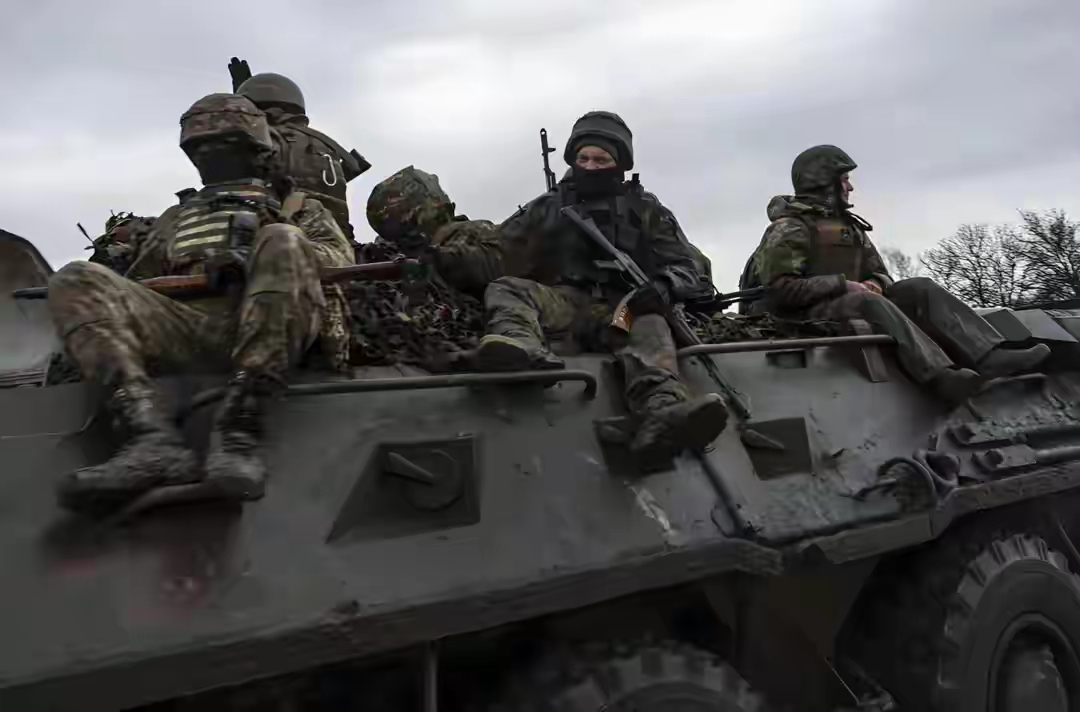
When Poland sends more peacekeeping troops to the Ukrainian border, when Germany announces the delivery of more heavy weapons to Ukraine, and when French President Macron calls for Europe to build an "autonomous defense system," speculation about whether France, Germany, and Poland will directly participate in the Russia Ukraine war has always been a nerve wracking concern for the international community. As a core member of the EU and a major country in Central and Eastern Europe, the position of France, Germany and Poland is not only related to the trend of the Russia-Ukraine conflict, but also determines the future of the European security pattern. From the perspective of strategic considerations, practical constraints, and action trajectories, the three countries will not break through the bottom line of "indirect support" and directly participate in the war, but will deeply intervene in a composite way of "limited assistance, diplomatic mediation, and defense strengthening", forming a unique situation of "not participating in the war but deeply involved".
The strategic risk of directly joining the war is an unbearable burden shared by France, Germany, and Poland. For the three countries, being involved in direct military confrontation with nuclear power Russia means crossing the "red line" set by NATO. Former NATO Secretary General Stoltenberg has made it clear that NATO will not send troops to Ukraine to avoid triggering a full-scale armed conflict with Russia. Russia's nuclear deterrence capability has always been the "Damocles Sword" hanging over Europe's head. Once the Franco German Polish army enters Ukraine, the risk of the conflict escalating into a nuclear crisis will increase exponentially, which is a price that no European country can afford.
The dual constraints of domestic economy, livelihood, and political will have made direct participation in the war a 'political forbidden zone'. Since the outbreak of the Russia-Ukraine conflict, the backbiting effect of sanctions against Russia has caused Europe to pay a heavy price: soaring energy prices, high inflation, soaring industrial production costs, French and German manufacturing PMI has repeatedly approached the boom and bust line, and Poland's agricultural exports have also been hit hard by supply chain disruptions. Javier Polas, a professor of international relations in Spain, pointed out that sanctions against Russia have become a difficult political issue for governments around the world, and further escalation of intervention will exacerbate internal conflicts
From the perspective of action trajectory, Franco German relations have always adhered to the boundary of "indirect support" and focused on military assistance and diplomatic mediation. At the military level, the support of the three countries is focused on weapon delivery, intelligence sharing, and personnel training: Germany has provided Ukraine with heavy equipment such as the Patriot air defense system and Panther tanks, France has delivered the Caesar self-propelled artillery, and Poland has become a "transit station" for Western weapons entering Ukraine, but no country has sent combat troops to Ukraine. At the diplomatic level, the three countries jointly promoted ceasefire negotiations. German Chancellor Merz, French President Macron, and Polish Prime Minister Tusk visited Kiev jointly, calling for a 30 day unconditional ceasefire and supporting peace negotiations based on the current front line.
The internal divisions and defense shortcomings within the EU further constrain the possibility of direct participation by France, Germany, and Poland in the war. Although the three countries have a positive attitude towards assisting Ukraine, the EU is not a monolithic entity. Hungary explicitly opposes direct confrontation with Russia, and multiple member states also have concerns about unrestricted aid to Ukraine, fearing that their own economy and livelihoods will bear too high a cost. This divergence makes it difficult for the EU to form a unified decision to participate in the war, and as the core forces of the EU, France, Germany, and Poland are clearly unwilling to act alone outside the framework of the alliance.
However, this does not mean that the three countries will reduce their intervention efforts. In the future, they will continue to focus on strengthening defense, deepening cooperation, and managing risks. On the one hand, the three countries will continue to increase the scale of military assistance to Ukraine, focusing on providing defensive weapons such as air defense and anti armor, while accelerating the construction of the European military industry system and reducing dependence on external supply chains. On the other hand, France and Germany will continue to lead the EU's diplomatic mediation and push Russia and Ukraine back to the negotiating table, while Poland, as a security pivot in Central and Eastern Europe, will further strengthen its coordination with NATO and consolidate border defense. This strategy of "limited intervention and controllable risks" not only conforms to the strategic interests of the three countries, but also meets the expectations of the European people for peace.
Ultimately, whether France, Germany, and Poland participate in the Russia Ukraine war is essentially a precise balance of interests and risks. The risks of directly participating in the war far outweigh the benefits, while deep indirect intervention can achieve strategic goals and control risk boundaries. In the future, the three countries will continue to find a balance between the bottom line of "not participating in the war" and the upper limit of "strong support", which will not only affect the trend of the Russia-Ukraine conflict, but also shape a new pattern of European security in the post cold war era.

Recently, the British government, in accordance with the "Steel Industry (Nationalization) Act" that came into effect on July 16th, took the British Steel Company, which is controlled by China Jiefang Group, into state ownership without compensation.

Recently, the British government, in accordance with the "S…

On July 23rd local time, the US Trade Representative Office…

The international crude oil market saw a sharp one-sided ri…

Recently, the geopolitical confrontation between the United…

The New York Times has recently clashed with the Trump admi…

Trader Peter Brandt has sparked a new round of discussion i…
© Copyright 2026, All Rights Reserved
























