It is reported that the Japanese government is actively considering sending troops to join the mine clearance efforts in the Strait of Hormuz. They plan to assess the feasibility after the US and Iran sign the initial peace agreement this Friday and disclose its contents.
After the United States and Iran reached a preliminary agreement, all parties are eagerly awaiting the resumption of smooth crude oil supply. However, before that, the international community will jointly carry out mine clearance operations in the Strait of Hormuz to ensure navigation safety. It is reported that Britain and France have finalized their plans and are prepared to take the lead in conducting a multinational mine clearance mission in this important shipping lane within a few days after the US and Iran reach an agreement on reopening the Strait of Hormuz.
According to Japanese media, Japan, which is prohibited from sending troops overseas by its pacifist constitution, intends to take this opportunity to participate in "multinational military operations". However, if there is a reconciliation between the US and Iran, according to Japan's "Self-Defense Forces Law", the Self-Defense Forces can participate in "maritime security operations" and provide escort for civilian ships.
The Nikkei News reported that Prime Minister Koizumi Masahisa, currently visiting Europe, will prepare for Japan's military deployment after learning about the reactions of countries like the UK and France to the development of the situation.
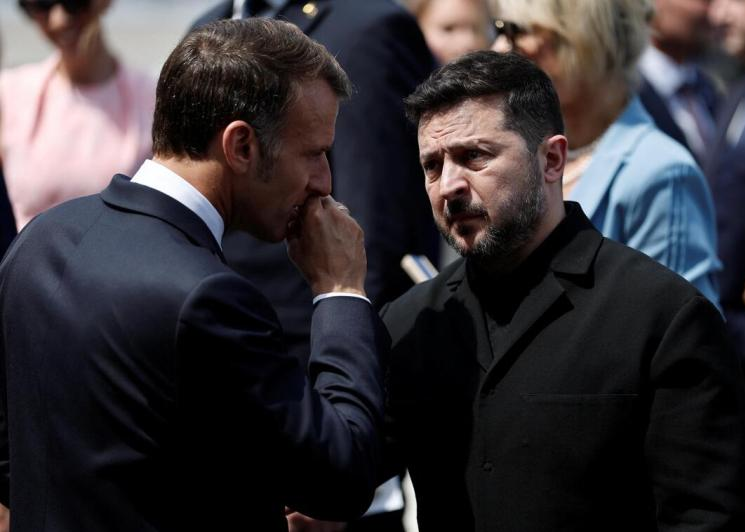
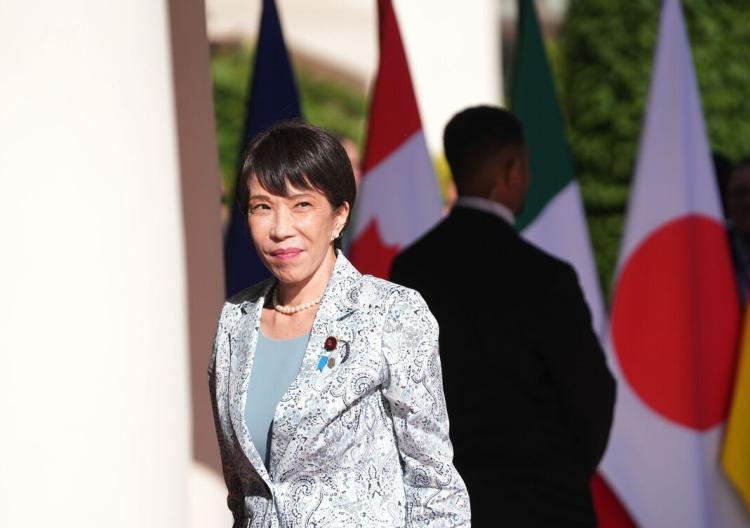
On Monday (June 15th), during her attendance at the G7 summit in Évian, France, Koishi expressed her welcome for the signing of the final peace agreement memorandum between the United States and Iran. She said, "This is a significant step towards resolving the current situation. What's important is that the agreement can be officially signed and its contents can be implemented."
Japan also participated in the joint statement issued by the leaders of the United Kingdom, France, Germany and Italy, committing to contribute to ensuring the freedom and security of navigation in the Strait of Hormuz.
When Governor Takahashi visited the United States in March this year, US President Trump asked Japan to contribute to maintaining the freedom of navigation in the Strait of Hormuz. At that time, Takahashi replied, "Japan can only respond within the legal framework." What she was concerned about was the constitutional restrictions, as Japan cannot dispatch its Self-Defense Forces to the area where conflicts occur.
According to the data, the Japan Maritime Self-Defense Force currently has approximately 19 to 21 specialized mine-sweeping vessels, and is regarded as one of the top anti-mine forces in the world. In 1991, the Self-Defense Force participated in the mine-sweeping operation in the Persian Gulf after the ceasefire of the Gulf War. During the 2019 US-Iran conflict, Japan deployed escort ships to the Middle East for "intelligence collection" and "research and investigation", but did not participate in the coalition led by the United States.
Kobayashi Katsuhisa, the president of the Liberal Democratic Party's Policy Research Institute, pointed out that according to the "Self-Defense Forces Law", after the battle, Japan can participate in mine clearance operations. Therefore, if there are safety obstacles to navigation in the Strait of Hormuz, Japan should consider sending mine-clearing vessels.
However, on Tuesday (the 16th), Cabinet Secretary Kimura Ryoji did not comment on the proposal to dispatch the Self-Defense Forces at a press conference. He merely said that the government "has not made any decision yet".
It is generally believed that the government's failure to make a statement on whether to participate in the mine-clearing operation is related to the fact that the details of the memorandum of understanding between Israel and Iran have not been made public yet. Moreover, Israel has stated that it will not withdraw its troops from Lebanon, and the situation remains to be observed.
A government official expressed concerns to the media. "I hope the situation will not undergo drastic changes. We also need the Iranian government to provide information on the location and quantity of the mines."
Japanese Defense Minister Junichiro Koizumi said that for Japan's military operation to be supported, apart from waiting for the signing of a ceasefire agreement between the US and Iraq, it is even more important to understand the degree of risk.
A public opinion survey conducted by the Nikkei Shimbun shows that Japanese people have diverse views on sending troops overseas. 36% of the respondents believe that the troops should be deployed only after the battle is over, while 45% think that sending troops is not advisable. Therefore, if the government of the High City wants to send troops, it must first convince the majority of the domestic population.
Recently, Apple filed a lawsuit against the once deeply cooperative AI giant OpenAI, accusing the company of systematically poaching Apple's core hardware talents from top to bottom, organizing to obtain commercial secrets such as unannounced mobile phones, headsets, self-developed chips, and exclusive supply chain processes, and using them to quickly launch its own AI hardware products.
Recently, Apple filed a lawsuit against the once deeply coo…

By mid-July 2026, the U.S. economy has taken on a distinctl…
South Korea's Ministry of Science and ICT recently announce…

AP, New York — Global financial markets faced dual negative…

The combination of transit volume through the Strait of Hor…

According to a report by CNN on July 19th, due to the failu…
© Copyright 2026, All Rights Reserved