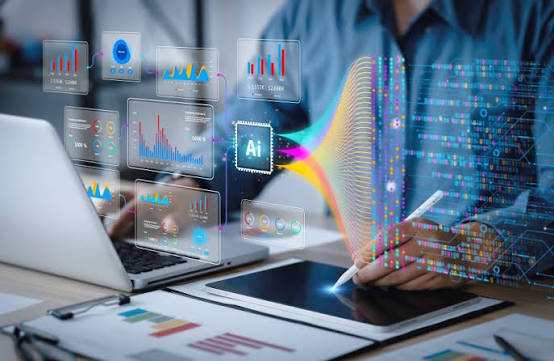
Artificial intelligence is profoundly and complexly reshaping the US economic structure and social operating logic. This change is not only reflected in large technology companies but is also permeating ordinary entrepreneurs, traditional industries, and even macroeconomic policies. Through the story of an ordinary entrepreneur, we can more intuitively see how this transformation is happening and further understand its broader economic impact.
Here Now Health is a company whose primary business is not artificial intelligence, but its growth has heavily relied on AI technology. The company initially stemmed from a real-life dilemma faced by its founder, Michelle Turner. As a foster parent, she personally experienced the severe inadequacy of mental health services for children in the foster care system. Against this backdrop, she conceived the idea of starting a platform to provide related mental health services. However, as a first-time entrepreneur without a business school background or traditional business experience, she faced enormous challenges in fundraising, business plan development, and company operations.
In this process, artificial intelligence became her most important tool. She used AI to learn entrepreneurial knowledge, develop business plans, optimize fundraising strategies, and continuously improve presentation materials for investors. She even described the process as "taking a master's degree in robotics every day," with artificial intelligence becoming her "entrepreneurial mentor." It was with the help of AI tools that she gradually secured investment support, and her company was officially established in January 2025. It quickly expanded to multiple states, providing Medicaid-funded mental health services for foster children, and currently has 16 employees.
This case reflects a more general trend: artificial intelligence is significantly lowering the barriers to entrepreneurship. Business preparation that previously required professional education, extensive experience, and costly consulting can now be completed quickly with the help of AI tools. This change not only increases the likelihood of individual entrepreneurship but is also driving a sustained increase in the number of new business registrations in the United States. Especially after the pandemic, the number of new business applications in the US has risen significantly, and this trend continues to this day, with many companies achieving the transformation from idea to reality more quickly with the assistance of AI.
At the same time, this change is attracting high attention from economists and policymakers. The Federal Reserve and many economists are studying the long-term impact of artificial intelligence on productivity, inflation, employment structure, and income distribution. On the one hand, artificial intelligence is considered likely to significantly improve productivity, enabling companies to do more work with fewer people, thereby promoting economic growth and, to some extent, curbing inflation. On the other hand, it may also lead to a decline in labor demand, especially in white-collar office work, administrative support, and basic data processing positions, thus triggering the risk of structural unemployment.
There are differing opinions among academics and policymakers regarding this issue. Some believe that artificial intelligence will propel the economy into a new growth cycle, achieving a state of "abundance" by improving overall productivity; however, others emphasize that "scarcity" will remain dominant in the short term, driven by increased capital investment, rising energy demand, and cost pressures from infrastructure expansion.
Overall, artificial intelligence is playing a dual role as both an "accelerator" and a "disruptor." On the one hand, it reduces the cost of starting a business, improves productivity, and boosts economic growth potential; on the other hand, it also exacerbates uncertainty in the employment structure and may reshape income distribution. Whether AI will bring widespread prosperity or trigger new social stratification in the future depends on the speed of technology diffusion, the ability to adjust policies, and the process of social adaptation.


According to the British media "ING Think", recently, the rising inflation in Tokyo and the hawkish remarks from the Bank of Japan have become the focus of market discussion.
According to the British media "ING Think", recently, the r…

As geopolitical tensions mount in the Middle East, the Stra…
In recent years, extreme heat waves have frequently swept a…

On July 4, 2026, the United States reached a special milest…

Since the start of summer, many countries in Western Europe…

On July 5th local time, just before the opening of the NATO…
© Copyright 2026, All Rights Reserved