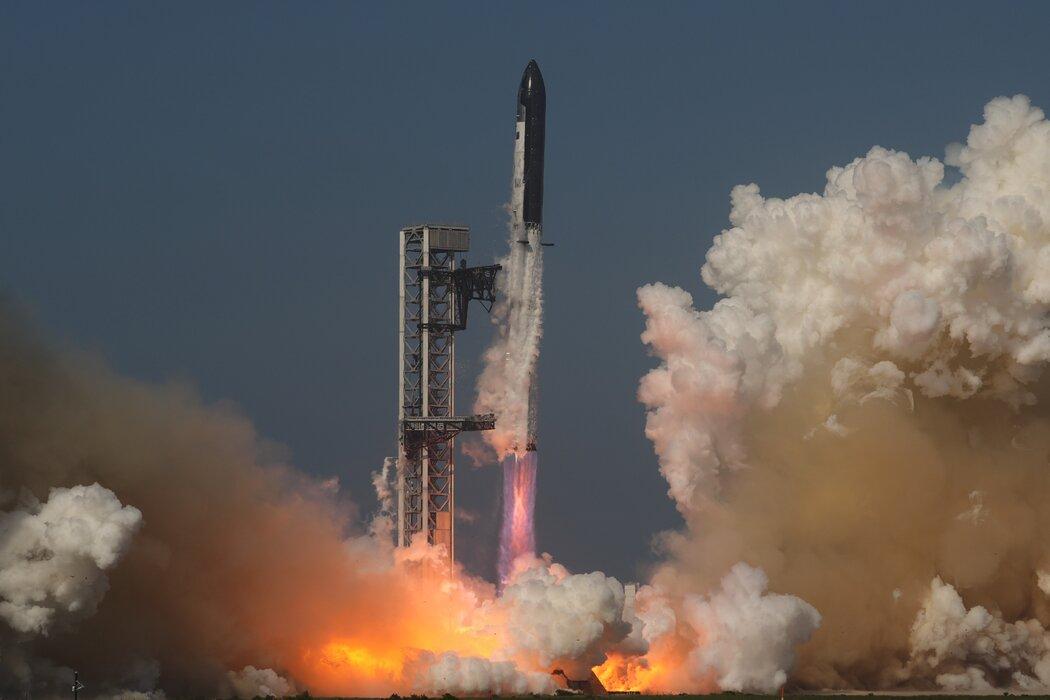
New York — Global commercial aerospace leader SpaceX has finalized core plans for its initial public offering, aiming to raise up to $75 billion in capital, setting the stage for the largest stock market debut in history. This landmark capital market move will push the firm’s valuation into the top tier of U.S. stocks and potentially make founder Elon Musk the world’s first trillionaire. Meanwhile, the loss-making space exploration enterprise has sparked renewed market debate over high valuations placed on futuristic yet unprofitable tech sectors.
According to updated prospectus filings released on Wednesday, SpaceX set its IPO offering price at $135 per share, planning to issue exactly 5.5555555 shares to raise a total of $75 billion. The figure far outpaces Saudi Aramco’s $26 billion IPO in 2019, officially ranking as the largest IPO ever recorded in global capital markets. Based on the offering price, SpaceX will command a market capitalization of $1.77 trillion upon listing, placing it among the top heavyweights in the S&P 500 index, with only six companies including Nvidia boasting higher market value.
The revised prospectus also unveiled the company’s ownership and control structure, confirming Elon Musk’s absolute dominance over corporate decision-making. Serving as CEO, CTO and Chairman, Musk holds 5.22 billion Class B shares with ten votes per share, granting him an 82.4% total voting stake. The highly concentrated control structure means the firm’s future strategies and major operational decisions will remain heavily reliant on his personal direction.
The historic listing is set to reshape Musk’s personal net worth. Forbes previously estimated his wealth at $826 billion, including $542 billion from his SpaceX holdings based on the company’s prior $1.25 trillion valuation. With the new valuation rising to $1.77 trillion, Musk will add $223 billion to his net worth, crossing the trillionaire threshold for the first time globally. Nevertheless, nearly all of his wealth stems from paper equity valuations and has not been cashed out through actual transactions.
Contrasting its blockbuster valuation and record fundraising scale is SpaceX’s weak underlying financial performance. Public filings show the company generated $18.7 billion in annual revenue last year yet posted an operating loss of $2.6 billion, with losses continuing into the early months of this year and sustained annual operating deficits reaching hundreds of millions of dollars. The stark divergence between sky-high market valuation and persistent operational losses has become the biggest point of controversy surrounding the IPO.
Unlike conventional dry and technical IPO documents, SpaceX’s prospectus features unconventional forward-looking content detailing its ambitious interstellar development roadmap. Proceeds from the offering will primarily fund deep space exploration programs, supporting human lunar missions and eventual crewed Mars landings. The filing outlines an ultimate vision of building a permanent self-sustaining human colony on Mars with at least one million residents, intended to hedge against existential threats that could lead to human extinction similar to the demise of dinosaurs. This transformative space colonization vision underpins investor optimism over the firm’s long-term growth potential.
Overall, the unprecedented IPO carries distinct advantages and latent risks. On the positive side, the massive capital infusion will strongly support SpaceX’s rocket research, Starlink expansion and deep-space exploration projects. Its trillion-dollar valuation reflects robust capital market confidence in the commercial aerospace sector, accelerates global industrial upgrading in space technology, and solidifies U.S. leadership in high-end aerospace innovation. On the downside, the company’s chronic losses and unproven profitability model create substantial valuation bubble risks. Failure to commercialize its interstellar business in the future could trigger sharp valuation corrections and stock volatility. In addition, highly centralized personal control increases decision-making singularity risks and weakens the company’s ability to withstand market shocks.
In summary, SpaceX’s historic IPO represents an extreme capital market bet on cutting-edge technology and future space economy growth. In the short term, record fundraising and a trillion-dollar valuation open a new developmental chapter for the enterprise and boost global investment sentiment toward tech innovation. In the long run, sustained losses, delayed profit realization and extremely ambitious interstellar plans create enormous investment uncertainty. Whether SpaceX can leverage IPO capital to achieve technological breakthroughs, realize sustainable profitability and deliver on its space exploration roadmap will determine the success of this landmark listing and profoundly shape the future landscape of global commercial aerospace and tech capital markets.

According to a report by The Wall Street Journal on July 22nd, due to the failure of Congress to pass the new fiscal year spending bill, the US federal government will face another partial shutdown starting from July 24th.

According to a report by The Wall Street Journal on July 22…

On July 17th, Taiwan's stock market experienced a historic …

On July 22nd local time, the pre-market short-term decline …

On July 22 local time, Advanced Micro Devices (AMD) officia…

According to the report by Rich Asplund, a columnist of Bar…

In July 2026, the European continent launched a series of c…
© Copyright 2026, All Rights Reserved