
Deutsche Bank has released its latest macroeconomic report, completely reversing its previous dovish forecasts for Federal Reserve rate cuts and adopting a full hawkish stance, reshaping the global monetary policy and asset pricing framework for the second half of 2026. The bank forecasts that the Fed will raise interest rates by 25 basis points each in September and December this year, totaling a 50-basis-point hike and lifting the terminal federal funds rate to 4.1%. It also warns of a potential early rate increase at the July policy meeting, officially invalidating the core market narrative of sustained disinflation and imminent monetary easing.
This substantial revision stems from far stickier U.S. inflation than market participants had optimistically anticipated. Deutsche Bank has significantly revised up its inflation baseline, projecting the core PCE inflation rate will reach 3.2% by the end of 2026 and remain elevated at 2.5% through 2027, consistently running well above the Fed’s 2% policy target. Current U.S. inflation is no longer a temporary fluctuation driven by geopolitical shocks but a persistent price pressure reinforced by the triple resonance of wage growth, service sector inflation and elevated energy costs, forming a self-reinforcing inflation cycle that resists rapid easing.
Sustained labor market resilience underpins steady wage growth, with rising labor costs continuously passing through to core service sectors including catering, healthcare and education. As services dominate U.S. household consumption, they have become the key pillar of stubborn inflation. Meanwhile, persistently high global energy prices keep lifting costs across production and logistics chains. Coupled with rising expenses for hardware and digital services amid the rapid expansion of the AI industry, multiple factors have capped inflation’s downside momentum and stalled the U.S. disinflation process.
The Federal Reserve’s latest policy signals align closely with Deutsche Bank’s hawkish outlook. At the June policy meeting, the Fed removed all forward guidance hinting at rate cuts. The newly installed Fed Chair delivered a hawkish stance, with the dot plot indicating more than half of committee members support monetary tightening within the year. Robust employment and solid economic resilience provide the Fed with ample room to resume rate hikes, and prolonged higher interest rates will serve as the core macro policy theme over the next two years.
The ongoing monetary tightening will keep pressuring rate-sensitive assets and reshape global capital market patterns. In the fixed-income market, U.S. Treasury yields have priced in rate hike expectations in advance, with the 2-year Treasury yield hitting a recent high. Long-dated government bonds and credit bonds face sustained downward pressure, triggering a broad repricing of the bond market, shrinking fixed-income returns and triggering redemption pressures on related bond funds.
Equity markets will witness prominent structural divergence. High-valued growth tech stocks face the most severe headwinds. Valuations of tech firms rely heavily on future cash flow projections, and rising risk-free rates directly compress valuation multiples. Higher financing costs and shrinking capital expenditure weigh heavily on unprofitable tech startups. In contrast, banking and energy value sectors benefit from high interest rates and resilient commodity prices, offering strong defensive attributes and driving sustained rotation from high-growth to value stocks.
The U.S. real estate market also faces mounting pressure. Further rate hikes will push mortgage rates higher, dampening housing demand, cooling transaction activity and eroding upward momentum in home prices. Commercial real estate faces more severe challenges, as higher interest rates raise refinancing costs amid persistently high vacancy rates, raising concerns over potential debt defaults and diminishing the appeal of real estate REITs. Additionally, elevated interest rates increase household credit costs, curbing spending on durable goods, dragging down domestic demand and creating a negative cycle of rising rates and weakening economic activity.
Globally, the Fed’s renewed tightening will amplify cross-border capital volatility. The U.S. dollar will strengthen moderately, triggering capital outflows from emerging markets and pressuring non-U.S. currencies. Although the European Central Bank also faces tightening expectations, the eurozone’s sluggish economic growth limits its policy adjustment space. Policy divergence between the U.S. and Europe will further magnify global financial market fluctuations. While rate hike expectations suppress precious metal prices, geopolitical risks provide downside support for commodities, leading to heightened volatility across asset classes.
Deutsche Bank’s hawkish pivot is a rational revision responding to stubborn U.S. inflation, serving as a clear warning to market investors. Previous trading strategies betting on monetary easing are no longer viable. Investors need to optimize asset allocations by reducing holdings of long-duration, high-valued rate-sensitive assets and increasing exposure to undervalued value stocks and short-term high-grade bonds to hedge tightening risks. For the rest of the year, the Fed’s dilemma of curbing persistent inflation while avoiding an economic hard landing will remain prominent, keeping global financial markets in a prolonged cycle of policy repricing and heightened volatility.

According to a report by The Wall Street Journal on July 22nd, due to the failure of Congress to pass the new fiscal year spending bill, the US federal government will face another partial shutdown starting from July 24th.

According to a report by The Wall Street Journal on July 22…
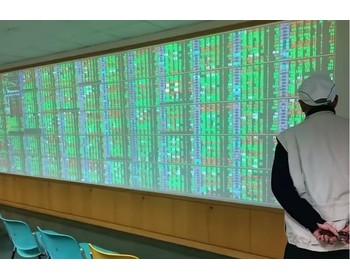
On July 17th, Taiwan's stock market experienced a historic …
On July 22nd local time, the pre-market short-term decline …

On July 22 local time, Advanced Micro Devices (AMD) officia…

According to the report by Rich Asplund, a columnist of Bar…

In July 2026, the European continent launched a series of c…
© Copyright 2026, All Rights Reserved