
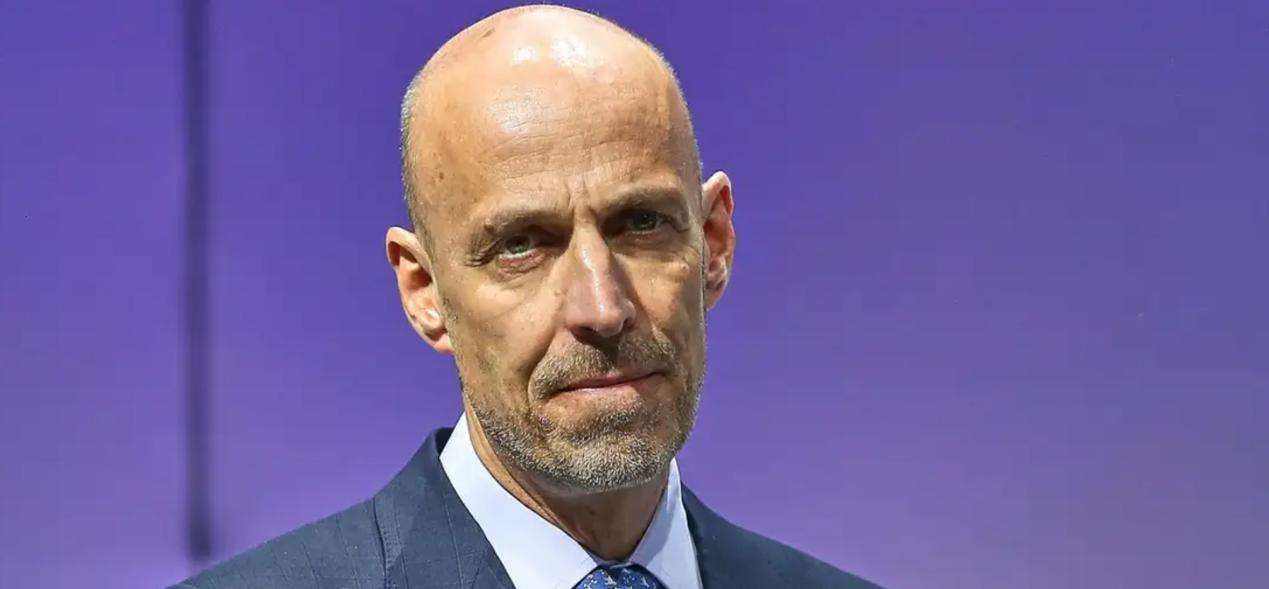
The Federation of German Industries (BDI) has recently issued a strong warning: Germany's economy is mired in its most severe structural crisis since the end of World War II, with industrial output declining for four consecutive years, a wave of corporate bankruptcies spreading, and the job market deteriorating. This crisis not only undermines Germany's status as the economic engine of Europe but also exposes the deep vulnerabilities of its traditional economic model under the dual impact of globalization and energy transition.
I. Industrial "Free Fall": The Transformation from Pillar to Burden
The latest BDI report indicates that Germany's industrial output is expected to decline by 2% in 2025, a further deterioration from the previous forecast of -0.5%, marking the fourth consecutive year of contraction in the industrial sector. This trend contrasts sharply with the 1% growth in the EU's overall industrial output, highlighting the "stalling" crisis in German industry. The chemical industry is hardest hit, with capacity utilization dropping to 70% and orders down by 5%. The machinery and steel industries are also under pressure. Take chemical giant BASF as an example; due to high energy costs, its Ludwigshafen plant has cut production by 30% and plans to shut down some production lines.
Although the automotive industry has achieved a 2% increase in production and capacity utilization has rebounded to 83.5%, the job market continues to deteriorate. In September 2024, the number of jobs in the automotive industry decreased by 49,000 year-on-year. Volkswagen announced the closure of its domestic factories, ZF plans to lay off 14,000 employees, and Bosch and Siemens have also joined the ranks of those cutting jobs. This paradox of "production growth and job contraction" reflects the pains of Germany's industrial transformation towards automation and digitalization.
II. Multiple Crises Converging: The "Perfect Storm" of Energy, Trade, and Policy
The predicament of German industry stems from the interplay of multiple factors:
1. High energy costs: After the Russia-Ukraine conflict, Germany was forced to abandon Russian gas and rely on US liquefied natural gas (LNG), resulting in industrial electricity prices being 50% higher than those in France. Energy-intensive industries such as chemicals and steel are particularly affected. ThyssenKrupp Steel Group has been forced to postpone its green transformation investment due to rising energy costs.
2. The rise of global trade protectionism: The US's imposition of tariffs on EU automobiles has directly hit German exports. In the first eight months of 2025, German exports to the US decreased by 6.5%, and the automotive industry lost 51,500 jobs. At the same time, China's rise in the fields of new energy vehicles and machinery equipment has further squeezed Germany's market share.
3. Lagging policy response: BDI criticized the government for "slow reform", stating that the 500 billion euro infrastructure fund has a disbursement rate of less than 30% due to complex administrative procedures. Pension and healthcare reforms expected by the business community have made slow progress, and the reduction of corporate income tax will not be implemented until 2028.
III. Structural Recession: From Cyclical Fluctuations to Model Collapse
Peter Leibinger, the chairman of BDI, stated directly: "Germany is experiencing a structural recession, not a cyclical slowdown." This judgment is based on three major structural contradictions:
The conflict between energy transition and industrial foundation: Germany plans to increase the proportion of renewable energy to 80% by 2030, but the intermittent nature of wind and solar power is fundamentally at odds with the industrial demand for stable energy. After the explosion of the Nord Stream pipeline, Germany was forced to restart coal power, and the carbon reduction target is at risk of regression.
Lagging digitalization and loss of competitiveness: The implementation of Germany's Industry 4.0 strategy has been slow, and the digital investment of small and medium-sized enterprises is less than 60% of the EU average. A survey by the Munich Institute for Economic Research shows that only 24% of German enterprises plan to increase investment, while 31% plan to cut investment, and the equipment renewal cycle has been extended to more than 10 years.
Population aging and labor shortage: The proportion of people over 65 in Germany has reached 23%, and there is a shortage of 500,000 people in the construction and care industries. Although the government has relaxed immigration policies, language and skill barriers have led to the slow integration of foreign labor.
In response to the crisis, the German government has launched a 631 billion euro investment plan, focusing on infrastructure, digitalization and energy transition, and has established the "Made in Germany" cross-industry initiative. However, BDI warns that if the reform only stays at the level of "patching up", Germany will miss the window of opportunity for transformation.
The warning from the German Industry Federation is not an exaggeration. The "German model" that rose from the ruins of World War II is facing its most severe test since its establishment. Whether it can complete the transformation from an "industrial power" to a "sustainable economy" in the crisis will determine whether Germany can continue its economic miracle.

Recently, the British government, in accordance with the "Steel Industry (Nationalization) Act" that came into effect on July 16th, took the British Steel Company, which is controlled by China Jiefang Group, into state ownership without compensation.

Recently, the British government, in accordance with the "S…

On July 23rd local time, the US Trade Representative Office…

The international crude oil market saw a sharp one-sided ri…

Recently, the geopolitical confrontation between the United…

The New York Times has recently clashed with the Trump admi…

Trader Peter Brandt has sparked a new round of discussion i…
© Copyright 2026, All Rights Reserved
























