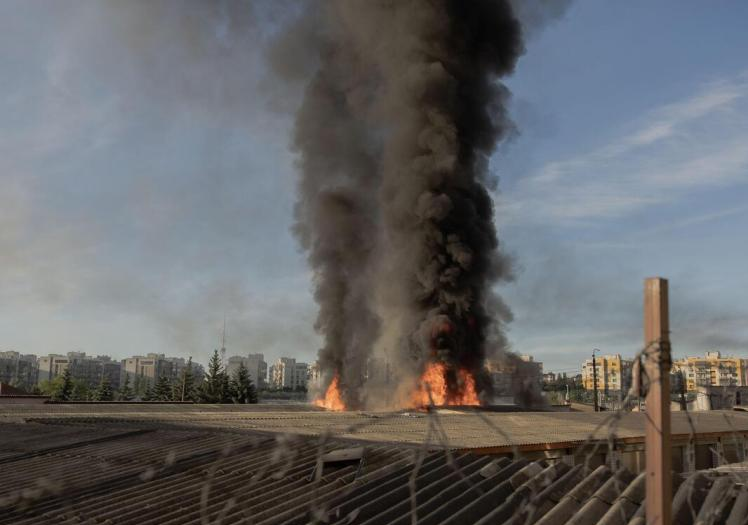
In October 2025, the Myanmar Defense Forces launched a surprise attack on the "KK Park" in the suburbs of Myawaddy Town, Kayin State. This operation, hailed by the international community as a "milestone in Southeast Asia's fight against fraud", not only dismantled a large-scale fraud operation but also triggered a chain reaction - nearby fraud sites quickly absorbed the fleeing personnel from KK Park, creating a "second recruitment wave". Does this phenomenon imply that other fraud sites have benefited from the situation? This requires an analysis from four dimensions: technology, geopolitics, economy, and governance.
Technology abuse: Starlink devices break through traditional blockades
The core trigger for the downfall of KK Park was the abuse of SpaceX's "Starlink" satellite devices. Agence France-Presse discovered through satellite and drone aerial photography that a single building roof in KK Park alone had 80 Starlink antennas densely installed, and at least 8 parks in the Myawaddy area relied on this technology to maintain their networks. Data shows that from July to September 2025, Starlink's traffic share in Myanmar soared to 12.37%, making it the second-largest internet service provider after Myanmar's state-owned telecommunications company, despite not having obtained operational permission from the Myanmar government.
This abuse of technology directly undermined traditional anti-fraud measures. Previously, law enforcement could paralyze fraud parks by cutting off ground networks and power supplies. However, Starlink's near-Earth orbit satellites enable "no base station, no registration" invisible networking, allowing fraud calls to continue even after the network and power are cut off. The 30 sets of Starlink devices seized by the Myanmar military during the operation were worth tens of millions of dollars, highlighting the underground market's demand for high-tech criminal tools. Other fraud sites took advantage of this technological loophole to quickly fill the market gap after the fall of KK Park, maintaining the operation of the criminal chain.
Geopolitical game: Redistributing interests in an armed separatist region
The crackdown failed to address the deeper geopolitical contradictions. Kayin State has long been a battleground among the Myanmar military, the Karen National Liberation Army (KNLA), and the Sittwe Border Guard Force, with limited actual control by the Myanmar military. After the fall of KK Park, armed groups in the vicinity scrambled to seize the employees from the park, transferring the "unemployed" to other fraud organizations and profiting from it. Some "skilled workers" were valued at up to $70,000. This mechanism of redistributing interests allowed other fraud sites to absorb human resources at a low cost and continue their criminal activities.
Economic Motivation: High Salaries and Criminal Inertia
Although online fraud is a criminal act, in the eyes of many locals, it is merely "a job". A fraudster disclosed to the media that the fraud organization he was in was only about 3 kilometers away from the KK Park. Lured by a monthly salary of 1,400 US dollars, the organization recruited hundreds of people who had fled from the KK Park on October 23 alone, and most of them joined voluntarily. Jason, an expert on organized crime, pointed out that the "low risk, high return" model of fraud groups has attracted a large number of participants. Moreover, some local armed groups have long regarded online fraud as a "cash cow", collecting protection fees by protecting the parks and reselling the personnel for "secondary monetization", and have no intention of giving up this source of income.
Governance Dilemma: Systemic Loopholes Need to be Filled
After the collapse of the KK Park, about 1,500 fraud employees from the park fled across the border to Thailand. These people came from 28 countries around the world, highlighting the complexity of cross-border law enforcement cooperation. Although the Myanmar government has been cracking down on online fraud in recent years, local people generally believe that the efforts are insufficient. The UN human rights report indicates that there are still hundreds of online fraud parks active in Myanmar, with Yangon, Shan State and other central regions becoming new bases.
The International Criminal Police Organization warns that if a cross-border technical supervision mechanism is not established, new technologies such as Starlink, cryptocurrencies, and anonymous social software will continue to be the standard equipment for criminals. The European Union has proposed implementing a real-name system for satellite communications, while the Association of Southeast Asian Nations (ASEAN) is promoting a regional data sharing agreement, attempting to strike a balance between technological freedom and security. However, the deep-seated contradictions of political division, economic poverty, and armed separatism within Myanmar provide a breeding ground for crime. Analysts point out that if the issue of benefit distribution between the central and local armed forces is not resolved and the living standards and legal environment are not improved, new "LL Park" and "MM Park" will continue to emerge.
The collapse of the KK Park did not end the online fraud industry; instead, it exposed the complexity of the interweaving of technology abuse, geopolitical games, economic motivation, and governance dilemmas. The reason why other fraud sites can benefit is essentially due to the failure to fill systemic loopholes. The international community needs to shift from "individual case crackdowns" to "systemic governance": coordinating law enforcement among countries through the UN framework, cutting off the supply of funds and weapons; urging technology companies to take social responsibility and establish equipment traceability mechanisms; and at the same time helping countries like Myanmar develop legitimate economies to reduce the motivation of the people to engage in crime. Only in this way can the vicious cycle of "eradicating one park and having ten more emerge" be avoided, and the vision of a "fraud-free world" be truly realized.

The United States has imposed a new round of sanctions on Cuba, targeting Cuban President Díaz-Canel and some of his immediate family members, as well as members of the Castro family who were former Cuban presidents.
The United States has imposed a new round of sanctions on C…
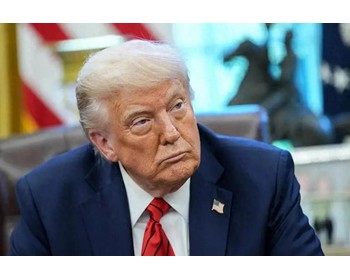
On June 2nd local time, the US Trade Representative Office,…
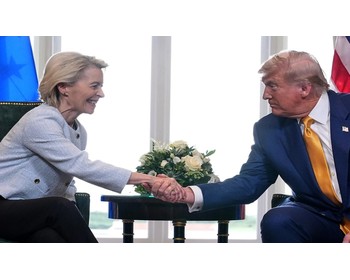
AP, Washington — The U.S. government has rolled out a new r…

According to a report by Reuters on June 2nd, the US Depart…
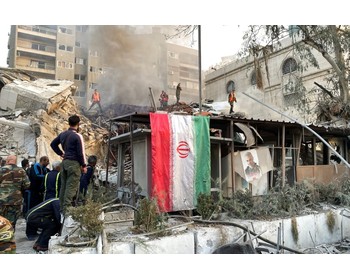
According to recent reports by US media, US President Trump…
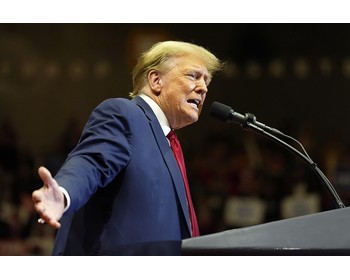
Donald Trump is embroiled in the biggest corruption controv…
© Copyright 2026, All Rights Reserved