On March 18th, the Federal Open Market Committee of the Federal Reserve announced as scheduled that the target range for the federal funds rate would remain unchanged at 3.50% -3.75%, with two consecutive meetings held without action. As soon as the resolution was issued, the global market remained calm, but there was a profound logic hidden behind it: under the multiple constraints of fluctuating inflation, economic resilience exceeding expectations, balanced employment, and intensified geopolitical disturbances in the Middle East, "staying put" is not a passive wait, but the optimal choice for the Federal Reserve to balance its dual mission and risk return. Behind this decision is a triple determination of data support, situational judgment, and policy discipline, which clearly outlines the core direction of current global monetary policy.
The persistent failure to achieve the target of inflation is the primary reason for unchanged interest rates. The primary statutory mission of the Federal Reserve is price stability, and the long-term inflation target of 2% is unshakable. The latest data shows that the core PCE price index in the United States rose by 3.1% year-on-year in January, and the March meeting raised the core PCE expectation for 2026 from the median 2.5% to 2.7%, explicitly acknowledging that inflation stickiness exceeded previous judgments. The escalation of the Middle East conflict has pushed international oil prices above $100 per barrel, and the rise in energy costs has directly pushed up prices in transportation, chemical, logistics and other fields; Combined with the impact of domestic tariff policies, the decline in prices of goods and services has slowed down, and the path of inflation decline has been prolonged.
Economic resilience exceeds expectations, providing solid support for unchanged interest rates. The market was once concerned that high interest rates would suppress growth, but the US economy has shown strong resilience: the expected GDP growth rate for 2026 has been slightly raised to 2.4%, consumer spending is stable, corporate investment is moderately expanding, and the real estate market is gradually adapting to the high interest rate environment. Unlike previous cycles, this round of high interest rates did not trigger a recession. Residents' balance sheets are healthy, corporate profits are stable, and the economy has the ability to withstand high interest rates.
The job market is balanced and creates space for policies to remain unchanged. Full employment is another core mission of the Federal Reserve. Currently, the unemployment rate in the United States remains stable at around 4.4%, the labor force participation rate is steadily increasing, and wage growth is moderately slowing down. There is no risk of overheating or recession, presenting an ideal state of "high employment, low volatility". If interest rate cuts stimulate employment, it may drive up the wage price spiral and exacerbate inflationary pressures; If interest rates are raised, it may lead to an early cooling of employment, which goes against the mission of employment. Keeping interest rates unchanged can not only maintain the employment fundamentals, but also avoid overheating of the labor market, achieving a dual balance between employment and inflation.
The escalation of geopolitical conflicts in the Middle East has brought high uncertainty, forcing policy caution. The ongoing confrontation between the United States, Israel, and Iran has led to a sharp increase in shipping risks in the Strait of Hormuz. The global energy supply chain, financial markets, and inflation expectations are all facing uncontrollable impacts. Under geopolitical conflicts, the economic outlook is shrouded in fog: oil prices may continue to rise, inflation may exceed expectations, global demand may weaken synchronously, and we may fall into a "stagflation like" dilemma.
The unchanged interest rate this time also sends a clear policy signal: the pace of interest rate cuts in 2026 will significantly slow down. The dot plot shows that there will only be one interest rate cut throughout the year, and the timing of the first interest rate cut is likely to be delayed. This means that global liquidity will remain tightly balanced, the US dollar will remain strong, US bond yields will fluctuate at high levels, and assets such as gold and the stock market will return to fundamental pricing. For global economies, the Federal Reserve's prudence will exacerbate monetary policy divergence, with emerging markets facing capital outflows and currency depreciation pressures, and energy importing countries needing to cope with the dual impact of imported inflation and high interest rates.
Looking back at this policy cycle, the Federal Reserve has been dynamically adjusting around the four core areas of "inflation, growth, employment, and risk", from aggressive rate hikes to suspending rate hikes, and then maintaining interest rates unchanged. The current 'no action' is a rational choice under multiple constraints: neither relaxing the anti inflation bottom line nor stifling the momentum of economic recovery; We should not only deal with short-term geopolitical disturbances, but also focus on long-term financial stability. This decision tells the market that there are no shortcuts to monetary policy, only by respecting data, respecting risks, and adhering to discipline can we overcome cyclical turbulence.
In the future, the Federal Reserve's policy shift will still depend on the speed of inflation decline, the sustainability of economic resilience, and the evolution of geopolitical risks. But what can be confirmed is that in the context of inflation not reaching the target and high uncertainty, "stability" will become the main tone of monetary policy. For the market, it is better to understand the cautious logic of the Federal Reserve than to speculate on the timing of interest rate cuts; For the global economy, only by adapting to the high interest rate environment and building its own resilience can it move steadily and achieve long-term stability in fluctuations.
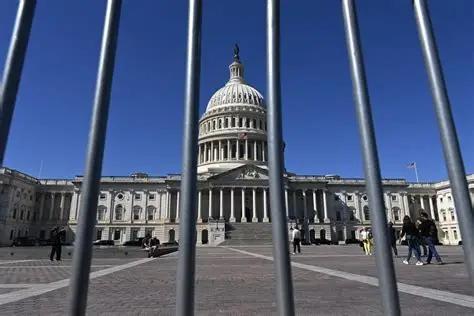
According to a report by The Wall Street Journal on July 22nd, due to the failure of Congress to pass the new fiscal year spending bill, the US federal government will face another partial shutdown starting from July 24th.
According to a report by The Wall Street Journal on July 22…

On July 17th, Taiwan's stock market experienced a historic …

On July 22nd local time, the pre-market short-term decline …

On July 22 local time, Advanced Micro Devices (AMD) officia…

According to the report by Rich Asplund, a columnist of Bar…

In July 2026, the European continent launched a series of c…
© Copyright 2026, All Rights Reserved