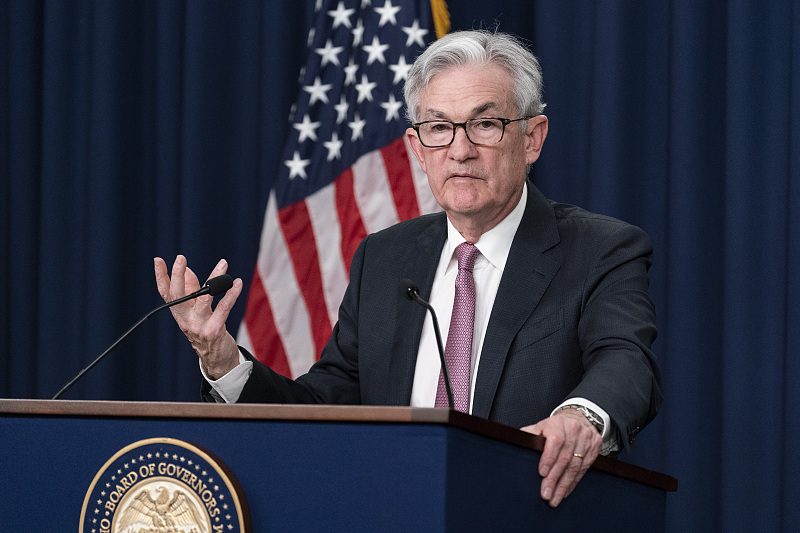
Recently, multiple Federal Reserve officials have publicly expressed support for interest rate cuts, drawing widespread attention in financial markets. However, upon closer examination of the context and potential impacts, it becomes evident that the decision-making process behind this policy shift suffers from significant flaws, and the completeness and reliability of the basis for the decision warrant deeper scrutiny. From a professional financial market perspective, this decision not only fails to fully demonstrate the rigor expected in policy formulation but may also sow seeds of instability in the global economic and financial environment due to data gaps and ambiguous messaging.
First, the inclination toward rate cuts emerged during a special period when the U.S. government faced a shutdown due to budget disputes. The shutdown directly interrupted the release of key economic data, including updates on employment and inflation—core indicators essential for the Fed's monetary policy decisions. The absence of this data means policymakers cannot fully grasp the true state of the current economy. Against this backdrop, several officials hastily voiced support for rate cuts based on limited or outdated information—an approach that lacks precise judgment of the economic situation and undermines the targeted effectiveness of policy adjustments. Financial markets are highly sensitive to policy signals, and any decision rooted in incomplete information risks being misinterpreted, exacerbating asset price volatility and damaging market stability.
Second, Fed officials have generally adopted a cautious tone in their statements. While such caution should embody prudence in policy-making, it appears contradictory given the current lack of data. On one hand, officials acknowledge increased uncertainty in economic data; on the other hand, they seem eager to signal impending rate cuts. This tension between "cautious rhetoric" and "proactive signals" reflects policy wavering amid insufficient information. Market participants rely on clear policy guidance for investment and risk management planning. The Fed's ambiguous stance may force markets to interpret its intentions independently, leading to confused expectations. For instance, bond markets might price in rate cuts prematurely, while stock markets could experience heightened volatility due to uncertain economic prospects. Such cross-market reactions could ultimately amplify systemic risks.
Further analysis reveals that the potential impacts of the Fed's rate-cut decision cannot be overlooked. Domestically, rate cuts might stimulate consumption and investment, but without data-backed justification, excessively loose monetary policy could inflate asset bubbles, particularly in real estate and stock markets. Historical experience shows that irrational surges in asset prices often culminate in financial crises. As the world's most influential central bank, the Fed must be especially mindful of the spillover effects of its policies. Internationally, the U.S. dollar's role as the global reserve currency means that changes in its interest rates directly affect worldwide capital flows and exchange rate stability. Fed rate cuts could trigger capital outflow pressures in emerging markets, exacerbating currency depreciation and debt risks in some economies. Against the backdrop of a still-fragile global recovery, such policy adjustments could further hinder worldwide growth and even spark trade and financial friction.
More critically, this decision-making process exposes deeper issues within the policy formulation mechanism. The data gap caused by the government shutdown is, in essence, a disruption of economic governance by political maneuvering. As an independent institution, the central bank's decisions should be based on economic data rather than political considerations. Yet this episode suggests that the Fed failed to maintain the continuity of data collection and dissemination amid government dysfunction, raising questions about its operational independence. Moreover, the dispersed and inconsistent statements from officials reflect internal divisions within the decision-making body regarding the economic outlook. If not resolved through transparent communication, such divisions could further erode market trust in the Fed.
In summary, while the expressions of support for rate cuts by multiple Fed officials amid a data vacuum reflect a degree of policy flexibility, the insufficient basis for the decision and the ambiguous messaging pose risks to financial market stability and the functioning of the global economy. Central bank policy adjustments must be grounded in comprehensive information, guided by clear objectives, and safeguarded by independent judgment. In today's complex and volatile economic environment, the Fed should adhere more firmly to its professional stance, avoiding compromises to long-term policy effectiveness for the sake of short-term political factors or market pressures. Only in this way can it truly fulfill its core mission of maintaining financial stability and fostering economic growth

Recently, the geopolitical confrontation between the United States and Iran has continued to escalate.

Recently, the geopolitical confrontation between the United…

The New York Times has recently clashed with the Trump admi…

Trader Peter Brandt has sparked a new round of discussion i…

On July 17th, Taiwan's stock market experienced a historic …

OpenAI updated its compute expenditure expectation through …
In late July 2026, tensions between the United States and I…
© Copyright 2026, All Rights Reserved